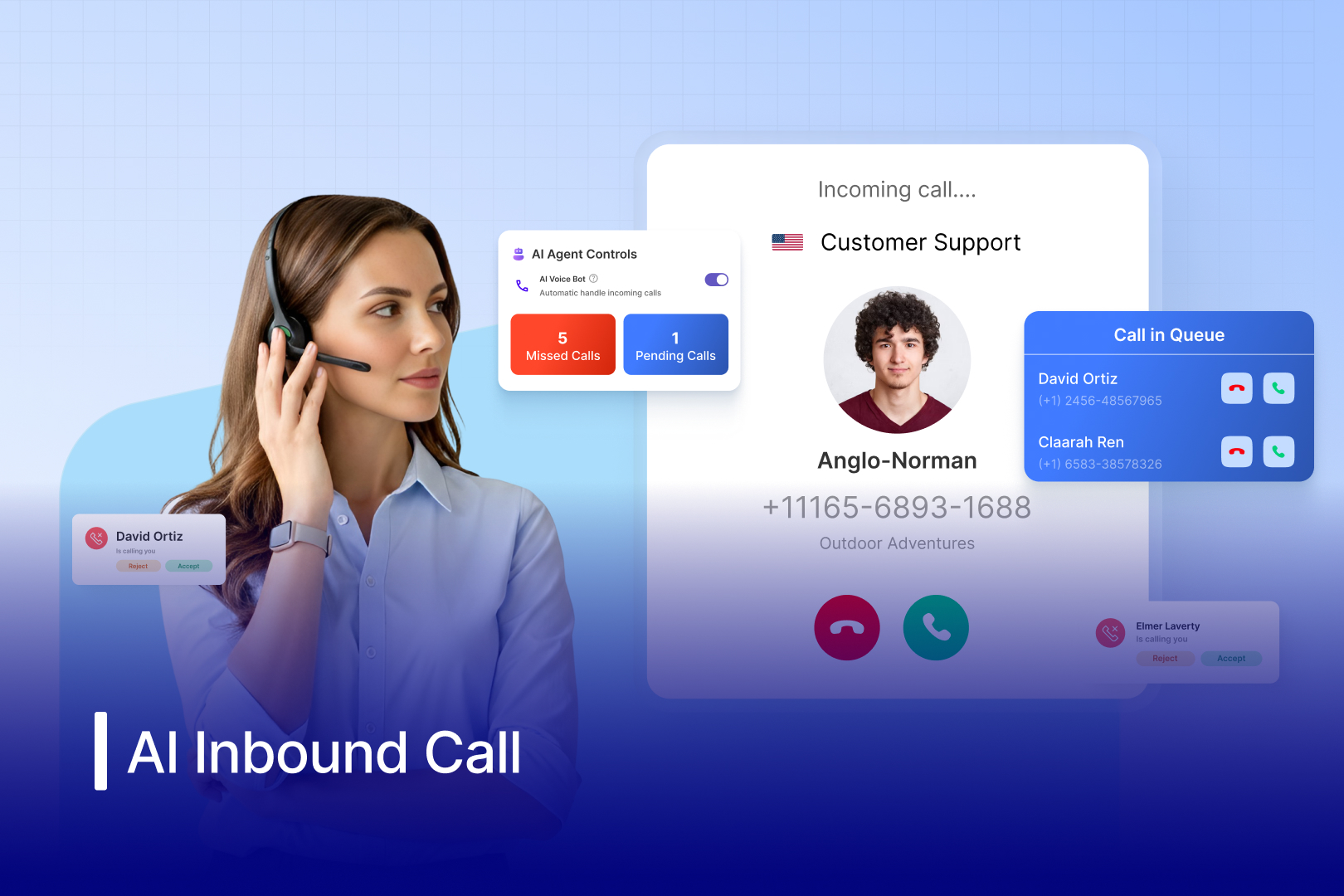

Executive SummaryAI inbound calling is transforming how automotive businesses manage customer conversations by providing instant, 24/7 responses. AI agents can answer calls, understand customer intent, handle FAQs, qualify leads, schedule appointments, access vehicle information, update CRM/DMS records, and route complex calls to the right team. This blog explores the key benefits, features, use cases, leading AI inbound calling solutions, and factors to consider when choosing a platform. It also explains how dealerships can implement AI inbound calls and use solutions like Spyne’s Vini AI to reduce missed opportunities, improve customer experience, and scale call operations efficiently. |
As of 2026, almost 2.86 billion buyers are online; that’s 33% of the world’s population. These buyers start their buying journey online by researching, comparing, and sending inquiries across multiple websites. This creates strong competition among businesses, and the first to respond to a customer’s inquiry is likely to win the deal. However, running a business 24/7 with human staff and expecting them to respond to every inquiry instantly isn’t possible.
This is why most businesses are now switching to automated inbound call handling. AI inbound call solutions respond to every customer inquiry within a moment of it reaching your dealership. These AI inbound call handling agents can handle your dealership calls 24/7, but they are most effective during after-hours, weekends, and holidays.
Let’s discuss in depth how AI-powered inbound call solutions actually impact business operations and help businesses grow.
What is an AI Inbound Call?
AI inbound call center software automatically answers customers’ calls. Unlike traditional call bots, these conversational AI agents utilize natural language understanding (NLU), natural language processing (NLP), and machine learning (ML). These technologies help AI agents understand customer behaviour, emotions, and conversation context and deliver personalized responses.
How Does an AI Inbound Call Agent Work?
AI inbound call center agents utilize conversational AI, speech recognition, and real-time data access to answer incoming customer calls, understand what callers need, and take the right action without relying on rigid IVR menus. It handles routine inquiries, qualifies leads, schedules appointments, updates customer records, and seamlessly escalates complex calls to human agents with the complete conversation context. Let’s discuss how AI inbound call agents actually work:
1. Answers Calls Instantly
When a customer calls, inbound call AI instantly answers, greets them, and starts the conversation naturally. It can handle multiple calls simultaneously, eliminating wait times. This ensures customers can reach you anytime, 24/7, at their own convenience.
2. Listens, Transcribes & Understands
A conversational AI agent uses automatic speech recognition (ASR) to convert speech into text and natural language understanding (NLU) to interpret the caller’s intent, context, urgency, and conversation history.
3. Decides What to Do & Takes Action
AI-powered inbound call solutions also determine the right next step based on the conversation. It can answer questions, look up customer or order information, qualify records, update records, schedule appointments, process requests, or trigger workflows through connected business systems.
4. Resolves or Routes With Context
AI can easily resolve routine inquiries instantly. A leading voice AI for inbound call routing solution also routes calls to the right team or agent when needed. Along with call routing, it also shares relevant conversation context, so customers don’t have to repeat themselves.
5. Logs Every Conversation & Generates Insights
After each call, the AI inbound call agent automatically creates transcripts, summaries, outcomes, and CRM updates. Businesses can analyze conversations and identify recurring issues, track call performance, and uncover insights to improve customer experience and operational efficiency.
What are the Benefits of AI-Powered Inbound Call Solutions?
AI inbound automotive call center services help businesses handle customer calls faster, smarter, and more efficiently. By automating conversations and support processes, they improve service quality while reducing operational effort.
1. 24/7 Availability
An AI inbound calling system delivers 24/7 support for customers, ensuring they can reach out to you anytime. This eliminates missed opportunities, reduces wait times, and keeps customer service accessible even outside business hours.
2. Lower Operational Cost
An inbound call AI solution automates routine tasks while reducing the need for a large support team. You can save on hiring, staffing, training, and operational costs while maintaining a consistent service quality for your customers.
3. Enhanced Customer Experience (CX)
With instant, personalized responses and around-the-clock support, an inbound call AI agent improves the overall customer interaction experience. Natural, human-like conversations build customer trust and boost customer satisfaction.
4. Enhanced First Call Resolution (FCR)
The AI inbound calling agent instantly understands customer intent and provides accurate answers, resolving inquiries in the first interaction. By resolving common issues immediately, it reduces the need for follow-up calls and improves service efficiency.
5. Scalability for Peak Volume
AI-powered inbound call center software can easily handle large volumes of calls simultaneously without affecting performance. This helps businesses scale during busy hours, ensuring every call is answered promptly without adding headcount.
6. Elimination of Hold Times
AI systems can answer multiple calls at the same time, eliminating long hold times. Customers receive instant responses without waiting for an available agent.
7. Consistent, On-Brand Service
AI ensures every customer interaction follows the same tone, messaging, and brand guidelines, delivering a consistent and professional experience across all calls.
8. Data-Driven Insights
AI analyzes call conversations and customer interactions to generate valuable insights. Businesses can identify trends, understand customer behavior, and improve service strategies using real-time data.

Top 7 Key Features of an AI Inbound Call Center
An inbound AI voice call solution comes with multiple advanced features that help businesses manage customer interactions effectively while delivering personalized responses and an enhanced experience. Here are the top key features of voice AI inbound calls:
1. Conversational AI
AI inbound call systems use conversational AI and NLP to understand customer requirements, intent, urgency, and respond naturally. This allows the AI to handle interruptions, maintain context, and deliver human-like conversations instead of rigid scripted responses.
2. Intelligent Call Routing
AI inbound call agents answer calls instantly and provide round-the-clock support for customers. This ensures no calls are missed, eliminates long hold times, and keeps customer service available even outside business hours.
3. Real-Time Agent Assistance
The inbound call AI agent transcribes the conversation in real time. It provides agents with relevant information, knowledge base articles, and helpful prompts while they speak with customers. This helps agents respond faster, follow the right process, and resolve queries more effectively.
4. Sentiment & Intent Analysis
AI inbound support call center agent analyzes the customer’s tone and emotions in real time to understand whether they are satisfied, frustrated, or upset. This helps businesses step in early, resolve issues faster, and improve the customer experience.
5. Automated Post-Call Work
AI automatically summarizes every call, records key details, and updates your system as soon as the call ends. This eliminates manual note-taking and saves agents time on repetitive post-call tasks.
6. AI Insights & Analytics
AI analyzes 100% of calls to track performance, customer trends, and key operational metrics. Instead of relying on small samples of manually reviewed calls, businesses get complete visibility into every conversation and can make better, data-driven decisions.
7. Multilingual
AI inbound agents can communicate in multiple languages, helping businesses serve customers across different regions. This makes conversations more accessible, improves understanding, and creates a smoother customer experience.
Best 7 Use Cases of Inbound Call AI
AI inbound call center solutions aren’t just limited to answering phone calls. AI call-handling agent offers various functionalities that help businesses with their operations. These AI agents can handle routine requests, qualify opportunities, route conversations, access real-time information, and support human teams across the entire customer journey.
1. After-Hours & Call Overflow Coverage
AI agents answer calls when dealership staff are busy or unavailable, ensuring every customer gets an immediate response. It captures potential leads after hours and prevents missed opportunities.
2. Service Appointment Scheduling
AI call agent can book, reschedule, or cancel service appointments directly over the phone. It checks available slots and helps manage routine service requests without adding workload to the BDC or service team.
3. Inventory & Vehicle Availability Check
AI connects with dealership inventory systems to provide real-time information about vehicle availability, models, trims, pricing, and other details. It can also turn high-intent inquiries into test-drive appointments.
4. Lead Qualification & Smart Routing
AI inbound call agents ask callers relevant questions to understand their buying needs, timeline, trade-in, or financing requirements. It qualifies leads and routes high-intent customers to the right sales representative with conversation context.
5. Recall and Maintenance Status Updates
AI phone agent can answer questions about vehicle recalls, maintenance, and repair status by accessing relevant dealership or service data. Customers get quick updates without repeatedly calling service advisors.
6. Dealership FAQ and Basic Information Routing
The conversational AI agent handles common questions about dealership hours, location, departments, services, shuttle availability, and more. It answers routine inquiries instantly and routes complex requests to the right team.
7. Real-Time Call Analytics and Sentiment Monitoring
AI agent analyzes 100% of inbound calls to track customer sentiment, call outcomes, and agent performance. It can identify frustrated customers, missed opportunities, and recurring issues, helping managers take action and improve dealership operations.
Top 10 AI Inbound Call Solutions
AI inbound calling tools are helping businesses answer calls 24/7, qualify leads, schedule appointments, resolve routine queries, and connect callers with the right human agent. From dealership-focused AI agents to enterprise contact-center platforms, here are the top options to consider in 2026.
1. Spyne Vini AI
Spyne Vini AI is an AI-powered voice agent built specifically for automotive dealerships. It answers inbound calls 24/7, handles sales and service conversations, qualifies leads, schedules appointments, and connects with dealership systems. Vini helps dealerships capture more opportunities without increasing BDC workload.
Key features:
- 24/7 inbound call answering
- Lead qualification and smart routing
- Sales and service appointment booking
- Real-time inventory and vehicle information
- CRM/DMS integration and automated call summaries
2. Retell AI
Retell AI is a voice-agent platform designed for businesses that want production-ready conversational AI. It combines natural conversations, low-latency voice interactions, integrations, and workflow automation.
Key features:
- AI voice agents for inbound calls
- Lead qualification and appointment booking
- Call transfers and routing
- CRM and API integrations
- Custom conversation workflows
3. Synthflow
Synthflow is a no-code voice AI platform that lets businesses build and deploy AI phone agents without extensive technical expertise. It is well-suited for teams that want to create and manage calling workflows themselves.
Key features:
- No-code AI agent builder
- AI receptionist and call answering
- Appointment scheduling
- Lead qualification
- CRM and workflow integrations
4. Vapi
Vapi is a developer-focused voice AI platform for building highly customized phone agents. It gives engineering teams greater control over models, voices, workflows, and integrations.
Key features:
- Developer-friendly APIs
- Custom LLM and voice configurations
- Real-time voice conversations
- Telephony integrations
- Flexible AI workflows
5. PolyAI
PolyAI provides conversational AI designed for large-scale customer service operations. Its agents can handle complex customer conversations and automate high-volume inbound interactions.
Key features:
- Enterprise voice assistants
- Complex query handling
- Intelligent call routing
- Contact-center integrations
- 24/7 customer support
6. Bland AI
Bland AI helps businesses automate phone conversations at scale through customizable AI voice agents. It is particularly useful for organizations managing large volumes of automated calls and workflows.
Key features:
- AI-powered phone agents
- High-volume call automation
- Lead qualification
- Custom call workflows
- API and system integrations
7. ElevenLabs Agents
ElevenLabs Agents combines conversational AI with highly natural voice generation. It is a strong option for businesses where realistic and engaging voice interactions are a major part of the customer experience.
Key features:
- Natural-sounding AI voices
- Real-time conversations
- Multilingual voice support
- Knowledge base integration
- Custom AI agent workflows
8. Sierra
Sierra focuses on AI agents that can manage end-to-end customer service interactions rather than simply answering calls. It is designed for enterprises looking to automate complex customer journeys across channels.
Key features:
- AI-powered customer service
- Complex issue resolution
- Multi-channel support
- Business system integrations
- Automated customer workflows
9. Haptik
Haptik offers conversational AI solutions for businesses looking to automate customer interactions across voice and digital channels. Its strong multilingual capabilities make it particularly relevant for businesses serving customers across India and other diverse markets.
Key features:
- AI voice automation
- Multilingual conversations
- Customer support automation
- WhatsApp and digital integrations
- Enterprise AI workflows
10. CloudTalk AI
CloudTalk combines AI capabilities with a traditional cloud-based business phone system. It is a practical choice for sales and support teams that want to bring AI into an existing calling and contact-center setup.
Key features:
- AI-powered call handling
- Call routing and management
- Call analytics
- CRM integrations
- Human and AI agent workflows
How to Choose AI for Inbound Call Handling?
Choosing the right AI inbound call solution requires looking beyond voice quality. The platform should fit your business workflows, integrate with your existing systems, and reliably handle customer conversations from start to finish.
1. Voice Quality & Response Speed
Choose an AI agent that sounds natural and responds quickly during conversations. Low latency and smooth turn-taking make interactions feel more human and reduce awkward pauses.
2. CRM, DMS & Calendar Integrations
Make sure the AI can connect with your existing systems and take action, not just access information. It should be able to update customer records, check availability, schedule appointments, and log call details in real time.
3. Smart Routing & Human Escalation
Look for flexible workflows that know when AI should handle a call and when a human should take over. The agent should identify complex or sensitive requests, frustrated callers, and high-intent leads and transfer them with the conversation context.
4. Security & Compliance
Evaluate the platform’s security measures, data protection practices, and relevant certifications based on your industry. This is especially important when AI handles customer, financial, or other sensitive information.
5. Scalability & Cost
Compare pricing based on your expected call volume, call duration, and peak-hour traffic. The right solution should support increasing call volumes and concurrent conversations without making costs difficult to manage.
How to Get Started with AI Inbound Calls?
Implementing AI inbound calls becomes easier when you start with clear goals and gradually expand the agent’s capabilities. A structured approach helps ensure the AI fits your workflows, handles customer conversations effectively, and delivers measurable results.
1. Define Your Business Goals
Start by identifying the calls and tasks you want AI to handle. This could include answering FAQs, scheduling appointments, qualifying leads, or handling after-hours calls. Begin with high-volume, repetitive tasks and expand the AI’s role as performance improves.
2. Choose the Right AI Inbound Calling Platform
Choose a platform that can deliver natural conversations, quick responses, and reliable call handling. Look for features such as workflow automation, intelligent routing, scalability, and real-time analytics. The platform should also support the specific needs of your business and customer interactions.
3. Integrate with Your Existing Systems
Connect the AI agent with your CRM, DMS, calendar, helpdesk, and other business systems. This allows the agent to access customer and business information and take actions during calls. For dealerships, this can include checking vehicle availability, updating lead records, and booking service appointments.
4. Build and Configure the AI Agent
Customize the AI agent around your business, brand tone, products, services, and workflows. Add relevant information such as FAQs, pricing, policies, and service details to its knowledge base. Define clear rules for what the AI can handle and when it should transfer a call to a human.
5. Test, Monitor & Optimize
Before going live, test the AI with common questions, unexpected requests, and complex scenarios. Once deployed, monitor call quality, resolution rates, customer feedback, and escalation patterns. Use these insights to continuously improve conversations, workflows, and overall AI performance.
Why Do Automotive Businesses Need an Inbound Call AI Agent?
Inbound AI phone call service helps automotive businesses handle customer calls instantly, 24/7, ensuring that no potential lead is missed. It automates the customer’s first interaction and routes calls based on their intent and requirements. It can answer common questions, schedule appointments quickly, and connect with CRM or DMS systems to keep everything updated. Here is why having AI inbound calling software is important for automotive businesses:
1. Eliminate Missed Opportunities
Automotive businesses receive a large number of phone calls for bookings, car availability, and pricing inquiries. AI inbound calls for dealerships ensure every call is answered instantly, even after business hours, while reducing missed opportunities and boosting conversion rates.
2. Enhance Customer Experience
AI inbound call agents deliver car buyers an enhanced customer experience by making human-like, real, and personalized conversations. It instantly delivers responses to customer inquiries 24/7.
3. Improve Operational Efficiency
By automating automotive call tracking and daily routine tasks, AI-powered inbound call solutions reduce the workload of your staff. This will allow your team to focus on in-person customers, complex repairs, and high-value sales activities.
4. For Data-Driven Insights
AI systems record, transcribe, and analyze every conversation, helping you understand what your customers need and their behavior patterns. These insights will help you improve your service quality, identify common issues, and make better decisions for your business.
5. Boost Cost Efficiency
AI inbound calling reduces the need for large call center teams while still managing high call volumes. This lowers operational costs while maintaining consistent customer service across peak hours and after-business times.
Spyne’s Vini AI: That Analyzes & Understands Human Emotions
While most AI-powered inbound call center software is generic, Spyne AI is specifically designed for automotive businesses. Our AI knows about cars, understands how the automotive business works, and understands car buyers. Not only does our AI help your business grow with its advanced features:
1. Human-Like Interactions
Our conversational AI “Vini” interacts with customers like a real human. It understands buyers’ intent, preferences, tone, and behavior in real-time to generate and deliver personalized responses that feel connected and conversational to buyers.
2. Multilingual Support
Our AI call bot for car dealerships has no language barrier. It can communicate with customers in multiple languages, helping your automotive businesses serve diverse customer bases and improve accessibility across different regions.
3. 24/7 Availability
The AI phone answering service for car dealerships operates 24/7, ensuring no inquiry is missed, even if it comes after business hours. This allows dealerships to capture more leads and handle customer queries anytime, around the clock.
4. Smart Call Routing
Our AI understands what buyers inquire about and routes calls to the correct department, such as sales, service, or parts, together with full context. This reduces wait times and ensures customers reach the right team quickly.
5. Advanced Automation
Integrating our AI inbound call solution into your existing CRM and DMS automatically fills customer details with their call recordings, conversation summaries, and transcripts. It also indicates where a buyer sits in the sales funnel.
6. Actionable Insights
Our AI analyzes every call conversation and its outcomes to provide valuable insights into customer behavior, call trends, and performance metrics. These insights help automotive businesses improve service strategies and make better data-driven decisions.
7. Scalability
Our AI inbound call service is the best call overflow solutions for automotive dealers. It can handle a large number of inbound calls at the same time without slowing down. It helps automotive businesses manage peak call volumes while maintaining fast and consistent customer service without adding more staff.

Conclusion
AI inbound calling is transforming how automotive businesses manage customer conversations. By enabling instant responses, 24/7 availability, and human-like interactions, AI helps companies reduce missed opportunities while improving customer satisfaction.
As businesses continue to scale digitally, an AI-powered automotive answering service will become essential for handling high call volumes, automating routine tasks, and delivering faster, more personalized customer experiences. If you want to see how Spyne’s AI inbound calling software can elevate your business growth and scalability, book a demo now.