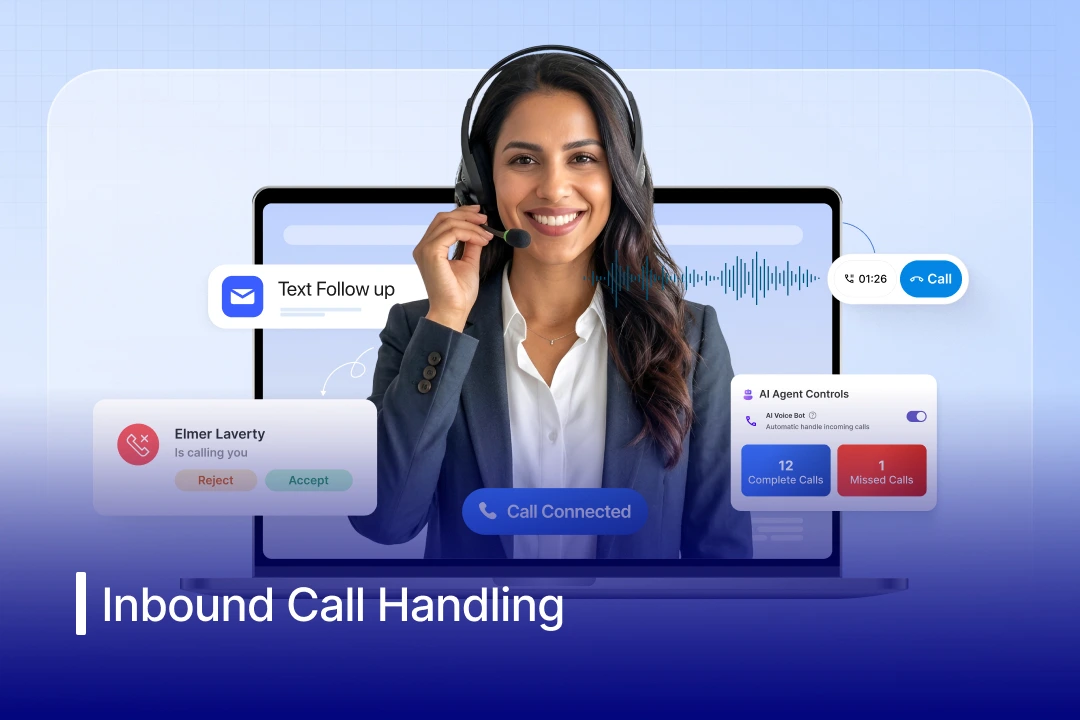

Running a business today means handling customer interactions via email, live chat, social media, and calls. But even with all these options, phone calls still remain the most important and impactful form of communication. Why? Because they are one-on-one conversations between the customer and business, wait times are shorter and deliver instant assistance. If managing these calls feels overwhelming or inconsistent, it’s a clear sign that your business needs a more structured, effective inbound call handling strategy.
In this blog, we will discuss everything you need to know about inbound call handling, from its impact to best practices for better call handling. So let’s delve into the blog ASAP!
What Are Inbound Calls?
Inbound calls are phone calls initiated by customers to businesses, usually to get information, request support, or explore a purchase. These calls are driven by customer intent, meaning when someone reaches out to your business, they already have a specific need or interest in your product or service. This makes inbound calls a key touchpoint for support, sales, and overall customer experience.
Handling inbound calls effectively directly impacts your customer experience. Instant and accurate responses are key factors in delivering an enhanced customer experience. However, since you don’t know the reason for the call in advance, your team should always be available to answer.
What Is Inbound Call Handling?
Inbound call handling is the systematic process businesses use to receive, manage, and resolve customer-initiated support or sales calls and inquiries efficiently. It involves instant replies, routing them to the right person or department, and ensuring that the customer’s query is handled efficiently.
Why Is Inbound Call Handling Important?
Inbound call handling is the structured process of managing incoming customer calls and inquiries to deliver timely support, resolve issues, and drive sales effectively. It directly shapes customer experience, driving loyalty and revenue while reducing churn. Here’s why inbound call handling is actually important for businesses:
1. Enhance Customer Experience
Today’s customers expect a lot from businesses, such as instant and accurate responses. This helps customers feel valued, builds trust and loyalty, and enhances their overall experience throughout the online buying journey.
2. Boost Sales & Revenue
Effective inbound call handling ensures that each call initiated by customers is answered promptly to prevent missed opportunities. When a single call can cost you revenue loss, virtual agents are always available to answer customer inquiries.
3. Improve operational Efficiency
Having a well-trained team or outsourcing inbound call handling services can handle high-volume calls. It ensures calls are routed to the right person at the right time and reduces customer wait times.
4. Provide Actionable Business Insights
Inbound call handling is a valuable source of feedback, providing businesses with insights into customers, including their preferences, behaviors, and pain points. You can utilize these insights to enhance your customer service and experience.
5. Ensures 24/7 Availability
AI-powered automated inbound call handling solutions allow businesses to connect with customers 24/7, picking up their calls and resolving their inquiries without taking breaks. It allows customers to connect to businesses at their convenience.
6. Improves First Call Resolution Rate
Being available to handle customer inquiries and calls around the clock ensures that each inquiry is addressed. Further, resolving issues during the first interaction reduces the need for follow-ups and repeat calls. This improves first-call resolution rates while enhancing overall customer satisfaction.
7. Builds Brand Loyalty & Trust
Delivering quick, professional, and positive resolutions makes customers feel valued. Consistent support experiences help build confidence in your brand. This fosters long-term loyalty and reduces customer frustration over time.

How Does Inbound Call Handling Impact Brand Experience?
Inbound call handling plays a crucial role in shaping brand experience, as it is often the first interaction a customer has with your business. Fast and accurate responses build customer trust and leave a lasting impression. However, delayed repetitive responses where customers feel stuck in a loop damage your brand perception. Further, studies show that:
- Around 88% of customers say the experience provided by an organization is equivalent to the product or service.
- Over 60% of customers will switch to a competitor after just one poor service experience.
Beyond support, every call also becomes an opportunity to strengthen loyalty, gather insights, drive more revenue, and make inbound calls, handling a direct driver of brand growth.
Top 5 Benefits of Professional Inbound Call Handling for Small Businesses
Professional call handling solutions help small businesses to scale and grow faster. It helps businesses to deliver an enhanced customer experience and build a strong brand image through instant, accurate responses around the clock. Let’s discuss in depth how inbound call handling actually benefits small businesses:
1. Enhances Customer Experience
Efficient customer calls handling backed by experts ensures every customer interaction is managed seamlessly, resolving queries, providing timely assistance, and delivering instant 24/7 responses that elevate the overall customer experience.
2. Scalability
Scaling is already a challenging task for small businesses, especially with limited resources. Outsourced, AI-powered Inbound call handling solutions help them handle all incoming calls during peak hours without adding headcount to their staff.
3. Enhance Lead Capturing
Professional call handling agents are always there to handle incoming calls, book appointments, and capture leads effectively around the clock, ensuring no opportunity slips away and boosting conversion rate for small businesses.
4. Cost-Effective Solution
Outsourcing or integrating AI inbound call handling is a more cost-effective solution for small businesses than hiring new staff. Hiring a full-time employee requires salary, benefits, and training costs.
5. Boosts Productivity
By implementing AI-powered call handling or outsourcing call management, your employees can focus on core responsibilities and business growth, while reducing constant, disruptive interruptions.
Best 6 Inbound Call Management Strategies For Your Business
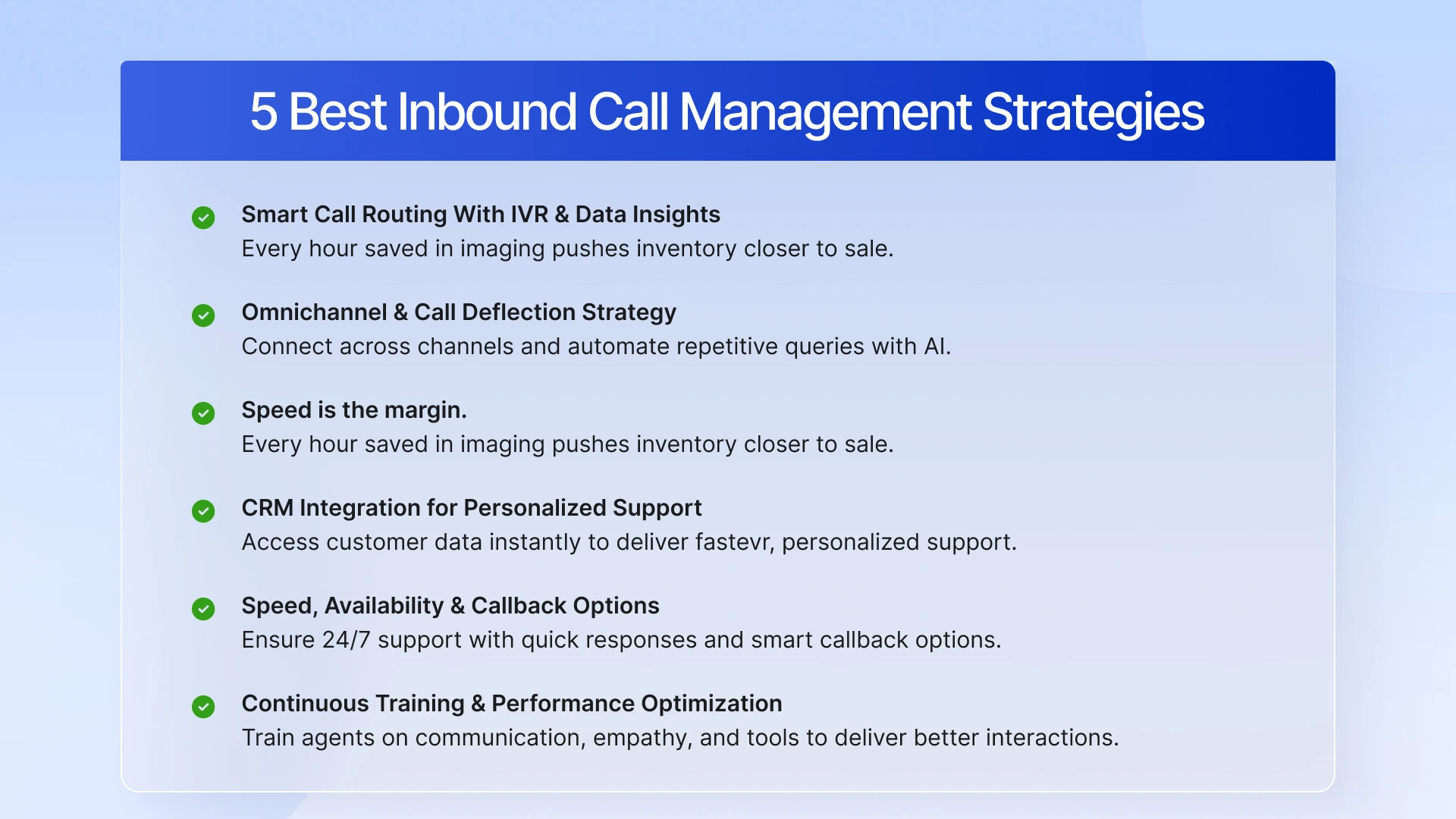
Learning how to handle inbound call with the best strategies is key to delivering fast, personalized, accurate responses and an enhanced customer experience. Here are the best strategies for your business to handle your inbound calls effectively:
1. Smart Call Routing With IVR & Data Insights
Use advanced intelligent IVR and smart call routing based on customers’ intent and need. Each call should be routed to the right department and person based on their skills. Further, continuously refine routing using call insights to reduce wait times and enhance first-call resolution.
2. Omnichannel & Call Deflection Strategy
Allow customers to connect with your business through multiple channels like calls, chat, SMS, and email. Handle repetitive queries with AI-powered conversational agents, freeing your team to focus on high-intent conversations that require human expertise.
3. CRM Integration for Personalized Support
Integrate your business call system with CRM tools to give your agents instant access to customer history, preferences, and past interactions. This enables faster resolutions, better conversations, and upsell opportunities for your business.
4. Speed, Availability & Callback Options
Deliver fast and reliable customer support 24/7 by minimizing wait times and ensuring no leads or inquiry misses. Implement smart queue management with defined wait-time thresholds to avoid long hold times. Also, offer your customers a callback option to reduce call abandonment and improve overall customer satisfaction.
5. Continuous Training & Performance Optimization
Continuously train agents on communication, empathy, and platform usage to improve interactions. Equip them with real-time AI support for call summaries and next-step guidance. This helps agents handle conversations more confidently and efficiently.
6. AI-Powered Analytics & Insights
Track key metrics like Service Level, First Call Resolution (FCR), and Abandonment Rate to measure performance. Use AI-driven analytics to monitor trends, customer sentiment, and agent productivity. These insights help identify gaps and optimize overall call handling strategies.
Best Inbound Call Handling Options and Examples
Handling inbound calls effectively requires the right mix of tools and strategies. Below are the key options and practical examples to help you streamline your call management process:
Inbound Call Handling Options
1. Live Receptionist Handles Calls
Outsourcing call handling services or having a live receptionist in your business can handle all incoming calls. They resolve customer inquiries, book appointments, or share business information in response to customer requirements.
2. Auto Attendant (IVR) for Greetings
You can set up an auto attendant for your business. They are AI receptionist answering calls. They ensure to handle all your incoming calls 24/7, offering customers around-the-clock connectivity. However, instead of integrating traditional IVRs, prefer advanced conversational AI that handles customer inquiries effectively.
3. Auto Call Distribution (ACD) Queues
ACD systems automatically route calls to the right department and the agent based on their skills, availability, or priority. This helps reduce wait times for customers and increase first call resolution rates.
4. Scheduled Callbacks
Instead of keeping your customers on hold, you can offer them a callback option. This allows them to receive a return call at their own convenience, improving satisfaction and reducing drop-offs and missed opportunities.
5. Geographical Routing
All calls are routed to the nearest hub, branch, or region-specific team to the customer’s location. This ensures delivering faster, more accurate assistance to customers and builds their trust.
6. Round-Robin Routing
Round-robin routing distributes calls evenly among team members in a rotating manner. It ensures that no single agent is overloaded while others remain idle. This approach works well for small teams managing consistent call volumes.
7. Voicemail-to-Email
Voicemail-to-email systems convert missed calls into audio files sent directly to your inbox. This allows teams to review and respond promptly, even outside working hours. It ensures no important message or lead is missed.
Inbound Call Handling Examples
1. High Volume Strategy
A local service business uses a virtual receptionist for sales or customer service call handling during peak hours. This ensures all customer inquiries are addressed without delays or missed opportunities. It helps maintain efficiency even during sudden call spikes.
2. Sales Inquiry Example
An agent answers calls with a friendly and open-ended greeting to encourage conversation. This approach builds rapport and helps understand customer needs better. It increases the chances of converting inquiries into sales.
3. Urgent Care Example
A healthcare clinic uses an intelligent system to identify high-priority callers instantly. These calls are escalated to experienced agents for immediate attention. This ensures critical issues are resolved quickly and efficiently.
4. After-Hours Solution
An automated system or AI call handling agents manage calls outside business hours by sharing key information or recording messages. Customers can leave detailed queries for follow-up. This ensures continuous support even when agents are unavailable.
5. Small Business Support
A small business uses round-robin routing to distribute incoming calls equally among team members. This keeps workloads balanced and ensures faster response times. It helps maintain consistent service quality with limited resources.
What Challenges Businesses Face in Inbound Call Handling?
With ineffective inbound call handling, businesses face numerous challenges and complexities. Meeting customer expectations, call complexities, work overload, and more. Let’s discuss in depth what challenges they actually face in handling their inbound calls effectively:
1. Rising Call Complexity & Customer Expectations
As call answering services resolve customers’ basic inquiries, agents now handle more complex inquiries involving emotionally sensitive issues. Customers expect fast, personalized, and empathetic support every time. This makes it difficult for agents to maintain deep product knowledge, strong communication skills, and consistent availability for every customer interaction.
2. High Call Volumes & Long Wait Times
Sudden spikes in calls from busy seasons, campaigns, or issues can overwhelm systems, leading to long wait times, missed opportunities, and customers dropping off before reaching an agent.
3. Low First Call Resolution (FCR)
Many businesses struggle to resolve customer issues in their first interaction. This is often because agents lack the necessary knowledge, tools, or authority. It leads to making repeated calls that frustrate customers.
4. Balancing Automation with Human Touch
AI helps streamline call routing and handle routine queries efficiently. However, many customers still prefer speaking to a live agent for personalized support. Striking the right balance between automation and human empathy remains a key challenge for businesses.
5. Inefficient Call Routing & Complex Workflows
Poorly designed Interactive Voice Response (IVR) systems and routing logic often lead to repeated call transfers and delays. Managing calls based on intent, department, language, or location adds complexity and slows down resolution.
6. Data Silos & Fragmented Technology
Disconnected or outdated systems make it difficult for agents to access complete customer information in real time. This often leads to repeated questions and a fragmented customer experience. As a result, resolution times increase, impacting efficiency and overall customer satisfaction.
7. Inconsistency & Burnout
High call volumes, repetitive tasks, and poor training can lead to agent burnout and inconsistent service quality. Without standardized training, varied agent performance creates uneven customer experiences and can harm brand reputation. This ultimately impacts both customer satisfaction and overall team productivity.
8. After-Hour Connectivity
Customers expect businesses to deliver assistance even beyond regular business hours, but maintaining 24/7 availability can be costly and resource-intensive without automation or external support.
9. Data Security & Regulatory Compliance
Protecting sensitive customer data while handling inbound calls is a major challenge for businesses. Ensuring compliance with regulations like GDPR and CCPA requires strict processes and secure systems. This becomes even more complex with remote or distributed teams managing customer interactions.
Overcoming these challenges can be difficult without the right approach. AI-powered solutions like Spyne AI help automate processes, improve efficiency, and ensure consistent customer experiences. This enables businesses to handle calls more smartly while reducing workload.
What Are the Inbound Call Handling Best Practices?
Effective inbound call handling for business primarily focuses on resolving customer inquiries through fast, accurate, and personalized responses to boost customer satisfaction. This helps businesses capture every incoming opportunity, scale, and grow seamlessly. Here are the inbound call handling best practices for your business:
1. Answer Calls Promptly & Professionally
Time is very crucial when running a business. If a customer calls, you’d have to answer that call within 20 seconds while maintaining professionalism. The first strong impression builds trust and reduces call abandonment.
2. Active Listening and Empathy
When interacting with customers, focus on understanding both their issues and emotions. Let your customers speak, acknowledge their concerns, and respond with empathy to improve customer satisfaction.
3. Smart Call Routing & Defection
Use IVR and ACD systems to route calls based on customer intent, preferences, and needs. Automate inbound calls for repetitive queries through self-service options, allowing agents to focus on high-value and complex interactions.
4 Use Call Insights for Personalization
Utilize customer data like their preferences, requirements, and past interaction history to personalize interactions in real-time. This helps you engage with customers more effectively and deliver an enhanced customer experience.
5. AI-Powered Assistance & Automation
One of the best practices that businesses are implementing is leveraging AI-powered solutions. These solutions help businesses with real-time suggestions, sentiment analysis, call summaries, and routine query handling. This improves efficiency while allowing agents to focus on complex issues.
6. Take Ownership & Provide Clear Next Steps
Agents should take full responsibility for resolving issues without unnecessary transfers. Always summarize the conversation, clearly outline the solution, and set expectations for any follow-up to ensure clarity and trust.
7. Effective Hold & Transfer Management
Always ask for permission before placing a caller on hold and explain the reason for transfers. Smooth transitions and clear communication help maintain a positive customer experience.
8. Prioritize First-Contact Resolution (FCR)
Focus on resolving issues during the first interaction rather than just reducing call time. This minimizes repeat calls, improves efficiency, and increases customer satisfaction while building trust and loyalty.
9. Continuous Training & Coaching
Regularly train agents on communication, soft skills, and product knowledge. Use call recordings, scorecards, and calibration sessions to maintain consistency and improve overall performance.
10. Monitor Key Metrics (KPIs)
Track metrics like Average Handle Time (AHT), Customer Satisfaction (CSAT), and First Call Resolution (FCR). Prioritize quality outcomes over speed to ensure better customer experiences and long-term success.
What Technologies to Consider for Improving Inbound Call Handling?
Modern inbound call handling services go far beyond just picking up calls. It delivers faster, smarter, and more personalized experiences for customers. Businesses that want to handle their inbound phone calls need a combination of AI, automation, and integrated tools. Here are the key technologies to consider:
1. AI-Powered Automation & Virtual Agents
AI-powered solutions like Conversational AI, chatbots, and AI voice assistants handle routine inquiries like FAQs, bookings, and tracking 24/7. These AI understand customer intent, preference, and tone to deliver personalized assistance in real-time. Further, by automating repetitive tasks, these AI systems reduce routine call volume by upto 40% and allow your team to focus on more complex and high-value interactions.
2. Smart IVR & Intelligent Routing
Advanced IVR systems and auto-attendants use natural language to understand customer intent. Automatic Call Distribution (ACD) ensures routing calls to the right department and agent based on their expertise and availability, reducing call transfers and wait times. This reduces unnecessary call transfers, minimizes wait times, and improves overall call resolution efficiency.
3. CRM Integration & Unified Data Access
Integrating automation tools into your CRM captures and organizes customer data automatically without human intervention. Your agents can easily access customer history, preferences, and past interactions. This eliminates repetition, enables personalization, and improves resolution speed.
4. Cloud Platforms & Omnichannel Systems
Cloud-based call handling software provides businesses with flexibility and scalability, as well as remote accessibility. Omnichannel platforms unify calls, chat, email, and social interactions into one dashboard for seamless customer experiences across all touchpoints.
5. Analytics, Automation & Performance Tools
AI-driven speech and call analytics monitor 100% of customer interactions to identify sentiment, common issues, and performance gaps. Combined with call recordings, transcripts, and real-time dashboards, these insights help businesses make proactive improvements. Automated workflows further streamline operations by managing follow-ups, feedback collection, and updates, ultimately boosting efficiency and first-call resolution rates.
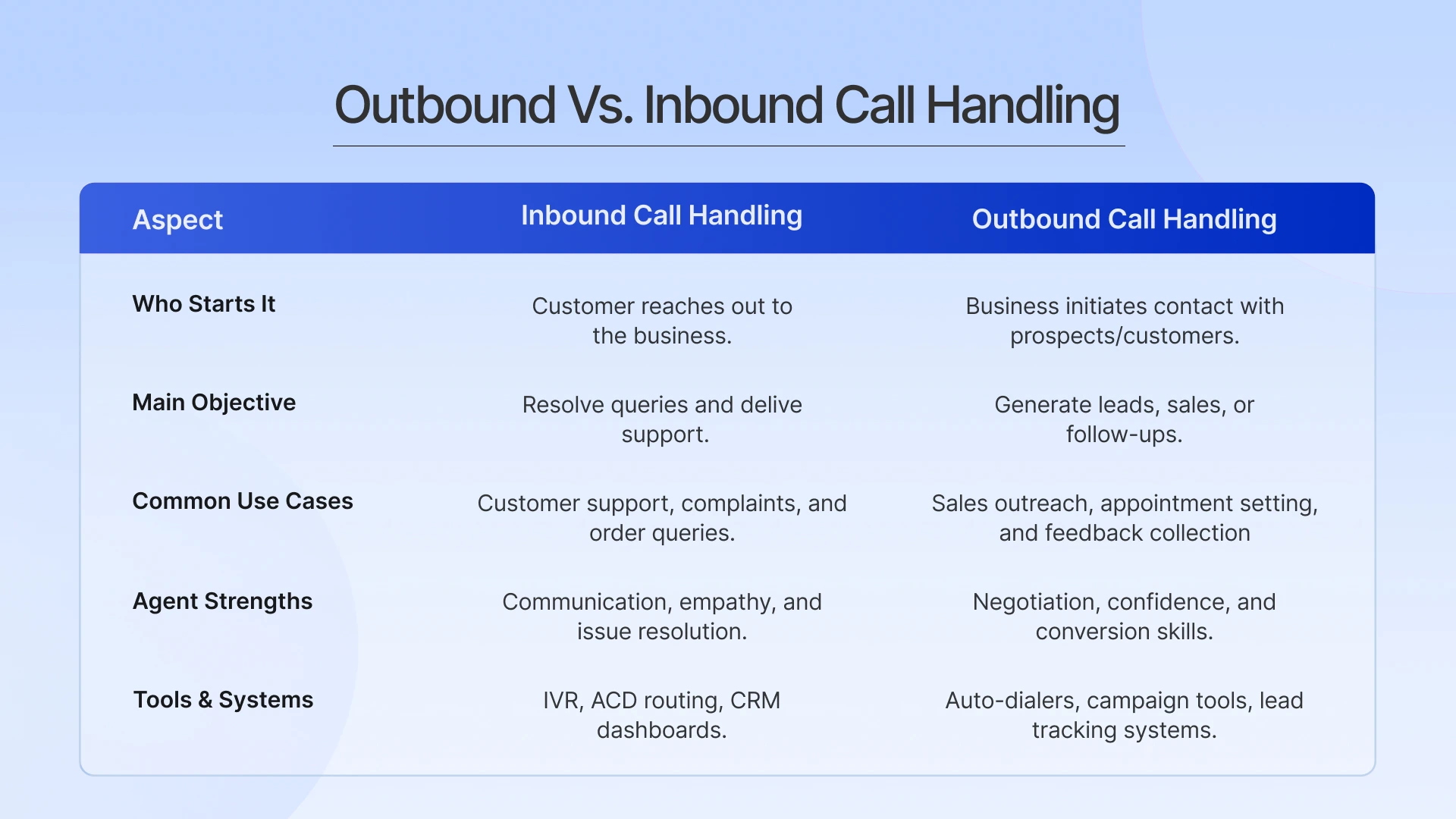
Outbound Vs. Inbound Call Handling
Both inbound and outbound call handling help businesses scale and grow, and are equally important. However, they serve different purposes. Let’s discuss how they differ from each other:
Inbound Call Handling
Inbound calls are initiated by customers seeking support, information, or issue resolution. These calls are handled using IVR systems or conversational AI that understand customer intent and route them to the right agent, reducing wait times. Success is measured through metrics like First Call Resolution (FCR), response time, and customer satisfaction.
Outbound Call Handling
Outbound call handling is initiated by businesses to generate leads, follow up, and drive sales. It focuses on proactive outreach, structured conversations, and the right timing to improve conversions. Modern contact centers combine inbound and outbound strategies with AI and CRM insights to deliver a seamless, data-driven customer experience.
Why Does the Automotive Industry Need Effective Inbound Call Handling?
Most auto buyers are online these days, researching and sending inquiries via calls. Each call you receive at your automotive dealership is a sales opportunity, and quick responses are crucial. Because if you don’t, you might lose on your potential leads. This impacts your customer experience, reduces revenue, and affects the conversion rate. This is why having voice AI call bot for car dealerships to handle incoming calls is crucial. It ensures that no high-intent leads are missed while delivering a seamless, responsive customer experience.
1. Instant Responses
Customers these days expect instant responses, and those who fail to respond quickly reduce the chances of converting interest into actual sales. This is where effective inbound call handling helps automotive businesses to respond immediately or within 30 seconds, meeting customer expectations.
2. 24/7 Connectivity
Most car buyers start their research after business hours and often reach out through calls, but without proper coverage, these inquiries go unanswered at the dealership. This often leads to loss of opportunity. However, outsourcing inbound call services and AI inbound call handling solutions offer 24/7 connectivity to customers.
3. Enhance Cost Efficiency
Hiring and managing large in-house teams can be expensive. AI-driven or outsourced call handling for business reduces operational costs. It helps you efficiently manage high call volumes without additional staffing.
4. Actionable Call Insights
AI phone call handling provides valuable data about customer preferences, intent, and pain points. Advanced call handling systems capture and analyze all this data to help you make smarter decisions for your automotive business.
5. Enhance Customer Experience
Through quick, accurate, and personalized responses, effective customer calls handling solution helps you deliver and enhance customer experience. This fosters trust, boosts customer satisfaction, and drives higher conversion rates.
How Spyne AI Becomes The Best Choice For Automotive Businesses?
Spyne AI offers the most advanced AI-powered solutions for your automotive business that help you save costs, scale without adding headcounts, route calls effectively, and deliver 24/7 connectivity with an enhanced customer experience.
1. Cost Saving
Our AI inbound call overflow solutions automate repetitive tasks such as handling routine calls and inquiries, removing the need for outsourced or in-house call teams. It helps in lowering operational costs while maintaining high-quality customer service.
2. Scaling
Whether it’s peak season, a sudden surge in inquiries, or after-hours inquiries, our AI responds immediately to each call 24/7. It can easily handle high call volumes effortlessly without adding extra staff and ensures you never miss a call again.
3. AI-Driven Insights
Our conversational AI understands and collects customer data, such as their intent, behavior, preferences, and requirements. You can analyze this data and make smarter business decisions for your dealership.
4. Smart Routing
Spyne AI intelligently routes calls to the right agent or department based on their skills, knowledge, and availability. It reduces wait times and call transfers while improving first call resolution.
5. CRM Integration
A seamless integration with your CRM or dealership systems gives agents instant access to customer history, enabling personalized conversations, better service, and enhanced lead conversion.
6. Omnichannel Communication
Manage customer interactions across calls, chats, and other channels from a single platform. This ensures a seamless and consistent experience while improving agent efficiency.
7. Advanced Analytics & Reporting
Get real-time insights into call performance, customer behavior, and agent productivity through dashboards and reports. This helps optimize operations and make data-driven decisions.
8. Secure & Cloud-Based Infrastructure
Leverage a reliable, cloud-based system with high uptime and strong data security. This ensures smooth operations, protects customer information, and allows easy scalability as your business grows.

Conclusion
Having an inbound call-handling system is crucial for businesses, helping to respond to customer inquiries instantly through personalized responses. Further, AI inbound call handling services like Spyne’s help automotive businesses to capture leads 24/7 while delivering an enhanced customer experience.
From reducing wait times to providing personalized, data-driven assistance, Spyne AI empowers businesses to handle inbound phone calls efficiently while improving customer satisfaction and operational performance. See for yourself how effectively Spyne’s AI inbound call handling solutions handle customer calls. Book a demo now!