

Executive SummaryA used vehicle inventory system is the software independent dealers use to track acquisition, pricing, reconditioning, and listing status for every unit on the lot. Cox Automotive reported used vehicle days’ supply at 49 days in January 2026, with units priced under $15,000 moving even faster at 38 days. Dealers running a structured used vehicle inventory system catch pricing drift and stale listings before they cost gross, instead of finding out at the next lot walk. |
Monday morning lot walk. Three units are sitting past their turn date, one is still priced at last week’s number, and nobody flagged it. Independent dealers retailed more than 9.8 million vehicles in 2025, according to NIADA, all competing on the same online marketplaces. A used vehicle inventory system is what keeps a lot from losing gross to information nobody caught in time. This guide covers how these systems work, how to track and list inventory online, what separates a strong system from a weak one, and the tips and strategies that keep inventory moving.
What Is a Used Vehicle Inventory System?
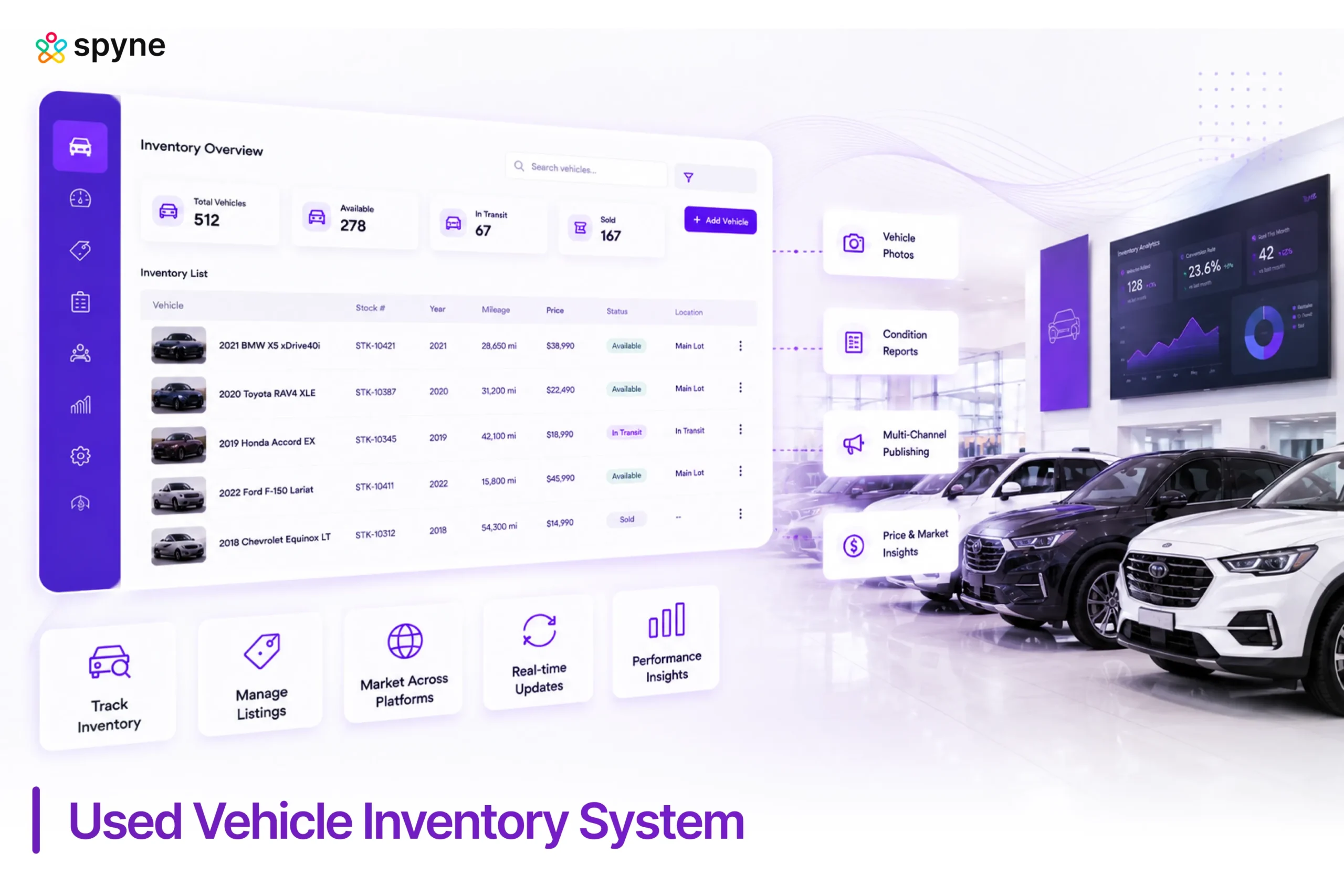
A used vehicle inventory system is software that tracks every used vehicle from acquisition to delivery, covering appraisal, reconditioning, pricing, photos, and listing status. Instead of spreadsheets, sticky notes, and disconnected marketplace logins, dealers get one source of truth for every vehicle on the lot.
For an independent dealer, this usually means one platform doing the work of several: acquisition logging, reconditioning tracking, pricing guidance, merchandising, and syndication. The right fit depends on lot size, whether the dealer does buy-here-pay-here business, and how many marketplaces the store lists on.
Every vehicle in a used vehicle inventory system sits in one of five statuses: Available, Reserved, Sold, In Transit, or Auction Purchase (bought at auction but not yet on the lot). Knowing which status a unit holds at any moment, and where it physically sits on the lot, is what separates a working system from a spreadsheet nobody updates. Many systems now tie each VIN to a location or GPS/QR tag so staff can find a vehicle in seconds instead of walking the row.
Related terms: days’ supply (how long current inventory would last at the current sales pace), turn rate (how often inventory sells and gets replaced), time-to-line (how long a vehicle takes to become front-line ready), and floor plan (the financing dealers use to stock inventory before it sells).

How a Used Vehicle Inventory System Works, From Acquisition to Sale
A used vehicle inventory system follows a vehicle through five stages, and each is where dealers most often lose gross if the system isn’t doing its job.
- Acquisition and VIN decoding: The system pulls vehicle history, trim, and options as soon as a VIN is scanned, so appraisal isn’t guesswork.
- Reconditioning tracking: Every vehicle gets a status (needs recon, in recon, front-line ready), so staff knows what’s sellable today.
- Pricing: Live market data shows what similar vehicles are actually selling for nearby, not a stale book value.
- Merchandising: Photos, videos, and descriptions get built for each VDP, since incomplete listings get skipped before a call comes in.
- Listing and syndication: The finished listing pushes to the website and marketplaces at once, instead of manual entry on each one.
Skipping or slowing any stage is where a used vehicle inventory system stops paying for itself. A vehicle stuck in recon an extra week, or priced against a stale comp set, sits longer and drags down turn rate lot-wide.
How to Track and List Used Vehicle Inventory Online
Tracking and listing used vehicle inventory online comes down to five habits that keep every vehicle visible, priced right, and easy to find.
- Log every vehicle the same day it arrives: VIN, mileage, and acquisition cost should enter the system within hours, not at week’s end.
- Standardize photo and video requirements: Set a minimum photo count and required angles before a listing goes live.
- Push listings to every marketplace at once: Syndication to sites like Autotrader, Cars.com, CarGurus, Facebook Marketplace, and Google’s Vehicle Listings program should happen from one system, not one login at a time.
- Set automatic price-check intervals: Review pricing every 3 to 5 days against live market comps instead of waiting for a vehicle to age out.
- Flag stale listings automatically: Any vehicle past 30 days without a price adjustment or a lead should trigger a review.
Cox Automotive’s 2025 Car Buyer Journey Study, published January 2026, found that 75% of buyers visited third-party marketplace sites while shopping, compared with 59% who visited a dealership’s own website. That gap is why listing inventory online cannot be a once-a-week task. If a used vehicle inventory system isn’t pushing accurate listings to those sites in near real time, the dealership is invisible to shoppers for part of the buying journey.
What Makes the Best Used Vehicle Inventory System for Independent Dealers
The strongest fit for independent dealers is built around three things: fast listing turnaround, accurate pricing data, and merchandising that doesn’t require a dedicated photography team. Independent dealers rarely have a franchise-size back office, so the system has to do more of the work automatically.
Decision framework: what to check before choosing a system
- Speed to listing: Hours from acquisition to a live, complete listing? Over 24 to 48 hours is costing visibility.
- Merchandising quality: Clean photos, car virtual tours, or AI-written descriptions, or does that fall on staff?
- Pricing intelligence: Live regional market data, or a static guidebook value?
- Syndication reach: Every marketplace the dealer actually uses, without manual re-entry?
- Reconditioning visibility: Recon status visible in real time, or stuck in a separate spreadsheet?
- Fit for lot size: A five-vehicle BHPH lot and a 150-unit superstore need very different automation.
Common mistakes independent dealers make when choosing a system
- Picking a system built for franchise-scale operations, then paying for unused features.
- Choosing on price alone and ending up with weak merchandising that hurts VDP performance.
- Ignoring DMS integration, which creates duplicate data entry instead of saving time.
Expert tip: Ask any vendor to show, live, how long it takes from VIN scan to a published listing. That single test reveals more than a feature checklist.
Used Vehicle Inventory System Tips and Strategies for Independent Dealers
These used vehicle inventory system tips come directly from how turn rate and gross get protected on independent lots.
Best practices:
- Review every vehicle’s price and listing status weekly, not just when a deal falls through.
- Keep photo and description standards identical across every listing for a consistent, trustworthy presentation.
- Track time-to-line as a core metric. A vehicle taking 10 days to reach a live listing loses shopper attention it rarely recovers.
- Use acquisition data to spot which vehicle types turn fastest, then adjust buying at the next auction or trade-in.
Used vehicle inventory system strategies that compound over time:
- Set a firm reconditioning deadline for every vehicle and track exceptions weekly.
- Automate price adjustments at set day intervals instead of relying on staff to remember.
- Centralize marketplace syndication so no listing is missing from a channel shoppers use.
- Review inventory health reports monthly to catch aging patterns early.
A dealer applying these used vehicle inventory system strategies consistently sees the biggest gains in the first 90 days, since most losses come from small delays that compound across dozens of units at once.
Spyne Inventory Management: A Used Vehicle Inventory System Built for Independent Dealers
Spyne Inventory Management is a used vehicle inventory system built for independent dealers who need to track, list, and manage inventory online without a large back office. It covers the stages outlined above, from VIN scan through syndication, and pairs with an existing DMS like DealerCenter or Frazer rather than replacing it.
1. AI-Powered Photo and Video Merchandising
Spyne generates studio-quality photos, car virtual tours, and video tours for every vehicle automatically, cutting the time between acquisition and a complete, clickable listing. Dealers no longer need a dedicated photography setup to produce consistent images across the lot. A vehicle that once waited two days for a photographer can go live the same afternoon.
2. Inventory Health Monitoring
Every vehicle gets a health score based on age, pricing competitiveness, and listing quality, flagging aging units before they become a 60-day problem. Sales managers can scan a health dashboard each morning instead of walking the lot to spot what’s stuck. This turns lot management from reactive to proactive.
3. Automated Listing Syndication
Completed listings push to the dealer’s website and connected marketplaces, including Google’s Vehicle Listings program, from a single workflow. This removes manual re-entry across channels and keeps every listing accurate the moment a price or status changes. Independent dealers running lean staff save hours of listing work each week.
4. Reconditioning Workflow Tracking
Recon status updates in real time, so sales staff always know which units are actually front-line ready. A vehicle moves from needs-recon to in-recon to ready without anyone checking a separate spreadsheet. This keeps sales and service aligned on what can legitimately be sold today.
5. Pricing and Market Comp Visibility
Pricing guidance reflects live regional market data, helping dealers avoid the stale-book-value trap that slows turn rate. Instead of pricing off a three-week-old guide, with Spyne, dealers see what comparable vehicles are actually selling for nearby. That visibility protects gross on every unit priced through the system.

Conclusion
A used vehicle inventory system is the difference between finding a pricing problem on a Monday lot walk and never finding it until the vehicle has aged 60 days. Independent dealers competing for a share of the 9.8 million vehicles NIADA reported sold in 2025 do not have room for inventory sitting quietly, mispriced, or missing from a marketplace shoppers actually use. The dealers who treat their used vehicle inventory system as a daily operating habit, not a once-a-quarter check-in, are the ones protecting turn rate and gross on every unit that comes onto the lot.