Meet VINI AI at NADA Show 2026

, ,
How Automotive BDC Handling Leads Works & Boost Your Car Sales
Automotive BDC Handling Leads

How Automotive BDC Handling Leads Works & Boost Your Car Sales

Sakshi Sharma
April 20, 2026
August 20, 2025
5 Min Read
5 Min Read
Automotive BDC Handling Leads

Managing incoming leads is essential for dealerships these days. The modern automotive businesses are now relying on the Business Development Center (BDC) to manage their leads in an effective manner. It helps dealerships to handle inbound lead inquiries, qualify leads, manage customer interactions, and enhance appointment scheduling processes. The automotive BDC handling leads captures and responds to leads in various forms, like calls, messages, or website forms. BDC ensures no lead is left unattended and every potential customer receives timely and professional responses.

This blog explains the process of lead handling, different forms of lead, and how BDC enhances the customer engagement strategies of your dealership.


How Does Automotive BDC Handling Leads Work?

The automotive BDC handling leads includes managing incoming calls, qualifying potential leads, and scheduling sales or service appointments for a dealership. They follow automotive BDC tips to maintain healthy customer relationships and send them personalized follow-ups.

1. Answer Incoming Inquiries

A BDC lead can come in various forms, such as incoming calls, emails, or chats. The best automotive BDC handling leads respond to the incoming inquiries by personalizing replies according to their needs and behaviour. They are provided with automotive BDC training to ensure all the customers’ issues are resolved effectively, enhancing their satisfaction levels.

2. Manage Customer Data

The agents work on the incoming leads by using automotive AI lead generation software, qualify them, and manage the customer data for running smooth operations. They keep the data updated in the CRM systems of the dealerships, track customer interactions to gain insights into their behaviour and purchasing habits. This helps them identify and improve their customer engagement strategies.

3. Instant Scheduling of Appointments

The BDC at car dealership handles the incoming leads and ensures the appointments are scheduled for their service or sales inquiries conveniently. This helps dealers convert each BDC lead into a profitable opportunity, increasing the dealership’s revenue model and growth.

4. Initiate Outbound Practices

One of the automotive BDC best practices is to initiate outbound interactions. The BDC agents reach out to customers by sending follow-ups, implementing automated outbound calling, and conducting campaigns to target the right segment of the audience.
 

How Automotive BDC Handling Leads Drives Dealership Growth


How many Leads Does a Dealership Require?

An automotive business runs if there is a smooth flow of incoming BDC leads. Here, the question arises: how many leads should a dealership require for growth and increased productivity? The number of leads for a BDC at car dealership depends on various automotive BDC metrics, including the sales goals, appointment conversion rates, agents’ productivity, lead volumes, etc. The auto dealers aim to have 25-40% of sales from the leads coming to their dealerships.

With this intention, they focus on generating more and more leads by using the automotive AI lead generation software, qualifying them, and prioritizing them based on their intent levels. This enhances the process of automotive BDC handling leads and helps sales reps to focus on the high-intent prospects, convincing them to achieve faster deal closure. This method of lead prioritization among automotive BDC best practices helps dealerships to increase their conversion rates, hence driving growth and revenue.


How many Leads are Required to Justify Automotive BDC Handling Leads?

There is no fixed number for dealers to consider investing in an AI BDC software for car dealerships. The volume of leads for BDC agents to handle depends on several factors, such as the capability of BDC representatives to handle incoming leads, dealership workflow processes, costs, and system integrations. Free automotive BDC handling leads could measure around 175 leads per month on average, while experienced BDC reps could take this number to 200-225 per month.

Dealerships must also consider between outsourced BDC vs in house BDC for handling the volume of leads generated. The other factors impacting the lead volume could be pricing, inventory management of your dealership, and the sales operations. Analysing the bottlenecks in your workflow helps to increase operational efficiency and enables you to identify the ideal lead volume to justify BDC for a dealership.


What Counts as a Lead in Dealership BDC?

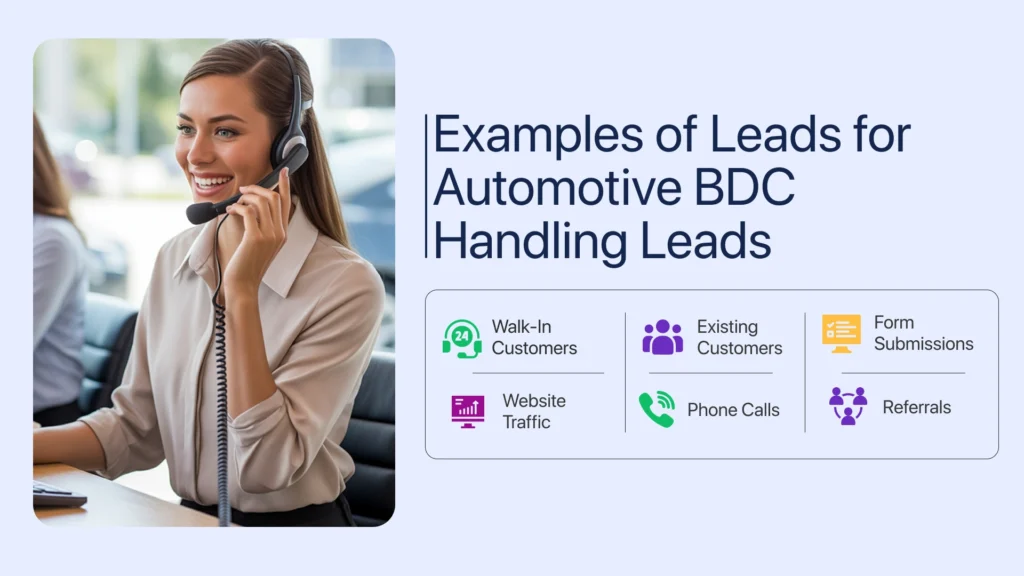
The automotive leads are those customers at a dealership who have a strong interest in purchasing a vehicle. The BDC leads can come from various sources, including online engagement and offline interactions. Automotive BDC handling leads are responsible for nurturing leads, delivering them quick and personalized responses, and converting them into potential buyers. Let us see a few examples of leads that a BDC at car dealership considers.

  • Walk-in Showroom Customers
  • Existing Customers
  • Inquiry Phone Calls
  • Chats Inquiries
  • Text Messages
  • Form Submission Leads
  • Referral Leads from Existing Satisfied Customers
  • Leads from Campaigns and Paid Ads
  • Leads from Website Traffic
  • Leads Generated from Contests or Giveaways by Dealerships
 

Examples of Leads for Automotive BDC Handling Leads


How Does Automotive BDC Improve Customer Engagement?

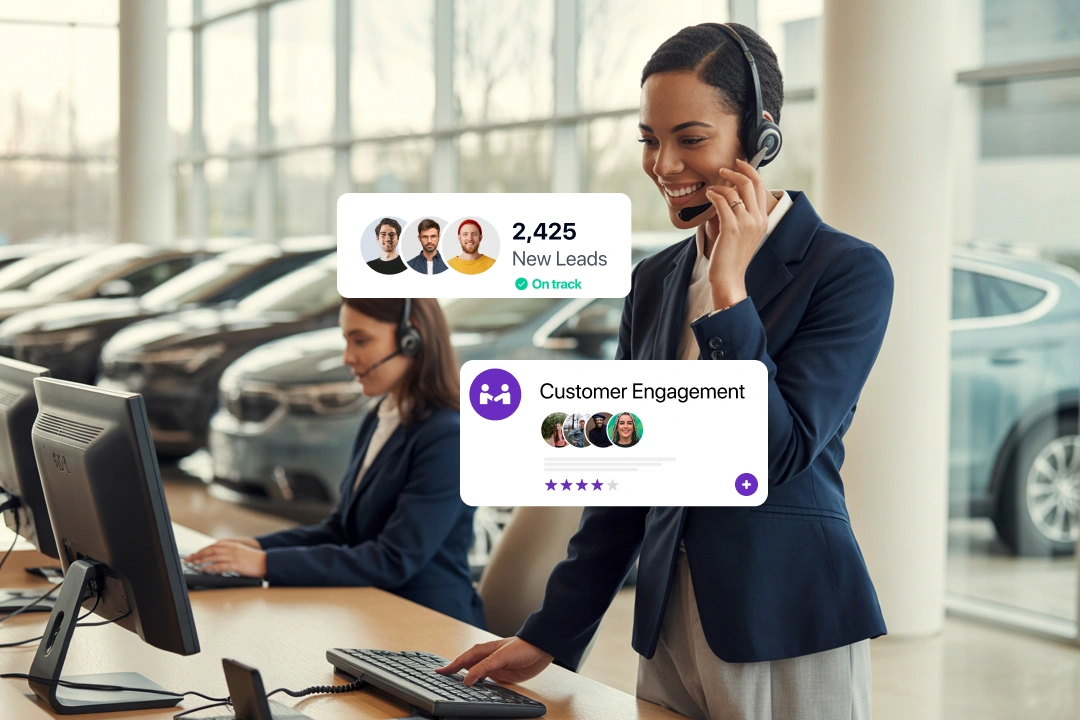
A Business Development Center (BDC) in the automotive industry is crucial for customer engagement processes. It manages lead inquiries, inbound and outbound calls, and handles appointments. The automotive BDC companies act as a bridge between the customer and your dealership, helping to improve the customer experience and convert inquiry leads into profitable deals. Effective communication and consistent customer engagement increase the chances of appointment setup by about 60%.

A comprehensive analysis of the dealership processes provides insights into what is working and what is not. These actionable insights help identify bottlenecks and make timely improvements to optimize the strategies. This enhances the customer engagement processes and increases their experience.
 

Transform Customer Engagement with Spyne’s Automotive BDC Handling Leads


Why Should You Choose Spyne for Automotive BDC Handling Leads?

Spyne provides AI capabilities to automate your dealership workflows. Our Retail AI helps in the process of automotive BDC handling leads. We provide round-the-clock support with personalized and quick responses to enhance customer experience, hence driving efficiency and growth to your automotive business.

1. 24/7 Leads Support

Spyne provides an always-on AI call bot for car dealerships to attend late-night inquiries or weekend leads. We ensure none of your leads fall through the cracks and your BDC managers don’t lose out on high-intent opportunities, day or night.

2. Engagement Across Multiple Channels

No matter where your leads come from, our AI can capture them and support omnichannel communication. We ensure all your BDC leads are attended to properly with quick and accurate responses.

3. Seamless Integrations

We save you from switching between tools with the help of our automotive CRM, which seamlessly integrates with your dealership’s existing workflows and systems. This way, you can get a clear view of your sales pipeline, all at a single dashboard.

4. Instant Follow-ups and Appointment Scheduling

The BDC at car dealership can benefit from our automated lead follow up system for car dealerships. This automatically sends follow-ups to customers based on their behavior, whether it’s a test drive reminder or an appointment setup.

5. Scalable for All Sizes of Dealerships

Whether you are a small dealership or a larger one, Spyne evolves with you. Our AI platform can store and manage expanded customer data, handle high-volume calls, and support dealership operations without hiring additional staff.

6. Personalized Conversations

Our conversational AI helps you deliver personalized responses to customers in a natural and human-like tone. This doesn’t sound robotic at all, and your customers won’t even realise that they are talking to an AI.

7. Prioritization of Hot Leads

Spyne offers smart AI lead scoring for car dealerships to identify buyers who are most interested in buying a product or service. This ensures your team does not waste time on the wrong prospects and focuses on hot leads for faster conversions.


Conclusion

Capturing and managing leads for automotive dealerships is crucial. BDC lead is something that auto dealers can not miss out on. They can be profitable opportunities for them, driving productivity and growth. Automotive BDC handling leads are responsible for providing agile support to customers and addressing their issues effectively. With the automotive AI lead generation software, BDC agents ensure no call is missed, customers are engaged timely manner, and schedule service appointments.

Spyne AI helps dealerships stay ahead of the competition with the use of artificial intelligence and automation features. This ensures smooth workflow management in the dealership and enhanced customer experience. Book a free demo with us today to get your BDC processes elevated!

SHARE THIS POST

CONTENT

THE SPYNE STORY

Built to Handle Massive Scale

5M+
5M+
Read More
Images processed every month​
75+
75+
Read More
Computer vision models deployed
10+
10+
Read More
Fortune 500 clients
100+
100+
Read More
Enterprise customers and partners
Previous
Next
FAQs

Got questions? We've got answers.

Find answers to common questions about Spyne and its capabilities.
  • How does a BDC handle leads at a car dealership?

    The lead handling process follows a structured sequence. When a lead enters the system, whether from an inbound call, website form, chat inquiry, third-party marketplace, or text message, the BDC agent responds within minutes with a personalized message. The agent then qualifies the lead by identifying the customer’s vehicle interest, purchase timeline, trade-in situation, and preferred contact method. Qualified leads are scored by intent level and either booked directly into an appointment or placed into a follow-up sequence. Every interaction is logged in the CRM with notes, outcome tags, and next-step actions. The BDC continues working the lead through multiple follow-up touches until an appointment is set, the lead converts, or the contact is exhausted. Spyne’s Vini AI automates this entire workflow, responding to every inquiry in under 60 seconds, qualifying through natural conversation, booking appointments directly into the scheduler, and executing persistent follow-up sequences without manual intervention.

  • How many leads can a single BDC representative handle per month?

    The industry benchmark is 150 to 200 leads per month for a trained BDC agent handling internet leads, with experienced reps reaching 200 to 225. For phone-heavy operations, a service BDC agent typically manages around 70 inbound calls and 160 outbound calls per day, including appointment reminders and follow-ups. When representatives consistently exceed these volumes, response times slow, follow-up quality drops, and appointment set rates decline. The key indicator is not how many leads are assigned but how quickly and consistently each one is worked. If your average first-response time is stretching past five minutes or follow-ups are stopping after one attempt, the team is over capacity. Spyne’s Vini AI removes this capacity ceiling entirely because it handles unlimited simultaneous conversations across calls, text, and chat without degradation in response speed or follow-up consistency, regardless of lead volume.

  • What is the ideal lead response time for a BDC?

    Industry data consistently shows that responding within five minutes of a lead submission dramatically increases the probability of making contact and setting an appointment. Dealerships that achieve sub-five-minute response times see three to four times higher conversion rates compared to those averaging 15 minutes or more. Despite this, the average dealership still takes 15 to 47 minutes to make first contact. Every minute of delay reduces the likelihood of conversion because buyers actively research multiple dealerships simultaneously and move forward with whoever responds first. Spyne’s Vini AI responds to 95% of inbound inquiries in under 60 seconds, whether the lead arrives at 2 PM on a Tuesday or 11 PM on a Saturday. This speed advantage is the single most impactful variable in BDC lead handling because it determines whether the conversation starts at all.

  • How should a BDC agent qualify an automotive lead?

    Effective lead qualification determines whether the contact is a genuine buyer, a service prospect, or an early-stage researcher, and routes them accordingly. The qualification process should capture the customer’s vehicle of interest or service need, their purchase or visit timeline, whether they have a trade-in, their preferred communication channel, and their availability for an appointment. Strong BDC agents use open-ended questions rather than scripted interrogations: asking what brought the customer to the dealership’s website or what they are looking for achieves better engagement than running through a rigid checklist. The goal is to identify intent level, not just collect data points. Spyne’s Vini AI conducts this qualification through natural conversation, extracting the same information a skilled agent would while simultaneously scoring the lead based on behavioral signals and routing high-intent prospects to the sales team with full context.

  • What is a good appointment set rate for a dealership BDC?

    Top-performing BDC operations achieve appointment set rates of 20% to 30% on internet leads, meaning that for every 100 leads worked, 20 to 30 result in a scheduled showroom or service visit. The national average is lower, typically in the 12% to 18% range. Phone leads convert at higher rates, with some studies showing 50% or higher appointment ratios for inbound calls that are answered by a trained agent. The gap between average and top performers almost always comes down to response speed, follow-up persistence, and conversation quality rather than lead source quality. Dealerships that blame low set rates on “bad leads” often find that the same leads convert at higher rates once handled by a disciplined BDC process. Spyne’s Vini AI contributes to higher set rates by eliminating the two biggest conversion killers: slow initial response and inconsistent follow-up execution.

  • How many follow-up attempts should a BDC make before stopping?

    The most effective BDC operations use a multi-touch, multi-channel follow-up cadence spanning 7 to 14 days for internet leads, with some extending to 30 or even 90 days for long-cycle buyers. A typical high-performing sequence includes six to eight contact attempts across phone, email, and text within the first five days, followed by less frequent but continued touches over the next two to four weeks. Industry data shows that most dealerships give up after one or two attempts, which is far too few. The majority of leads that eventually convert do so after the third or fourth contact attempt. Persistence matters, but so does relevance: follow-up messages should reference the specific vehicle or service the customer inquired about, not generic “just checking in” language. Spyne’s Vini AI executes these follow-up sequences automatically and persistently, tailoring each message to the customer’s original inquiry and adjusting timing based on engagement signals.

  • What types of leads does a dealership's BDC handle?

    A dealership BDC handles a wide range of lead types across both sales and service. On the sales side, this includes internet form submissions from the dealership website and third-party marketplaces like Autotrader or Cars.com, inbound phone calls from ad campaigns, chat and text inquiries, walk-in follow-ups for unsold showroom traffic, lease-end and equity-mining re-engagement, and referral leads. On the service side, BDC leads include inbound appointment requests, recall outreach, declined-service follow-up, maintenance reminder campaigns, and CSI recovery contacts. Each lead type requires a slightly different handling approach in terms of urgency, talk track, and conversion goal. Spyne’s Vini AI is trained to recognize the intent behind each inquiry type, whether it is a sales question about a specific vehicle or a service request for an oil change, and handles the conversation accordingly without requiring separate scripts or agent specialization.

  • How does AI improve the BDC lead handling process?

    AI enhances every stage of the lead handling workflow. At the intake stage, AI responds instantly to every lead across all channels without capacity constraints. During qualification, AI asks the right questions through natural conversation and scores leads based on intent signals. For routing, AI directs high-intent leads to the best available salesperson with full conversation context. In follow-up, AI executes persistent multi-touch sequences that continue until the lead converts or is exhausted, without relying on a human agent to remember to make the next call. AI also surfaces insights from call and conversation data, identifying which talk tracks, response times, and follow-up intervals produce the highest conversion rates. Spyne’s Vini AI performs all of these functions within a single platform, replacing the patchwork of separate tools (chatbot, phone system, email sequencer, lead scoring software) that most dealerships currently juggle.

  • What happens when BDC leads are not handled properly?

    The cost of poor lead handling is measurable and significant. When leads wait more than 10 minutes for a first response, contact rates drop sharply, often to single digits. When follow-up stops after one attempt, the majority of eventual buyers are never re-engaged. When CRM records are incomplete or call outcomes are not logged, managers lose visibility into pipeline health and cannot coach effectively. Industry estimates suggest that 35% to 45% of inbound dealership calls never reach a salesperson, and 65% of customers who do not get through on the first try do not call back. At an average gross profit of $1,500 to $3,500 per used vehicle sale, even a small percentage of unworked leads translates to tens of thousands of dollars in monthly lost revenue. Spyne’s Vini AI prevents these failures structurally by ensuring every lead gets an immediate response, every conversation is logged with full context, and every follow-up sequence runs to completion.

  • How should leads be handed off between the BDC and the sales floor?

    The handoff is where many dealerships lose momentum. A lead that has been carefully qualified and scheduled by the BDC can fall apart if the salesperson who receives it has no context on what was discussed or what the customer expects. The best practice is to pass a complete lead brief to the assigned salesperson that includes the customer’s name, vehicle of interest, timeline, trade-in details, any pricing discussions, and the specific appointment date and time. The salesperson should receive this before the customer arrives, not at the moment they walk in. Confirmation communications, such as a text reminder from the BDC the day before the appointment, should reinforce that the customer is expected and valued. Spyne’s Vini AI builds this handoff into the workflow automatically. Every appointment booked by Vini includes a full conversation summary pushed to the CRM record, so the salesperson walks into the interaction with complete context on the customer’s needs and expectations.

Related Articles

THE SPYNE STORY

Built to Handle Massive Scale

5M+

Images processed every month

75+

Computer vision models deployed

10+

Fortune 500 clients

100+

Enterprise customers and partners

Recent Blogs

Ready to Revolutionize
Your Workflow?

Join thousands of forward-thinking companies already using Spyne to dominate their industries.

Bring the studio
to your cars.

Let's get Started

Just drop in your details to book a Demo