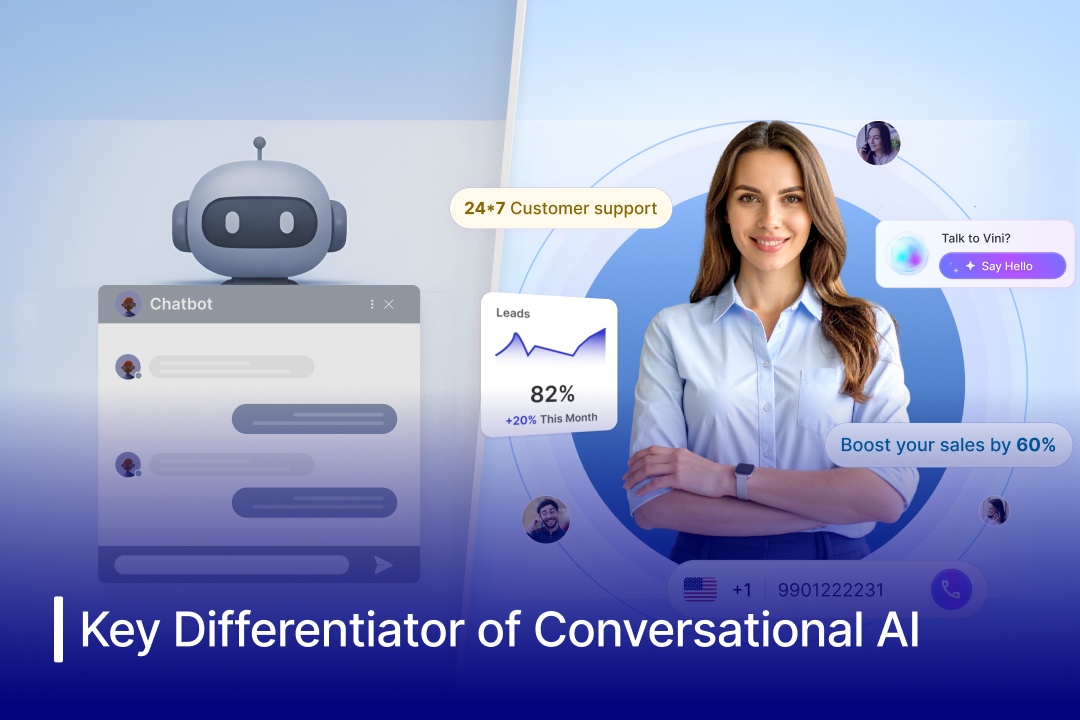

Conversational AI and traditional chatbots may look similar since both serve the same purpose of delivering instant responses to customer queries. But the key differentiator of conversational AI lies in how they interact. Generic chatbots are rule-based and rely on preset scripts, which limit their ability to handle complex, emotional, or intent-driven conversations. When buyer questions go beyond predefined flows, these bots often deliver generic or irrelevant replies.
Conversational AI works differently. It understands buyer intent, context, and behavior using NLP and machine learning, and is industry-specific. Instead of fixed responses, it delivers personalized, adaptive conversations that feel more human, making it far more effective for engaging buyers and driving meaningful interactions.
What is Conversational AI?
Conversational AI is an artificial intelligence software that uses natural language processing (NLP), natural language understanding (NLU), and machine learning (ML) to understand, process, and respond to human queries. It delivers a human-like interaction to buyers through texts and voice while answering their questions.
It automates daily tasks for the automotive businesses, such as capturing leads, qualifying leads, and routing leads to sales representatives. Further, it bridges the gap between human language and machine understanding by providing round-the-clock, personalized experiences.
What Sets Conversational AI Apart from Chatbots
The difference between AI chatbots and traditional chatbots with conversational AI is how they interact with customers. Chatbots are the outdated versions of artificial intelligence, because they are rule-based bots, and they depend on fixed scripts while delivering generic answers.
However, conversational AI uses technologies like NLP, ML, and NLU to understand what users are asking for. Moreover, the conversation AI comes with multilingual features, allowing dealerships across the globe integrate it into their dealership system. This helps AI-powered virtual assistants make human-like conversations while delivering smooth, personalized interactions.
Conversational AI can understand customers’ intent, behavior, needs, and preferences, which makes it the best AI bot, as conversational AI is the brain power of all the chatbots.

How Conversational AI Understands the Intent and Context of Conversations with Customers?
Car-buying conversations are never linear. Buyers often jump from one topic to another, like pricing, features, financing, and more. Conversational AI is specifically built to handle this complexity by understanding both buyer intent and the conversation context in real-time. Here’s how it does that:
1. Natural Language Processing (NLP & NLU): It breaks down buyer language and extracts key details like model names, budget, and location. It understands what buyers are looking for, allowing it to respond naturally to automotive-specific queries.
2. Dialogue Management: This acts as the brain of the conversation. It helps conversational AI decide what to say next, whether to answer a question, ask a follow-up, or suggest a test drive. The responses it sends are based on where the buyer is in their journey.
3. Machine Learning for Smarter Conversations: The AI continuously learns from past interactions and improves intent detection and response accuracy. This helps conversational AI respond with personalized responses over time.
4. CRM & Inventory Integration: By connecting with dealership CRMs and inventory systems, conversational AI uses real-time data to provide accurate pricing, availability, and personalized recommendations.
How Conversational AI is the Most Suitable Bot for Human-Centric & Industry-Specific?
What is a key differentiator of conversational AI for car dealerships that makes it better for buyer engagement? That is its human-centric and industry-specific module. These AI-powered chatbots are specifically designed for car dealerships to deliver a human-like interaction for car buyers.
1. Natural & Conversational Interactions: Every interaction it makes is natural and conversational. Conversational AI understands buyers’ intent, context ad sentiment through NLP.
2. Empathy & Tone: The conversational AI can be trained according to your dealership’s tone. This ensures maintaining a consistent conversation and tone, matching your brand tone across all platforms.
3. Contextual Handoff: When car buyers are nurtured and are ready to take action, conversational AI routes them to your sales representatives with full context, including vehicle interest, budget range, previous messages, and intent. This helps your sales team to effectively close deals without repeating questions.
4. Domain Knowledge: Unlike generic chatbots, automotive conversational AI is specifically trained for the automotive industry. It understands vehicle trims, inventory status, financing options, service scheduling, warranties, and complex dealership workflows.
5. Smooth Integration: The automotive conversational AI is seamlessly integrated with your automotive business CRMs, DMs, inventory management systems, and lead tools.
6. Versatile Applications: These conversational AIs come with multiple personas. They can act as your sales assistant, service advisor, or lead qualification bot. It can handle the entire car buyer journey from first inquiry to post-sale support.
How to Pick the Right Conversational AI Solution?
When it comes to picking the right conversational AI for your automotive business, there are a few things you should look out for:
1. Define Your Automotive Business Goals: The first thing you should look for is what your automotive business goals are and what you want to achieve. Want a fast response, book more test drives, reduce missed calls, or improve service appointment scheduling? Having clear goals will help you determine whether you need a sales-focused AI, a service assistant, or an end-to-end dealership solution.
2. Evaluate Platform Capabilities: Look for strong NLP that understands automotive-specific questions or inquiries, such as pricing, availability, financing, and trade-ins. The conversational AI you choose should support omnichannel engagement, including website, WhatsApp, SMS, and social media.
3. Assess Technical & Operational Fit: It should be easily integrated with your existing CRM, DMS, inventory, and lead management tools. Also, ensure that it can scale during high-traffic periods, provide analytics on buyer intent, and offer smooth human handoff to sales or service teams when needed.
4. Compare Prices from Different Vendors: Evaluate the costs of multiple automotive conversational AI from various vendors. Not only this, but you should also look for what’s included, like the number of conversations, integrations, customization, analytics, and support.
5. Final Decision: Before coming to the final decision, ask for a demo or a trial. This will help you clearly understand which conversational AI can be best suited for your automotive business goals. Choose the vendor that understands dealership workflows, offers reliable support, and can evolve with your business as buyer expectations change.
How does Conversational AI impact the growth of Automotive Businesses?
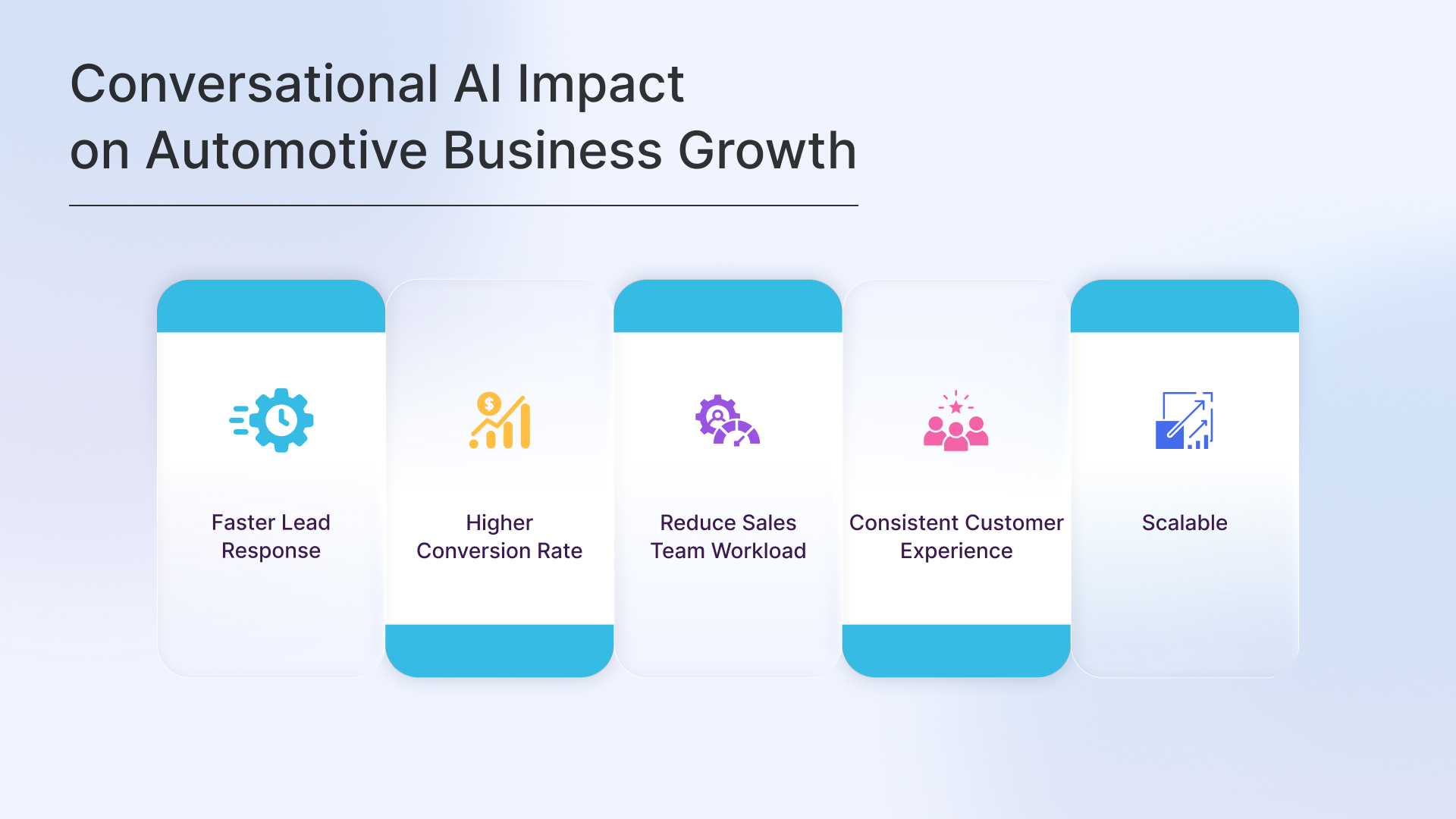
Conversational AI is not just an automotive answering service. It directly impacts how dealerships operate and grow. From instant replies to smoother sales process, it turns everyday interactions into measurable business growth. Here’s how conversational AI delivers real-world impact:
1. Faster Lead Response: Conversational AI for used car dealerships responds instantly to every inquiry that comes, even outside automotive business hours. It keeps car buyers engaged from the very first point they arrive at your website or send an inquiry, ensuring that no opportunity slips away.
2. Higher Conversion Rates: With fast and relevant responses, it keeps buyers interested. The AI-powered virtual assistants guide buyers throughout their car-buying journey, reducing the drop-offs along the way.
3. Reduce Workload for Sales Teams: It automates the day-to-day activities. It captures leads, follows up, qualifies leads, and organizes high-intent leads automatically, just like an automotive BDC, so that your salespeople can focus on other important tasks like closing deals faster instead of following up on cold leads.
4. Consistent Customer Experience: Conversational AI delivers accurate and on-brand responses across multiple channels every time. This consistency helps you build trust through a reliable customer experience across all channels.
5. Scalable Dealership Operations: As the inquiry volume grows, conversational AI scales them effortlessly. It can handle multiple conversations at once without slowing down. This helps your dealership grow without compromising on potential leads.
How Spyne’s Vini is the Best Conversational AI for Automotive Businesses?
At Spyne, our conversational AI “Vini” is especially built for auto dealers, helping them grow through smarter and more meaningful conversations. Our Vini understands buyer intent and then provides a personalized response accordingly. Here’s why Spyne’s conversational AI stands out from others in the automotive industry:
1. Built for Auto Dealers: Our conversational AI “Vini” is built and trained for auto dealers. It understands car models, variants, features, parts, pricing logic, and common buyer questions. This makes it easy for our AI-powered virtual assistant to engage with buyers effectively.
2. Boost Conversion Rate: With instant and relevant responses, it builds trust among the buyers, making it one of the best automotive sales solutions for auto dealers. It nurtures the casual buyers, while high-intent buyers are directly guided to actions, either booking test drives or connecting with a sales advisor.
3. Auto-Lead Management: Spyne’s conversational AI automates lead management. From the first inquiry to follow-ups, it ensures no lead goes unnoticed. It captures, qualifies, and routes leads to sales representatives effectively.
4. Human-Like Interactions: Our conversational AI “Vini” interacts with customers just like a real salesperson does. It analyzes buyers’ intent and needs, then responds with personalized messages, making every interaction natural and conversational.
5. Drive Real Growth: Vini is designed to drive the real growth for your auto dealership business. It helps you boost customer engagement and drive a higher conversion rate through human-like interactions with buyers.
6. Personalization: Our Vini comes with multiple personalized personas for your dealerships. It could be a finance advisor, sales assistant, or an AI receptionist for car dealerships based on the buyer’s inquiry.
7. Multi-Lingual: Spyne’s conversational AI “Vini” supports multiple languages, allowing dealerships to communicate with buyers in their preferred language. This helps you reach a wider audience, improve understanding, and deliver a more inclusive and comfortable customer experience.

Conclusion
Conversational AI is indeed better than traditional chatbots. It represents how dealerships interact with modern buyers. The conversational AI call bot for dealerships aims to meet the expectations of modern buyers by providing instant and engaging responses. Unlike traditional chatbots that rely on fixed scripts, conversational AI understands buyer intent, behavior, and needs and delivers personalized replies that feel human and relevant.
However, when you come to choose the best conversational automotive chat software for your dealership, Spyne’s Vini stands out. It’s not just a conversational chatbot for dealerships. It automates lead management, enhances buyer engagement, and boosts conversion rates, driving real results for dealerships. Turn every interest into a conversation with Spyne’s Vini. Book a demo now!