

Used car buyers today expect quick, accurate responses, whether they’re browsing inventory late at night or comparing options across multiple dealerships. The challenge isn’t just generating leads anymore, but responding to them instantly and consistently enough to keep them engaged. This is where conversational AI for used car dealerships is making a real impact and is quickly becoming essential.
By automating conversations across chat, SMS, and voice, these systems help dealerships capture, qualify, and follow up with every lead without delays. In this guide, we’ll break down how conversational AI works, the key benefits and features to look for, and the best conversational AI for dealerships that are improving conversions and streamlining operations.
What is Conversational AI for Used Car Dealerships?
Conversational AI for used car dealerships is a 24/7 AI-powered system that uses natural language processing (NLP) to handle customer conversations across chat, SMS, and voice. It helps dealerships respond instantly, qualify leads, answer inventory-related questions, schedule test drives, and follow up automatically without manual effort.
Instead of relying solely on sales teams, conversational AI platforms for dealerships act as a continuous digital assistant, capturing and nurturing every lead. By automating conversations and integrating with dealership workflows, these systems improve response speed, reduce workload, and ensure no high-intent buyer slips through the cracks.
11 Benefits of Conversational AI for Used Car Dealerships
For most used car dealerships, growth isn’t just about getting more leads but about how those leads are handled once they come in. When responses are delayed or inconsistent, even high-intent buyers lose interest. Over time, that impacts conversions more than most teams realize. Conversational AI for dealerships helps close these gaps by making sure every interaction is timely, consistent, and aligned with what the buyer is looking for.
| Stage | Without AI | With Conversational AI |
| Response | Delayed | Instant |
| Lead Qualification | Manual | Automated |
| Follow-ups | Inconsistent | Continuous |
| Scheduling | Back-and-forth | Instant booking |
| Missed leads | High | Minimal |
Here’s how that translates into day-to-day impact:
1. 24/7 Lead Engagement with AI
Leads don’t always come in during business hours, and not every inquiry can be handled instantly by a team. Conversational AI ensures that every incoming query, whether it’s late at night or during a busy afternoon, gets an immediate response. This kind of availability helps dealerships capture opportunities that would otherwise be missed, especially when buyers are comparing multiple options at once.
2. Faster Response Times, Higher Conversions
Speed plays a major role in whether a lead converts. The longer the delay, the higher the chances of losing that buyer to another dealership. By responding instantly, conversational AI helps maintain momentum in the conversation. Buyers stay engaged, get their questions answered quickly, and are more likely to take the next step, whether that’s booking a test drive or requesting more details.
3. AI-Powered Lead Qualification
Not every inquiry turns into a sale, and manually sorting through leads can take up a significant amount of time. Conversational AI helps streamline this by asking relevant questions early in the interaction to understand what the buyer is looking for, their timeline, and level of interest. This allows dealerships to identify serious buyers faster and prioritize follow-ups more effectively.
4. Automating Dealership Workflows
A large portion of daily dealership communication involves answering similar questions about vehicle availability, pricing, financing options, or scheduling. These interactions can be automated using AI for car dealerships and conversational AI solutions. An AI-driven system reduces the load on sales and BDC teams, allowing them to focus on conversations that actually move deals forward.
5. Automated Follow-Ups for Lead Nurturing
Follow-ups are critical, but they’re also easy to miss when teams are juggling multiple conversations. Conversational AI helps maintain consistency by automatically sending reminders, updates, and check-ins at the right time. This keeps leads from going cold and increases the chances of re-engaging buyers who may not have been ready initially.
6. Smarter Scheduling & Fewer No-Shows
No-shows are a common challenge, especially when there’s no structured reminder process in place. With automated confirmations and reminders, conversational AI helps ensure that buyers stay informed and committed to their appointments. Many systems also support voice-enabled scheduling for test drives and service appointments, making it easier for customers to book without friction. It can also handle rescheduling, making the entire process smoother for both the dealership and the customer.
7. Personalized Buyer Interactions with AI
Buyers expect conversations that feel relevant to their needs, not generic responses. Conversational AI tools for dealerships use context from previous interactions, preferences, and inquiries to customize responses. Using natural language processing (NLP), these systems can also match buyer preferences such as budget, model, mileage, or features with available inventory, guiding customers toward the most relevant vehicles. Whether it’s suggesting similar options or answering specific questions, this level of personalization helps build trust and keeps buyers engaged longer.
8. Improved Customer Experience Across Channels
Consistency in communication plays a major role in customer experience. Conversational AI ensures that every interaction, whether through website chat, SMS, or platforms like WhatsApp, feels seamless and immediate. Many conversational AI platforms also support multilingual communication, allowing dealerships to engage a wider audience while maintaining accuracy and speed. This improves overall customer satisfaction and builds trust throughout the buying journey.
9. Insights from Customer Conversations
Every interaction provides useful information about what buyers are asking, which vehicles are getting attention, and where conversations tend to drop off. These insights help dealerships make better decisions around inventory, marketing, and follow-up strategies, leading to more efficient operations over time.
10. Lower Costs with AI Automation
Cost reduction is one of the most significant benefits of conversational AI. By reducing the need for manual handling of routine interactions, dealerships can operate more efficiently without increasing team size. At the same time, improved response times and better lead management contribute to higher conversion rates, making the investment in conversational AI worthwhile in a relatively short period.
11. Better Team Productivity with AI
When teams spend less time on repetitive queries and unqualified leads, they can focus on what actually drives revenue- meaningful conversations and closing deals. As a result, conversations move faster, follow-ups become more reliable, and leads are handled with a level of consistency that’s difficult to achieve manually. It is something that often leads to stronger conversions and a more efficient sales process overall.
Top 10 Features of Conversational AI for Used Car Dealerships
To understand how conversational AI fits into a dealership’s day-to-day operations, it helps to look at what these systems actually do behind the scenes. At a basic level, they manage conversations. But in practice, they go much further, handling everything from lead capture to appointment scheduling, while keeping interactions consistent across channels like chat, SMS, and voice.
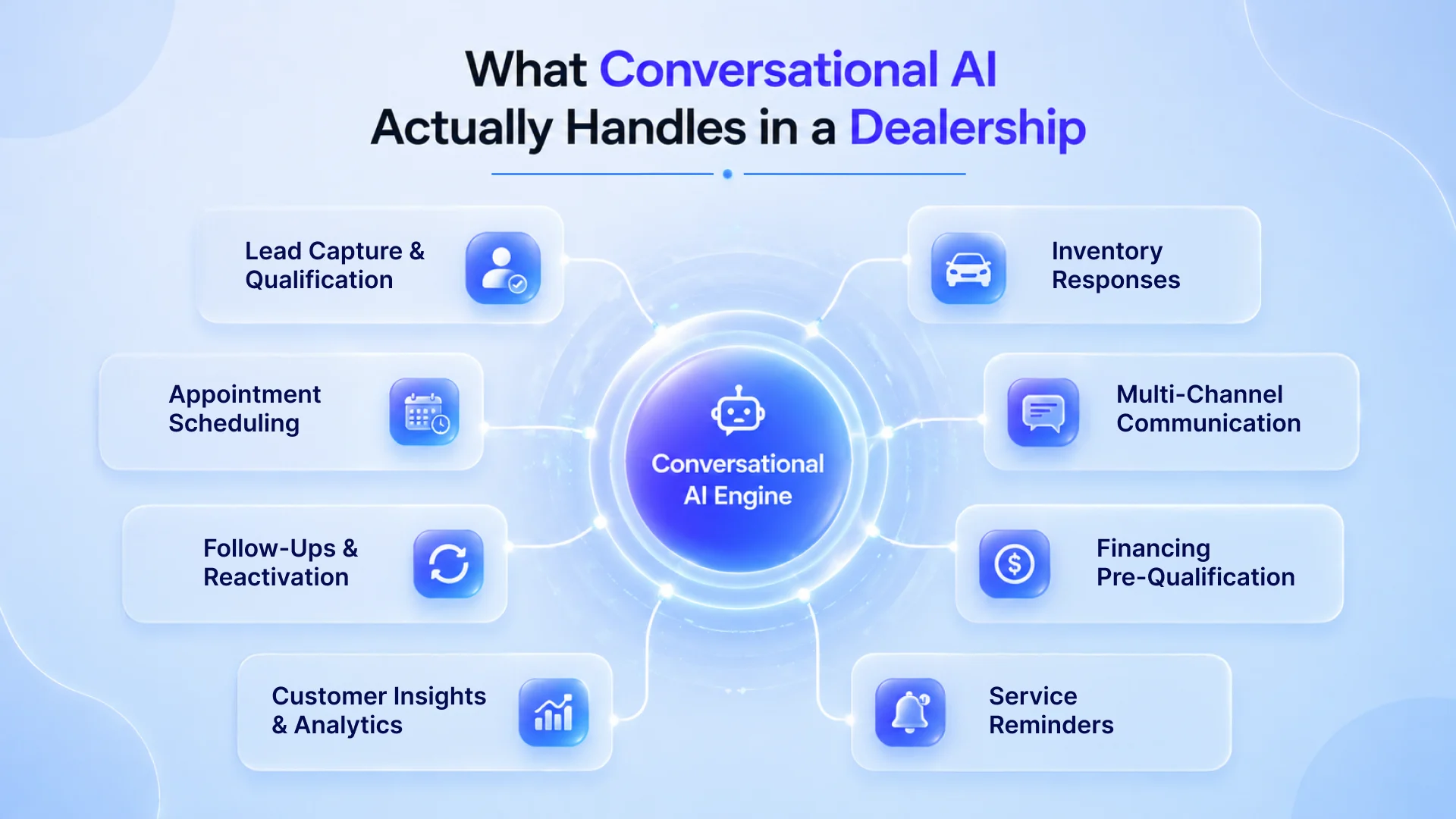
Here are the key features of conversational AI that make that possible:
1. 24/7 Lead Capture and Qualification
One of the core capabilities of conversational AI is its ability to engage every visitor the moment they reach out. Instead of waiting for a salesperson to respond, the system immediately starts the conversation, answers initial queries, and asks relevant follow-up questions.
This helps capture lead details, understand buyer intent, and filter out low-interest inquiries early on. Many platforms also sync this data directly with CRM systems, ensuring that high-intent leads are identified and acted on without delay.
2. Real-Time Inventory Responses and Vehicle Recommendations
Buyers often reach out with very specific questions about a car’s availability, pricing, mileage, or features. Conversational AI can instantly access inventory data and respond with accurate, up-to-date information.
It can also guide buyers toward relevant options by suggesting vehicles based on their preferences, budget, or previous interactions. This makes the experience feel more like interacting with a knowledgeable product specialist rather than a generic chatbot.
3. Automated Test Drive and Appointment Scheduling
Coordinating schedules manually can slow things down, especially when there’s back-and-forth involved. With conversational AI, buyers can book test drives or appointments directly within the conversation.
The system checks availability, confirms time slots, and handles the scheduling without requiring human intervention. It also sends reminders and confirmations automatically, which helps reduce missed appointments and keeps the process organized.
4. OmniChannel Communication Across Chat, SMS, and Voice
Customers don’t stick to one channel, and dealerships need to meet them wherever they prefer to engage. Modern conversational AI platforms for dealerships are designed to work across multiple touchpoints, including website chat, text messages, email, and even voice calls.
This ensures that conversations remain consistent, regardless of where they start. It also allows dealerships to maintain ongoing communication without switching between different tools or systems.
5. Automated Follow-Ups and Lead Reactivation
Not every lead converts right away. Some need time, while others simply drop off after the initial interaction. Conversational AI for dealerships helps address this by running automated follow-up sequences and re-engaging past leads.
It can reach out with reminders, new inventory updates, or personalized messages based on previous conversations. This is especially useful for tapping into dormant leads that would otherwise remain untouched in the CRM, making this feature a key differentiator of conversational AI.
6. AI-Assisted Financing and Pre-Qualification
For many buyers, financing is a key part of the decision-making process. Conversational AI can help by collecting basic financial details, guiding users through pre-qualification steps, and sharing relevant options early in the journey. This reduces friction and prepares both the buyer and the dealership for a more productive conversation later.
7. Customer Data Capture and Personalization
Every interaction adds to a growing pool of customer data, including preferences, past inquiries, timelines, and behavior. Conversational AI uses this information to personalize future interactions, whether it’s recommending similar vehicles or continuing a previous conversation without starting from scratch. Over time, this creates a more seamless and relevant experience for returning buyers.
8. Performance Tracking and Conversation Analytics
Beyond handling conversations, these systems also provide visibility into how those conversations are performing. Dealerships can track metrics like response times, lead quality, engagement levels, and conversion rates.
This helps identify what’s working, where leads are dropping off, and how communication strategies can be improved. These insights often play a key role in refining both sales and marketing efforts.
9. Service Reminders and Post-Sale Engagement
The value of conversational AI doesn’t stop after the sale. Dealerships can use it to send service reminders, schedule maintenance appointments, and stay connected with customers over time. This helps improve retention and ensures that the relationship continues beyond the initial purchase.
10. Scalable, Consistent Communication Across All Leads
As lead volume grows, maintaining consistency becomes more difficult. Conversational AI solves this by handling multiple conversations simultaneously without delays or variation in quality.
Every lead receives the same level of attention, regardless of when or how they reach out. This consistency is often what allows dealerships to scale their operations without compromising on customer experience.
List of Top 13 Conversational AI Platforms for Used Car Dealerships
The conversational AI space for used car dealerships has evolved from basic chatbots to advanced systems that can manage conversations, qualify leads, and drive appointments across chat, SMS, and voice.
While many tools still focus on specific functions like messaging or voice automation, newer platforms are built to handle the entire customer journey in one place. This makes it easier for dealerships to respond faster, stay consistent, and convert more of the leads they already generate.
1. Spyne (Vini AI): All-in-One Conversational AI Platform
Spyne’s conversational AI platform is built specifically for automotive dealerships, designed to manage both inbound and outbound conversations across chat, SMS, email, and voice. It helps dealerships respond instantly to leads, qualify buyers based on intent, follow up automatically, and schedule appointments without manual effort.
Unlike many tools that specialize in just one area, Spyne combines lead qualification, voice AI, and multi-channel messaging into a single system. This allows dealerships to manage the entire customer journey without relying on multiple tools or disconnected workflows.

2. Drivee AI
Drivee AI is built around multi-channel engagement, enabling dealerships to maintain continuous conversations across chat, SMS, and email. It emphasizes reducing missed opportunities by keeping leads engaged throughout the buying journey.
3. Swirl
Swirl represents a newer generation of AI systems that go beyond conversation. It can navigate dealership websites, assist with vehicle configuration, and support buyers through more complex decision-making journeys.
4. DealerAI
DealerAI is a generative AI chatbot built specifically for automotive dealerships. It uses a proprietary engine to deliver context-aware, human-like conversations, helping dealerships engage, qualify, and guide buyers more effectively throughout the sales process.
5. Toma
Toma specializes in voice-based AI for dealerships, particularly for service scheduling and inbound call handling. It helps automate phone conversations and reduces pressure on service and BDC teams.
6. Numa
Numa focuses on missed-call recovery and voice automation. It ensures inbound calls are not lost and provides dealerships with a unified way to manage voice-based customer interactions.
7. Mia Labs
Mia is a phone-first AI assistant designed for 24/7 appointment scheduling, follow-ups, and inbound call handling, helping dealerships capture more opportunities without increasing staff workload.
8. Podium
Podium is widely used for its unified inbox that brings together SMS, web chat, and review management. Its AI features primarily support lead qualification and improving response efficiency.
9. Matador AI
Matador AI integrates with existing CRM systems and focuses heavily on SMS-based lead engagement, helping dealerships automate conversations and appointment scheduling without replacing their current setup.
10. Drift
Drift is a conversational marketing platform that helps dealerships engage website visitors in real time. It focuses on lead qualification, conversation routing, and appointment scheduling, making it useful for improving conversion rates from inbound traffic.
11. DriveCentric
DriveCentric combines CRM functionality with AI-driven engagement tools, offering automated follow-ups, lead scoring, and communication assistance for dealership sales teams.
12. Owini
Owini is an all-in-one platform that combines AI lead response, CRM pipeline management, and marketplace automation. It is designed for dealerships looking for a unified system across sales channels.
13. Capacity
Capacity is an omnichannel AI platform that supports chat, voice, and email interactions. It integrates with CRM systems to deliver more personalized responses and helps dealerships manage customer communication across multiple touchpoints.
Top Conversational AI Platforms at a Glance
| Platform | Primary Strength | Best For |
| Spyne (Vini AI) | All-in-one conversational AI | End-to-end lead handling & conversion |
| Drivee AI | Multi-channel engagement | Continuous lead nurturing |
| Swirl | Autonomous AI workflows | Advanced buyer journeys |
| Dealer AI | Generative AI conversations | Context-aware engagement |
| Toma | Voice AI automation | Service scheduling and calls |
| Numa | Voice + inbox automation | Missed call recovery |
| Mia Labs | Phone-first AI assistant | Appointment handling |
| Podium | Messaging + reviews | Unified inbox workflows |
| Matador AI | SMS-based engagement | CRM-compatible automation |
| Drift | Conversational marketing | Website lead conversion |
| DriveCentric | AI-powered CRM | Sales team productivity |
| Owini | AI + CRM + marketplace automation | Multi-channel sales management |
| Capacity | Omnichannel AI | Personalized communication |
How to Choose the Right Conversational AI Platform for Your Dealership?
While all these tools operate in the same space, they differ in focus. Some are built for sales automation, others specialize in voice or CRM workflows. When evaluating conversational AI for dealerships, the key is choosing a platform that fits your workflow and helps you convert more of the leads you’re already generating.
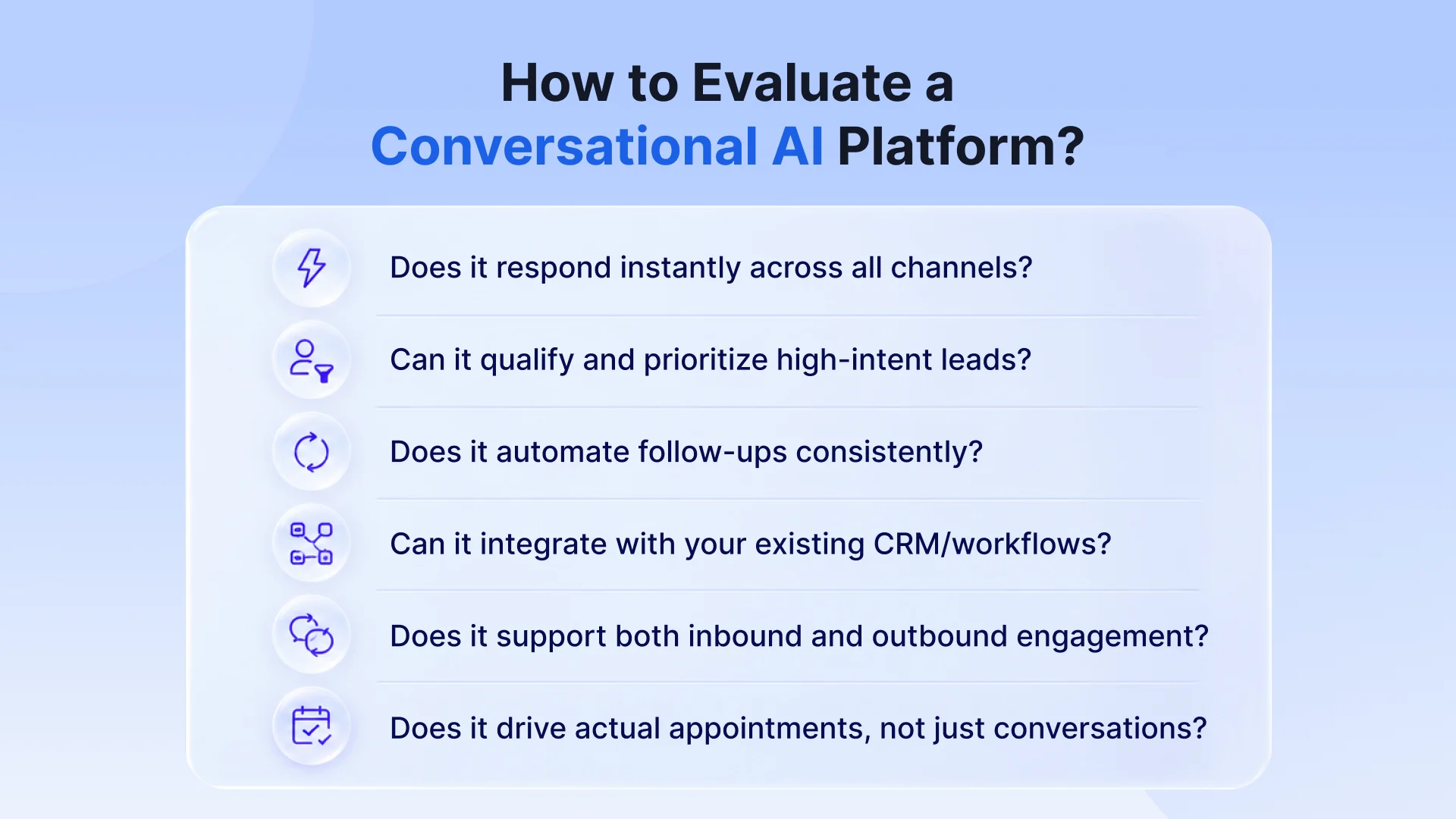
For most used car dealerships, the decision comes down to:
- How much of the sales process do you want to automate
- Whether your priority is chat, voice, or CRM integration
- How well the system fits into your existing operations
As the AI space evolves, stronger platforms are moving toward full conversation ownership, guiding leads from first interaction to conversion through consistent engagement and follow-ups. For dealerships looking to simplify operations and improve conversions, all-in-one conversational AI platforms help keep every interaction connected across channels.
Why Spyne AI Stands Out for Used Car Dealerships?
Most conversational AI tools help dealerships respond faster. Spyne goes a step further by ensuring those conversations actually move toward conversion. Built for dealership workflows, Spyne’s conversational AI product, Vini, brings structure and consistency to how leads are handled across channels, making it a strong contender among the best conversational AI platforms for dealerships.
It manages everything from the first inquiry to follow-ups and appointment scheduling, without disrupting existing processes. With Spyne, car dealerships can:
- Capture and qualify leads instantly, 24/7
- Automate follow-ups and re-engage dormant prospects
- Schedule test drives and appointments without delays
- Manage conversations across chat, SMS, and voice in one flow
Instead of scattered conversations and missed opportunities, every interaction is handled with continuity, making it easier to move buyers from inquiry to action. That consistency is what turns everyday conversations into measurable growth.

Conclusion
Conversational AI is no longer just a support layer for dealerships. It’s central to how leads are managed, nurtured, and converted. The right conversational AI for dealerships fits seamlessly into your workflow while helping you convert more of the leads you’re already generating, bringing consistency through instant responses, automated follow-ups, and smarter scheduling.
Spyne takes this a step further by turning conversations into structured, conversion-driven workflows. Its conversational AI, Vini, ensures every lead is captured, qualified, and moved forward without gaps.
As buyer expectations continue to shift, one of the best conversational AI for dealerships in place becomes a real advantage. Book a demo to see how Spyne can help reduce operational costs while improving speed, consistency, and customer experience, without scaling your team.