

Over the last decade, Carvana reset buyer expectations. It proved that car buying doesn’t have to feel fragmented or slow; it can be guided, predictable, and almost effortless. What’s often misunderstood is how Carvana pulled this off.
It wasn’t just branding, marketing budgets, or out-of-the-box ideas, such as vending machines. Carvana’s real advantage came from something simpler: a fully automated online experience that eliminated friction from every part of the digital retail process.
What’s changed in the last few years is that automotive dealerships no longer need Carvana-size capital or teams to build something similar. The technology that once sat behind billion-dollar operations is now accessible, easier to adopt, and purpose-built for dealerships of every size.
That means traditional dealers can borrow more than just “visual standards.” They can reimagine their entire retail value chain.
The Carvana Standard Isn’t About Scale But About Systemization
Dealerships often view Carvana as a major player in the industry. But its true determiner wasn’t size; it was discipline.
Everything a buyer sees on their platform is engineered to feel uniform:
- The same backgrounds and framing
- The same set of angles
- The same clarity and visual finish
This consistency creates trust, and trust drives conversions.
Most dealerships already know this intuitively. They want their online inventory to look clean and reliable. But the reality on the ground is far different. Photos are taken in different weather, with different devices, under inconsistent lighting, by different team members.
The result is not in “bad images” but “unpredictable images.” And unpredictability is the enemy of online retail.
What Carvana proved is that systemized visuals are more persuasive than high-budget visuals.
Why is Manual Work The Hidden Gap in Dealership Operations?
Across hundreds of dealerships, one pattern consistently emerges: the biggest delays in online merchandising come after the photos are taken.
- Background cleanups
- Exposure correction
- Angle alignment
- Reordering images
- Creating listing layouts
- Preparing VDP assets
- Publishing to classified sites
Individually, these steps don’t feel heavy. Collectively, they create days of lost time.
Carvana’s core innovation was simply eliminating all of this manual work. They built internal automation years before “automation” became a buzzword.
What’s happening now, and what platforms like Spyne have been deeply involved in, is the standardization of those same automated capabilities for everyday dealerships.
How Modern Dealerships Can Build Marketplace-Grade Experiences at Dealership Scale?
The question dealership owners should be asking isn’t “How do we become Carvana?”
Rather, it should be “How do we deliver a Carvana-level experience while staying lean, localized, and independent?”
The answer comes down to five pillars:
- Consistent image style across every car
- Automated enhancement and background replacement
- Structured VDP templates
- Instant listing creation
- One-click distribution across marketplaces
And the best part is that none of this requires:
- A studio
- Multiple vendors
- An in-house imaging team
- Expensive hardware
- Additional staff
The modern dealerships don’t build marketplaces from scratch.
They adopt the infrastructure that replicates marketplace workflows, the same ones a handful of innovators like Spyne have been shaping.
The Strategic Insight: Speed Is the New Competitive Advantage
Dealerships often think differentiation comes from product, pricing, or negotiation strength.
But in today’s digital market, the most powerful differentiator is speed.
A car that goes live in 2 hours instead of 2-3 days tends to:
- Get more impressions
- Get more inquiries
- Turn faster
- Compound revenue over time
This is where automation has the strongest impact.
And it’s the part dealerships consistently underestimate until they see the numbers.
Carvana’s “inventory machine” wasn’t powered by marketing brilliance; it was powered by speed.
Spyne’s work with dealerships globally reflects this same principle, i.e., once the manual middle disappears, everything from publishing to leads to turn rates accelerates.
What an Automated Online Experience Actually Looks Like?
To understand what “Carvana-style automation” looks like inside a dealership, imagine this:
Step 1: Capture
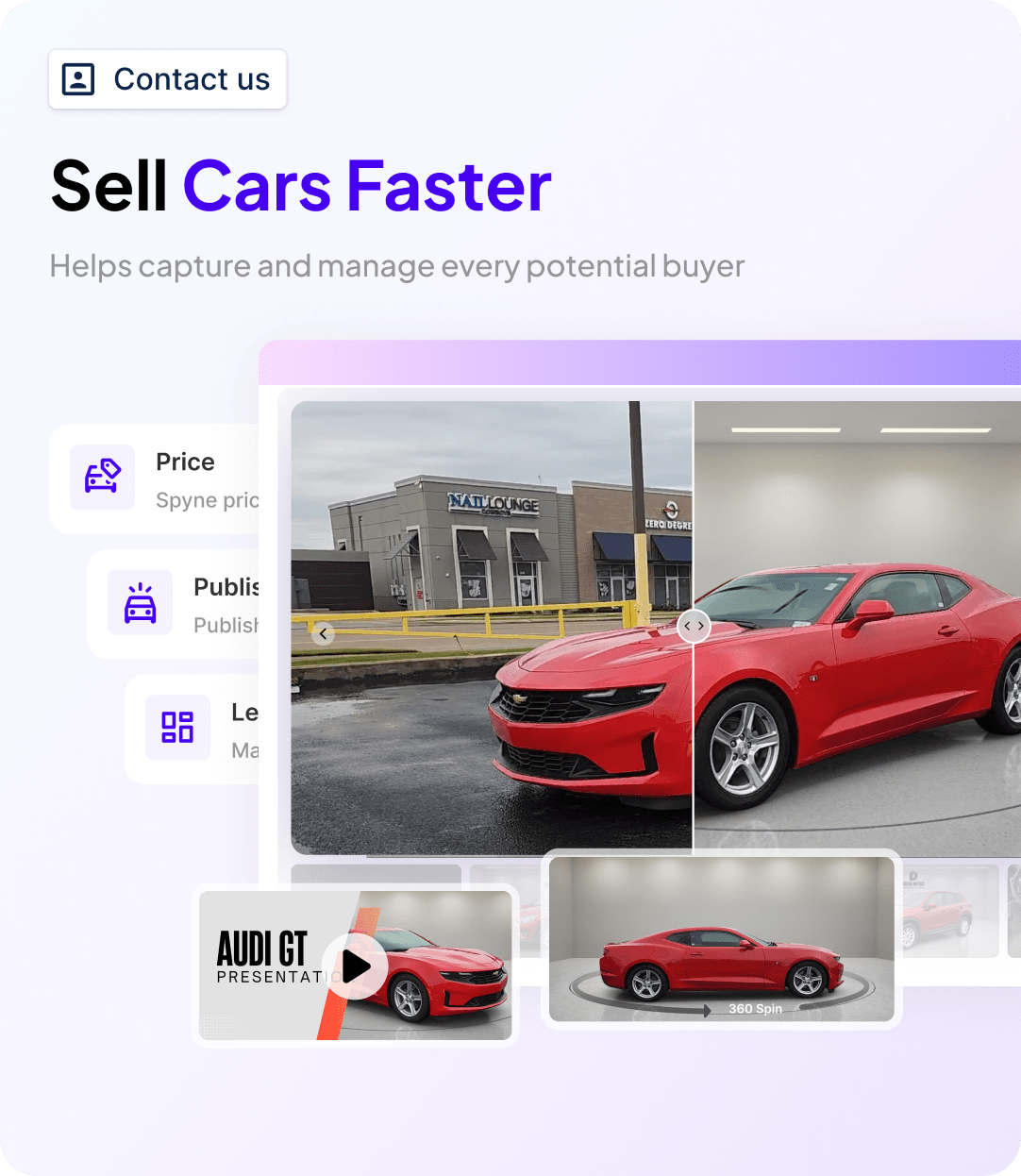
Photos are taken casually, in the lot, in the driveway, anywhere, using a guided workflow.
Step 2: Real-Time Enhancement
Within seconds, the system fixes lighting, removes cluttered backgrounds, aligns the vehicle, standardizes the angle order, and applies a clean, marketplace-ready aesthetic. All this without an editing team, reshoots, or bottlenecks.
Step 3: Listing Auto-Assembly
The system pulls in sorted data, features, structured layout, and existing templates. A listing that used to take 30-60 minutes now takes 30 seconds.
Step 4: Multi-Platform Distribution
With one click, the listing pushes to the dealership website, marketplaces, classifieds, and social channels. This is how small teams start to operate like large platforms.
And this is the shift that companies like Spyne specialize in, providing the quiet infrastructure that lets dealerships compete above their size.
How Automation Changes a Dealership’s Brand Identity and Not Just Its Operations?
When dealerships adopt automation, the transformation isn’t only operational, it’s reputational.
Your ROI improves the moment your workflow speeds up, resulting in faster listing publication, more VDP views, and a higher lead-to-show rate.
And the most overlooked advantage of automation is that it makes small dealerships appear category-leading without increasing costs or headcount.
The Visionary Role Spyne Plays in This Ecosystem
Spyne is not just another “software.”
Its role is closer to infrastructure, the same kind of infrastructure that helped big marketplaces scale visual merchandising and online workflows a decade ago.
The brand’s contribution is rooted in three long-term shifts:
- Making high-quality automotive visuals accessible: Dealerships no longer need studios or photographers to achieve professional consistency.
- Transforming images into structured online inventory: More than just visuals, images become the backbone of complete, high-performing listings.
- Enabling marketplace-style automation for every dealership.
What used to require engineering teams, editors, manual QA, and a custom pipeline is now available to individual rooftops in a single, integrated workflow.
Spyne’s influence is not about replacing people. It’s about eliminating the invisible inefficiencies that prevent dealerships from scaling digitally.
That’s what industry visionaries do; they make the complex simple, and the inaccessible achievable.
The Future Belongs to Dealerships That Build Digital First
Carvana didn’t win because it was exhaustive. It won because it understood the discipline of digital retail long before the rest of the industry.
But today, the landscape is different:
- Buyers expect online clarity, every single time
- Marketplaces reward consistent visuals
- Automation is more accessible
- Speed matters more than scale
The dealership of the future won’t compete by expanding lots or adding staff. It will compete by building experiences that feel modern, fast, and trustworthy.
And the brands shaping these capabilities, including Spyne, will define the next era of automotive retail.
Final Thoughts
Dealerships no longer need to “become Carvana.” They simply need to adopt the systems that made Carvana successful.
Automation is no longer a luxury. It’s a strategic advantage.
And for the first time, it’s available to everyone, not just industry giants.
The dealerships that act now will move ahead. The ones that wait will eventually have to catch up.