
EXECUTIVE SUMMARYCinematic car videos turn a flat vehicle listing into something a shopper actually stops scrolling for, and a dealership without a crew or a shoot day can still have one. Spyne’s Video Tour builds that video straight from a vehicle’s existing listing link, no filming required. A 2016 Autotrader dataset found that listings with video saw a 13% increase in vehicle detail page views compared to listings without one. |
Have you ever wondered how some people get great cinematic shots of cars? It’s not just about having an expensive camera. Cinematic car videos combine the right angles, lighting, camera movement, and storytelling to make a vehicle look its best and keep viewers watching.
The good news is, you don’t need a professional film crew to create them. Cox Automotive’s 2024 Car Buyer Journey Study found that today’s buyers now spend over 13 hours researching a vehicle before they buy it, most of that time online, which is exactly the window a strong video can capture and hold. With a few practical techniques, the right equipment, and thoughtful editing, you can turn everyday car footage into engaging videos that showcase a vehicle’s design, features, and personality.
In this blog, we’ll walk through the shooting techniques, the gear actually worth buying, and the editing choices that turn raw footage into something people watch all the way through.
What are Cinematic Car Videos?
Cinematic car videos are actual car pictures and videos that have been shot with great detail. These videos are artistic and offer visually appealing effects. Some creators simply call this style car cinematics, since the goal is treating a vehicle the way a film treats its subject, not just documenting it. These car videos are shot to showcase the vehicle’s features, power, and uniqueness using creative camera work. This also requires focusing on car video editing to make the video look engaging and enjoyable for the audience.
How to Shoot Cinematic Car Videos
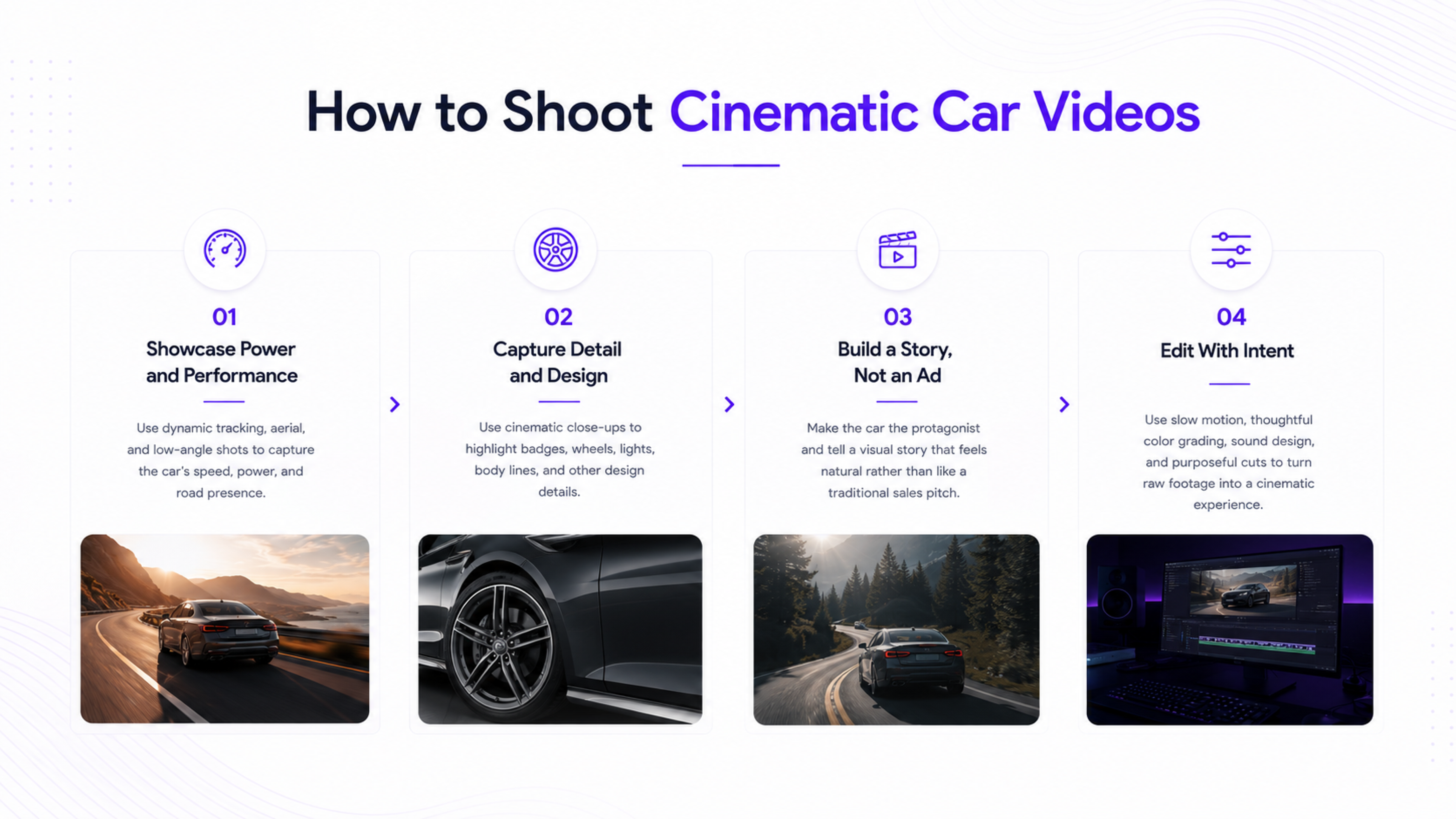
Shooting a cinematic car video comes down to four things: camera movement, close attention to detail, a story instead of a sales pitch, and deliberate editing. Here’s how each one plays out in practice.
Step 1: Showcase Power and Performance
Open with movement, not a static frame. Tracking shots, low aerial passes, and perspective shots from the wheel arch or hood line all communicate speed and presence before a single word of copy does. Static wide shots tell a viewer a car exists; moving shots tell them what it feels like to be near one.
Step 2: Capture Detail and Design
Every body line has a reason it exists, and getting cinematic car shots that prove it means slowing down. Macro shots of badge work, panel gaps, wheel spokes, and light signatures separate a generic listing from one that looks deliberately produced, and these are the shots viewers rewatch.
Step 3: Build a Story, Not an Ad
A cinematic car video fails the moment it starts to feel like a commercial. Frame the car as the protagonist of a short scene, arriving somewhere, waiting somewhere, being noticed, rather than a product being narrated at the viewer.
Step 4: Edit With Intent
Post-production is where the previous three steps either pay off or fall flat. Slow motion on a reveal shot, a color grade that matches the car’s tone (cool for performance, warm for luxury), and sound design that layers engine note under ambient noise are what make the difference between raw footage and a finished piece.
Equipment and Tools for Professional Car Cinematic Videos
It is easy to create a cinematic car short video if you have the right set of tools and equipment with you, and putting together a car shoot video doesn’t have to mean a full production budget. Listed below are must-haves for creating your dream cinematic car videos.
1. Tripod
Walking and taking a shot can create motion in your footage that may not look good. The solution is using a tripod, which can always remain stable. These tripods are good enough to hold a large DSLR camera. Besides, it also has a long handle that can keep your face at a reasonable distance when filming. A tripod also comes with the added benefit of height adjustment, a tiltable head, and improved stability, all of which can be good for your cinematic car videos.
2. Action Camera
Even though APS-C, DSLR, or mirrorless cameras are considered excellent for capturing a car cinematic video, you can still get high-quality footage using an action camera. These cameras come with physical image stabilization that can help smooth bumpy road imperfections, engine vibration, etc, which can look problematic in your footage. Moreover, these cameras can be used externally and in any awkward places for unique pictures and shoots.
3. Suction Mount
For internal cinematic car shots, you must invest in a good suction mount for mounting your camera. Go for a mount with extra suction pads that can make it strong enough to handle a large camera and not fall easily.
4. Microphone
You need a microphone if you want to capture engine noise or film yourself speaking in the vehicle. You cannot rely on the camera’s microphone, especially if you need to manage the background noise. Many microphones are available, such as booms, which are easy to carry, and the footage can be edited as the audio is already synced. You can even try a lapel microphone that is excellent for capturing engine noise. It can be tapped near the exhaust to capture the noise.
5. Lens
The lens may be an expensive thing, and you will also need to buy a camera with an interchangeable lens option. If going for the lens, opt for 35mm as it can capture wide enough, including interiors, if mounted inside the car.
Shot well, even with this basic kit, the result is cinematic car clips worth sharing on YouTube, Instagram, or a dealership’s own listings.

The Role of AI in Cinematic Car Videos
Video content is becoming essential for the automotive industry, especially for marketing strategies. It is not about showing the car’s features but creating narratives that match the needs of potential buyers and convince them to take the next step. That is where artificial intelligence helps transform regular videos into cinematic car shots. Using AI, you can create engaging and dynamic cinematic car videos that are more than just static images.
To grab the audience’s interest, AI improves car images, creates gripping stories, and adds visual effects. Now, prospective purchasers can have an immersive experience that simulates physically evaluating the vehicle. Additionally, AI can also help create videos at scale, allowing constant production of videos with less manual intervention. This reduces human errors and focuses on standardized video quality levels.
Why Do You Need Cinematic Car Videos
There are many reasons why cinematic car videos can prove to be beneficial. Listed are some of them:
- Showcasing features: A car cinematic video can highlight a vehicle’s unique features, such as performance, design, technology, etc., in a more advanced way.
- Luxurious appeal: These videos, especially for luxury cars, can demonstrate a sense of luxury and power, showcasing their premium status.
- Audience attention: A car cinematic video is excellent content that can grasp the audience’s attention with its immersive sound and dynamic visuals.
- Storytelling: These cinematic videos are an excellent way of storytelling by keeping the vehicle as the main character. Such storytelling helps audiences relate to the vehicle better.
What Features Do You Need to Highlight in Your Cinematic Car Videos?
It is important to focus on essential features when you create a cinematic car short video to highlight the vehicle’s uniqueness:
- Exterior design: Capture the car’s body lines and shapes, lighting elements, wheels, and tires.
- Interiors: Show the control layout and dashboard, the material quality, and the seating comfort.
- Performance: Engine sound is one of the essentials, and it must be appropriately captured. Demonstrate the vehicle’s handling, acceleration, and braking system.
- Infotainment and technology: Include a section showing touchscreen displays, driver assistance systems, and connectivity features.
- Innovative features: Highlight whatever is unique to your vehicle or its USPs, whether that’s an eco-friendly aspect, autonomous driving capability, or a customization option.
Spyne’s Video Tour for Best Cinematic Car Videos Shoots
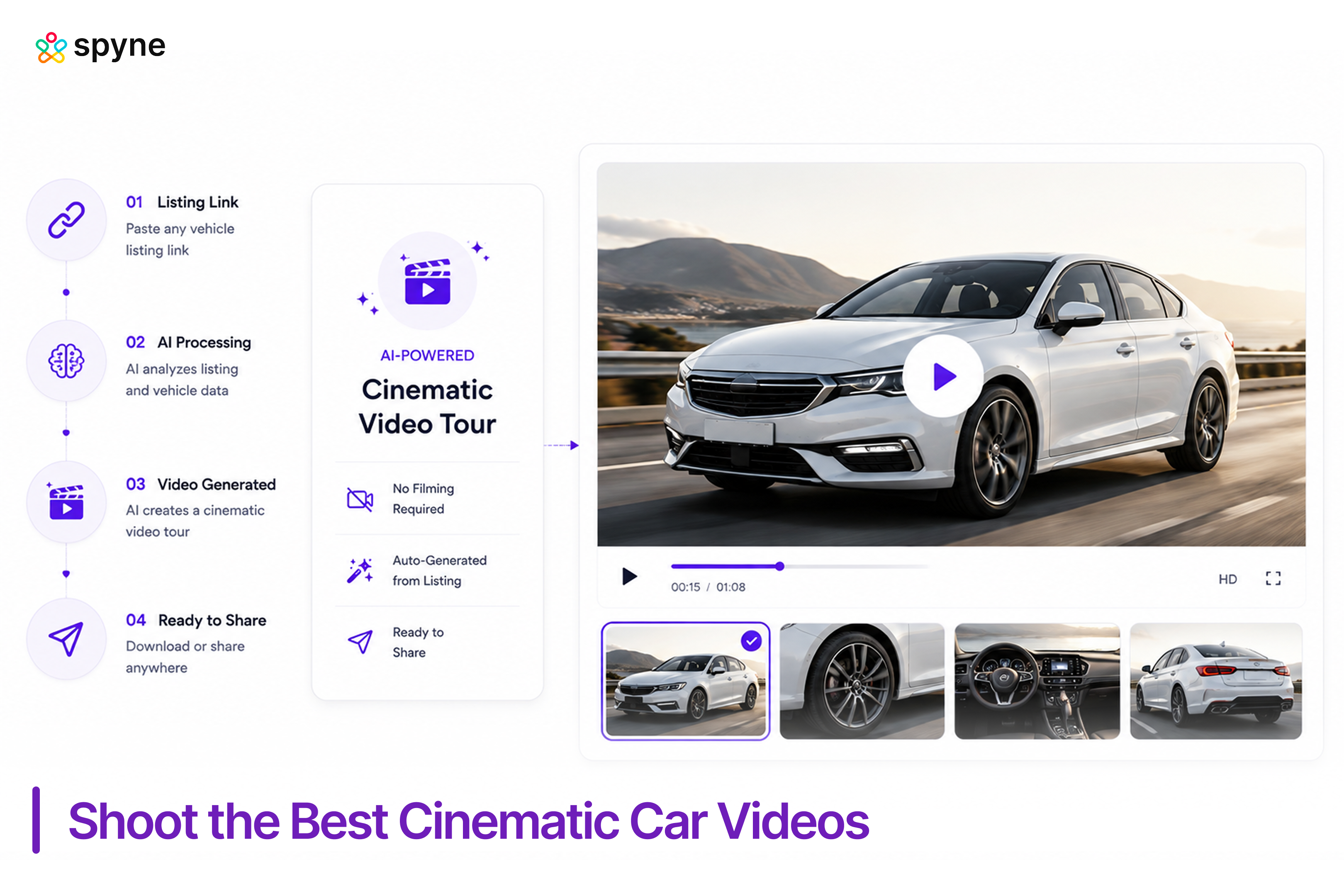
Getting a cinematic video out of a vehicle listing doesn’t have to mean booking a crew. Car video tour turns what a dealership already has, mainly the listing itself, into a finished video using a set of built-in tools instead of a camera setup.
1. Paste a Link, Get a Video
This is the part that actually removes the shoot day. Drop in a vehicle’s listing URL, and Video Tour builds a video from it directly, no photos to upload, no footage to shoot first. What used to take a camera and a free afternoon now takes the time it takes to paste a link.
2. 1,000+ Ready-Made Templates
Instead of planning shots and figuring out pacing from scratch, you pick a template that already has that worked out. It’s the difference between staging a scene yourself and choosing one that’s already built, tested, and ready to drop a vehicle into.
3. Script Generation and Voice Cloning
Somebody still has to explain what’s on screen, and that usually means writing a script and finding someone to read it. Video Tour writes the script and can clone a natural-sounding voice to narrate it, so a video doesn’t sit unfinished just because nobody had time to record audio.
4. Multilingual Voiceovers
A dealership working across different language markets normally means separate recording sessions for each one. Here, the same video gets narrated in another language without booking new voice talent or running the whole production again.
5. Auto Reframe
A video built for a website doesn’t automatically work as a vertical clip for Instagram or TikTok. Auto reframe handles that adjustment on its own, so one video actually functions across a few different feeds instead of needing separate edits for each platform.

Conclusion
Getting a cinematic car video right takes attention to movement, light, and story, and none of it requires a Hollywood budget. But a dealership rarely has time to give every car on the lot that treatment, and buyers who spend over 13 hours researching before they walk in are deciding what gets a second look long before they arrive. Spyne’s Video Tour closes that gap, turning a listing link into a finished video without adding a shoot day to the schedule. See what it looks like on your own inventory. Book a demo today!