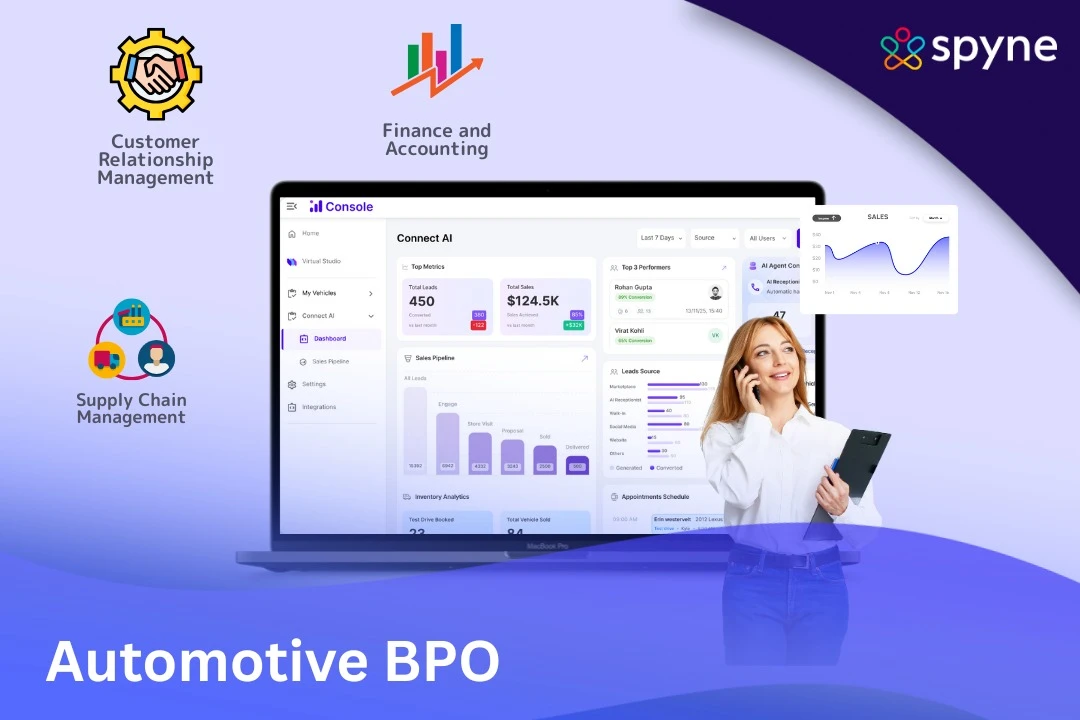

Operating a used car business involves doing a lot of things at the same time—customer calls, service appointments, paperwork, etc. That is where automobile BPO services enter the picture. BPO is short for Business Process Outsourcing, which involves outsourcing mundane tasks to a reliable partner so your staff can keep selling cars. From taking calls to tracking inventory data, BPO gets your dealership working more smoothly without adding to your staff numbers. In this guide, we’ll explain what automotive BPO is, its benefits, trends, and how Spyne’s AI tools make outsourcing even smarter for used car dealers.
What is an Automotive BPO?
Automotive BPO refers to outsourcing part of your dealership’s daily work to another team outside your business. Rather than doing everything in-house, such as customer service, data entry, or follow-up calls, you have another company handle it. This leaves your team free to sell cars and interact with customers directly. It’s a good idea for used car dealerships who need to save time, reduce expenses, and still maintain business as usual, particularly when the staff is limited or stretched too thin.
What are the advantages of Automotive BPO for Used Car Dealerships?
Automotive BPO (Business Process Outsourcing) enables used car dealerships to accomplish more without additional stress. It saves time, reduces expenditures, and allows your team to concentrate on selling. Here’s how it assists:
1. Less Busywork, More Time to Sell
BPO staff perform activities such as follow-ups, appointment booking, and data entry. Your sales staff will have more time with actual buyers rather than performing administrative tasks. Smaller groups can function effectively too.
2. Day and Night Excellent Customer Service
With automotive call center services, experienced representatives can communicate with clients, provide answers, and schedule visits at any time. Customers get a better experience, and you can capture more leads after office hours.
3. Save Money and Stay Flexible
Employing full-time employees is expensive. But with automotive industry BPO solutions, you pay only for your usage. This saves you money without holding back your work.
4. Get Expert Assistance from Day One
BPO agents understand how auto industry services are done. They’re equipped to use CRM software, engage with customers, and process tasks. You don’t have to train them, they’re able to assist right away.
5. Expand or Contract Easily
If your business becomes too busy, you can increase assistance. If it slows, you can cut back. That’s why automotive industry BPO solutions are ideal for dealerships that prefer flexibility.
6. Keep on Course and Obey the Laws
Most auto professionals’ work can assist with documents, reports, and being in compliance with the law. It keeps your records in order and prevents hassle.
What Are the Current Trends in Automotive BPO?
Automotive BPO is constantly evolving. New technology and changing customer needs are defining how these services operate. Staying current with these trends keeps used car dealerships competitive, saves them money, and offers better service. Let’s examine the top trends that are having a significant impact in automotive BPO today.
1. How Automation and AI Enhance Work Efficiency
Artificial intelligence and automation are increasingly being applied to automotive BPO services. They facilitate speeding up tasks such as inventory management, order processing, and dealing with customer calls without errors.
2. Prioritizing the Customers with Improved Support
BPO service providers are prioritizing providing customers with increased individual attention. They utilize phone, email, and chat support to respond quickly to customers’ questions and make the buyers happy.
3. Making Intelligent Decisions with Data
Most auto industry outsourcing services are employing the use of data analytics today. This makes dealerships aware of what customers prefer and identifies trends in the market to make informed business decisions.
4. Becoming Digital for Increased Speed
Online customer support, digital invoices, and e-documents are becoming popular. These developments make BPO services quicker and minimize paperwork errors.
5. Facilitating Green Principles in Automotive BPO
More car business solutions are green. BPO companies are discovering how to reduce their environmental footprint by minimizing waste and conserving energy.
6. Saving Money Through Outsourcing Non-Core Functions
Car dealerships cut costs by outsourcing mundane tasks such as data entry and customer support. This allows them to allocate their budget on critical functions such as sales and marketing.
7. Flexible Services That Grow With Your Business
Automotive industry BPO solutions are versatile, making it simple for dealerships to scale their services up or down as need dictates. Tools like an AI phone answering service help manage call volumes without adding staff, especially during peak or slack seasons.
8. Allowing Dealerships to Focus on What Counts Most
By allowing BPO providers to take care of mundane work, dealerships can focus on key activities such as the sale of vehicles, advertising, and enhancing customer relations.
How Does Automotive BPO Help the Aftermarket Sector?
Automotive BPO plays a big role in helping used car dealerships and automotive aftermarket businesses work smarter. By outsourcing certain tasks like calling, follow-ups, companies can improve how they operate, save money, and offer better customer service. Here’s how automotive BPO services support the automotive aftermarket sector.
1. Better Customer Support Around the Clock
Most auto call center services have 24/7 support via telephone, email, chat, and social media. Automotive call center outsourcing makes this possible by giving dealerships access to round-the-clock customer support without hiring extra staff. This allows customers to seek assistance at any time, enhancing their experience and making them more loyal to your company.
2. Smarter Supply Chain and Inventory Management
BPO companies utilize data and technology to control inventory, shipping, and deliveries. Alongside automotive call center services, this prevents overstocking or stockouts of parts, maintaining the supply chain fluid and efficient.
3. Cost Savings on Operations Daily
Outsourcing everyday work such as data entry, order processing, and customer support reduces expenses. This allows your budget to invest in expanding your auto business.
4. Access to Experienced Professionals and Technology
Automotive professional service providers have experts who understand the industry thoroughly. They employ the most advanced tools of data analysis, customer management, and compliance, so you won’t need to spend money on training or specialized software.
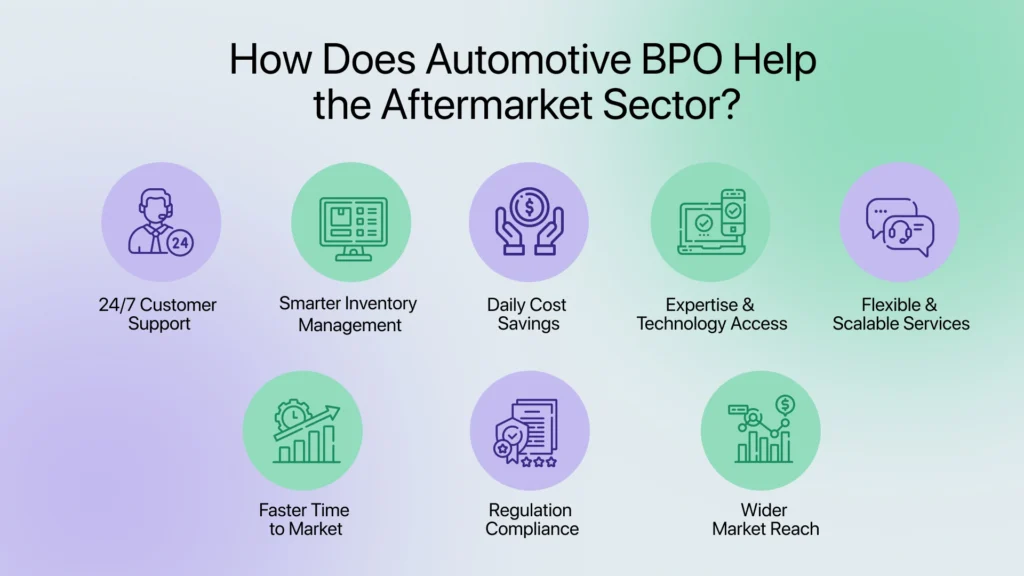
5. Flexible and Scalable Solutions for Your Business
Whether your company is expanding or experiencing lean times, automotive industry BPO solutions enable you to scale services up or down with ease. This flexibility maintains your operations running smoothly without additional hiring hassles.
6. Reduced Time to Market for New Products
BPO staff facilitates a faster design, testing, and quality assurance process. This results in new auto parts and accessories being delivered to the customer sooner.
7. Seamless Compliance with Industry Regulations
Automotive BPO service providers keep your business in line with regulations and compliance with the law. Even during an AI phone call, these services ensure that all communications follow legal standards. This saves you from risks and shields your reputation.
8. Increase Your Market Reach
Most BPO in the automotive aftermarket have a regional presence, allowing you to navigate across various regions, cultural variations, and regional regulations and thus make it simpler to expand your global automotive aftermarket business.
How to Make Automotive BPO Work Efficiently in the Aftermarket Sector
Getting the most from automotive BPO in the automotive aftermarket sector starts with clear planning and goal setting. From choosing the right BPO partner to using the right tools, every step matters. These steps will help ensure your outsourcing efforts bring real results and help your used car dealership run more smoothly and efficiently.
1. Understand Your Needs and Set Clear Goals
Before choosing a BPO partner, figure out what tasks you want to outsource and what problems you want to fix. Set clear goals so you know what success looks like.
2. Choose the Right BPO Partner
Look for a provider who understands the automotive aftermarket and has the skills and technology you need. Check their experience, services, and reputation carefully.
3. Make the Contract Clear and Fair
Agree on contract terms that protect your interests. If your BPO partner will use tools like automotive call monitoring software, make sure responsibilities and compliance are clearly defined. Be clear about pricing, timelines, and confidentiality to avoid surprises.
4. Use Technology to Track and Manage Inventory
Good inventory management is key. Use systems that track parts in real-time and predict demand so you don’t run out or overstock.
5. Streamline Your Operations
Automate repetitive tasks like order processing and data entry. Tools like an AI call bot for car dealerships can also help manage incoming queries automatically. This saves time and reduces mistakes. Keep an eye on workflows to spot and fix bottlenecks.
6. Focus on Customer Experience
Offer fast, helpful, and personalized customer service across multiple channels like phone, email, and chat. Happy customers come back and spread the word.
7. Protect Data and Privacy
Make sure your BPO partner follows all data security rules and keeps customer information safe. This builds trust and avoids legal troubles.
8. Train Your Team and Keep Improving
Help your BPO in the automotive aftermarket team understand your brand and goals. Whether it’s data entry or virtual receptionist services, regular training and feedback help improve performance and keep things running well.
How to Pick the Right Automotive BPO Partner for Your Dealership
Choosing the right automotive BPO partner can help your used car dealership work smarter, save time, and provide better customer service. A good BPO partner will understand your dealership’s needs and offer helpful automotive business solutions without breaking your budget. Here’s how to find the right one for your dealership:
1. Know What You Need
Make a list of what you want help with, like customer support, lead calls, data entry or follow-ups. This makes it easier for you to find a BPO that offers the automotive BPO services you need to grow.
2. Choose Someone with Auto Experience
Look for an automotive BPO companies. They already work in the automotive industry and have great experience. They’ll understand industry services and also know how used car dealerships run.
3. Compare Prices and Services
Check what each company offers you and what they charge. Find one that gives good service at a low price. Many automotive industry outsourcing services offer flexible pricing and are suitable for your needs.
4. Check Their Tools and Tech
Ask if they use modern tools like automotive CRM systems, automation, or analytics for leads. A company with the right automotive professional services will help you run smoothly and more quickly.
5. Look at Reviews and Results
Always read reviews or ask for references. A good automotive industry BPO solutions provider will have success stories from other dealerships like yours.
6. Make Sure They Communicate Well
Pick a partner who is easy to talk to and understands your goals. A good working relationship is just as important as the service itself.
7. Try a Small Project First
Start with a test project. This helps you see how they work before signing a bigger contract.
What Automotive BPO Services Spyne Offers to Help Your Dealership Grow
Spyne provides automotive BPO services that handle your non-selling tasks, like customer support, parts orders, and back-office work, so your team can focus on selling more cars and growing your dealership.
1. Order Processing, Billing and Payment
Automotive BPO solutions can process your order processing, invoicing, and payments for you. This ensures that orders are processed properly, payments arrive on time, and your staff is spared from billing mistakes.
2. Inbound, Outbound and eCommerce Call Center Services
Whether it’s providing customer answers, follow-up calls, or online inquiries, call center support through BPO ensures your purchasers are assisted every step of the way. With smart call routing, customer queries are directed to the right agents instantly, enhancing service for both in-store and web shoppers.
3. Accounting, Bookkeeping and Finance Support
BPO finance staff handles your accounting duties such as payroll, tax payments, paying vendors, and accounting reports. This maintains your business accounts current and assists you in making wiser money choices.
4. Management of Products and Inventory Information
Maintaining your listings current is important. BPO services update product information such as vehicle specifications, images, and pricing. This will present buyers with accurate information, either online or in person.
5. Filing, Form Processing, and Data Entry
BPO professionals perform daily tasks such as entering vehicle data, updating files, and filing necessary documents. These are often the same tasks covered in guides about front desk receptionist, and outsourcing them frees your employees’ time and reduces human error.
6. Scheduling of Appointments and Customer Follow-ups
Missed calls and delays equal lost sales. BPO in the automotive aftermarket staff can assist with test drive bookings, service bookings, and lead follow-up to keep your sales pipeline in top shape.
7. Back Office Administration
From payroll and HR forms to internal reporting and admin assistance, automotive BPO solutions do the mundane office work. This frees up your in-house staff to work on sales and customer service.
8. Telemarketing and Lead Generation
Used car dealerships stand to gain from BPO-driven calling campaigns. The services are used to generate fresh leads, push special deals, and increase footfall to your website or outlet.
9. Vendor, Payable and Receivable Management
BPO staff monitor vendor payments, issue invoices, and follow up on receivables. This maintains your cash inflow constant and your vendor connections strong.
10. Warranty, Recall and After-Sales Support
Post-sale activities such as warranty claims, recall notices, repair coordination, and customer communication can be handled by BPO service providers, keeping your buyers satisfied and promoting long-term loyalty.
How Spyne Conversational AI Supports Automotive BPO Services for Used Car Dealerships
Spyne’s conversational AI is purpose-built for used car dealerships and automotive BPO workflows. From lead handling and customer support to automated follow-ups and smart insights, it helps dealerships save time, reduce costs, and boost conversions without adding headcount.
1. 24/7 Response with Automotive AI Voice Assistants
Spyne’s AI voice bots answer buyer calls anytime, even after hours. They also support call overflow solutions, making sure no inquiry goes unanswered during peak hours. Whether it’s checking service hours or following up on vehicle interest, customers always get a reply, no matter when they call.
2. Dealership Customer Support
Spyne handles FAQs like vehicle features, warranty coverage, service questions, and appointment reminders. It acts as your first layer of support, reducing load on your sales or service teams.
3. Personalized Conversations with Automotive NLP
Spyne uses Natural Language Processing designed for auto use cases. It understands what customers mean when they mention trims, prices, or trade-ins and responds like a pro, every time.
4. Automate Test Drive Bookings, Financing FAQs, and More
From booking a test drive to explaining EMI options, Spyne automates repetitive dealership questions. This makes it easier to move leads down the funnel without human effort.
5. Collect Buyer Data and Deliver Smarter Insights
Every chatbot or callbot conversation collects key info like preferred car type, price range, and location. It pushes that data to your CRM so BPO teams follow up with context, not cold calls.
6. Multilingual Support for Regional Car Buyers
Spyne supports multiple languages, helping your BPO team assist buyers from different backgrounds without needing separate language staff.
7. Scales Effortlessly During High Inquiry Volume
Whether it’s year-end sales or a special offer, Spyne AI can handle hundreds of calls and chats per hour. Your team stays focused without getting overwhelmed.
8. Connects with CRM and Inventory Tools
Spyne syncs seamlessly with automotive CRM and inventory systems. It checks car availability, updates lead profiles, and stores every interaction for future use.
9. Built-In Data Privacy and Compliance
Spyne ensures all customer data is secure and follows compliance standards like TCPA and GDPR. You stay protected without holding back your outreach.
10. Supports the Full Automotive BPO Workflow
From sales inquiries to service reminders, parts support to post-sale engagement, Spyne helps manage every part of the dealership communication journey.
11. Lead Scoring and Smart Prioritization
Spyne AI lead scoring automatically gives scores to leads based on behavior and conversation quality. High-intent leads go straight to your team, while the system keeps warming up colder ones in the background.
Conclusion
Automotive BPO services help used car dealerships run smoother, faster, and more efficiently. Whether it’s handling customer calls, managing data, or following up with leads, outsourcing these tasks lets your team focus on what truly matters selling cars and building relationships. With the right partner and tools like Spyne’s Conversational AI, you can scale your operations, reduce costs, and boost customer satisfaction without adding extra staff. Ready to streamline your dealership operations? Book a Free Demo! Let Spyne show you how automotive BPO can transform the way you work.