

Digital transformation is helping dealers streamline sales and service operations. It can be deployed at multiple fronts to boost sales, increase productivity, and lower overall operational costs. Meanwhile, with reduced chances of manual errors, dealers can ensure better services to customers.
If we take a closer look at a customer’s journey, customers start their journey online and directly reach dealers. In case dealerships aren’t ready for digital, they can lose customers to competition. Furthermore, digital enablement is essential to create an omnichannel sales strategy that helps increase conversions and even automate service operations to reduce vehicle downtime and maintain customer satisfaction levels.
In this blog, we have covered several ways digital tools can help dealers refine sales and service operations with a key focus on driving higher ROI.
How Digital Tools are Turbocharging Dealer Sales?
In terms of increasing sales revenue, digital tools can help dealers in several ways:
Create Digital Showrooms
With 3D technology, dealers can create online digital showrooms. Customers can visit these showrooms and browse any vehicle they want. Moreover, they can use Augmented Reality (AR) to view automobiles in their workshops or garages. This helps increase engagement levels and attract customers, who are more likely to convert after witnessing an immersive sales experience.
Sales Channel Enablement
Along with creating digital showrooms, modern technology can help dealers launch their very own sales channels, including but not limited to single-vendor eCommerce stores, multi-vendor eCommerce stores, mobile apps, social media platforms, etc. The best part is that dealers don’t need to manage all these platforms individually. Instead, they can use a multi-listing software to update their catalog and manage omnichannel sales.
AI Sales Support
When it comes to online channels, there aren’t any real sales professionals to help customers. Even if customers approach sales personnel through chat or email, the quality of sales support can be inconsistent. With AI-powered sales support, dealers can ensure that there’s a salesperson available 24/7 to provide customers with immediate support and consistent replies. Customers can interact with an automotive virtual assistant through both voice and chat, and as the AI collects data and learns, its sales capabilities keep improving over time.
AI-Personalization
Customers are aware that brands are collecting data about them and want more personalization in return. AI can help dealers achieve personalization on a very micro level. With AI for car dealerships, you can deliver more accurate product recommendations, personalize every shopper touchpoint, and optimize your ad strategy for higher conversions. Even alerts and notifications can be optimized for different customer audiences, and a more native marketing experience can be provided.
CRM Integration
With robust automotive CRM integrations, today’s CRMs pull leads from emails, forms, social media, WhatsApp, and other platforms, triggering the right responses instantly. The result: better data, verified leads, and faster sales cycles.
How Digital Tools are Reinventing Dealer Service Operations?
After-sales service has a major impact on how customers perceive a brand, and this affects not only the dealers but the OEM’s brand image as well. Thus, dealers mostly prioritize providing quality after-sales service to customers. Here’s how digital aftermarket software can help them improve overall service.
Online Bookings Portals
Digital tools can help dealers launch online booking portals that customers can access to schedule service appointments. These portals help manage bookings and service agents as well. Dealers can estimate footfalls, vehicle count, and ensure that adequate staff are available to cater to the customer, including service agents, technicians, and other individuals.
Telematics & Remote Diagnostics
With the help of IoT and telematics devices, dealerships can monitor spare part condition and usage levels. They can figure out which part is malfunctioning and requires replacement. Likewise, dealers can use the data to help OEMs in research and development and improve overall performance.
Predictive Maintenance
With real-time monitoring of data, dealers can track part wear and tear and call back the vehicle for predictive maintenance. They can figure out which parts are deteriorating fast and replenish inventory levels to prevent understocking. This helps avoid last-minute rush and manage logistics. In case certain parts are deteriorating fast, dealers can share the data with the OEM.
Spare Parts Management
Managing spare parts can be a big hassle for dealers. They have to maintain optimum stock levels, ensure accurate part ordering, and invoicing. Spare parts management systems help dealers manage spare parts efficiently. Spare parts management systems help dealers streamline these tasks, leading to faster repairs and quicker service for customers.
Job Card Creation
Digital tools also help dealers automate the service process. Service agents can create job cards through mobile apps and collect necessary details, like distance travelled, fuel level, any existing damages, repair estimates, etc. With mobile apps, service agents can also share the job status with customers along with timely updates. This provides added convenience to both dealers and customers who don’t have to store paper job cards.
Faster Repairs
With the help of AI-enabled service documentation, service agents can easily interact with service manuals and extract the required information. No manual lookups are required. This approach is highly time-effective and ensures faster repairs for both customers and dealers.
How Spyne Elevates Dealer Sales and Service Operations?
As dealers shift more of their sales and service journey online, two pressure points keep surfacing: poor visuals and slow customer response times. Spyne addresses both with tools designed to strengthen digital storefronts and enable real-time conversations. Below are key tools and features dealers can rely on to improve performance across sales and service:
Unified Inventory and High-Quality Visuals
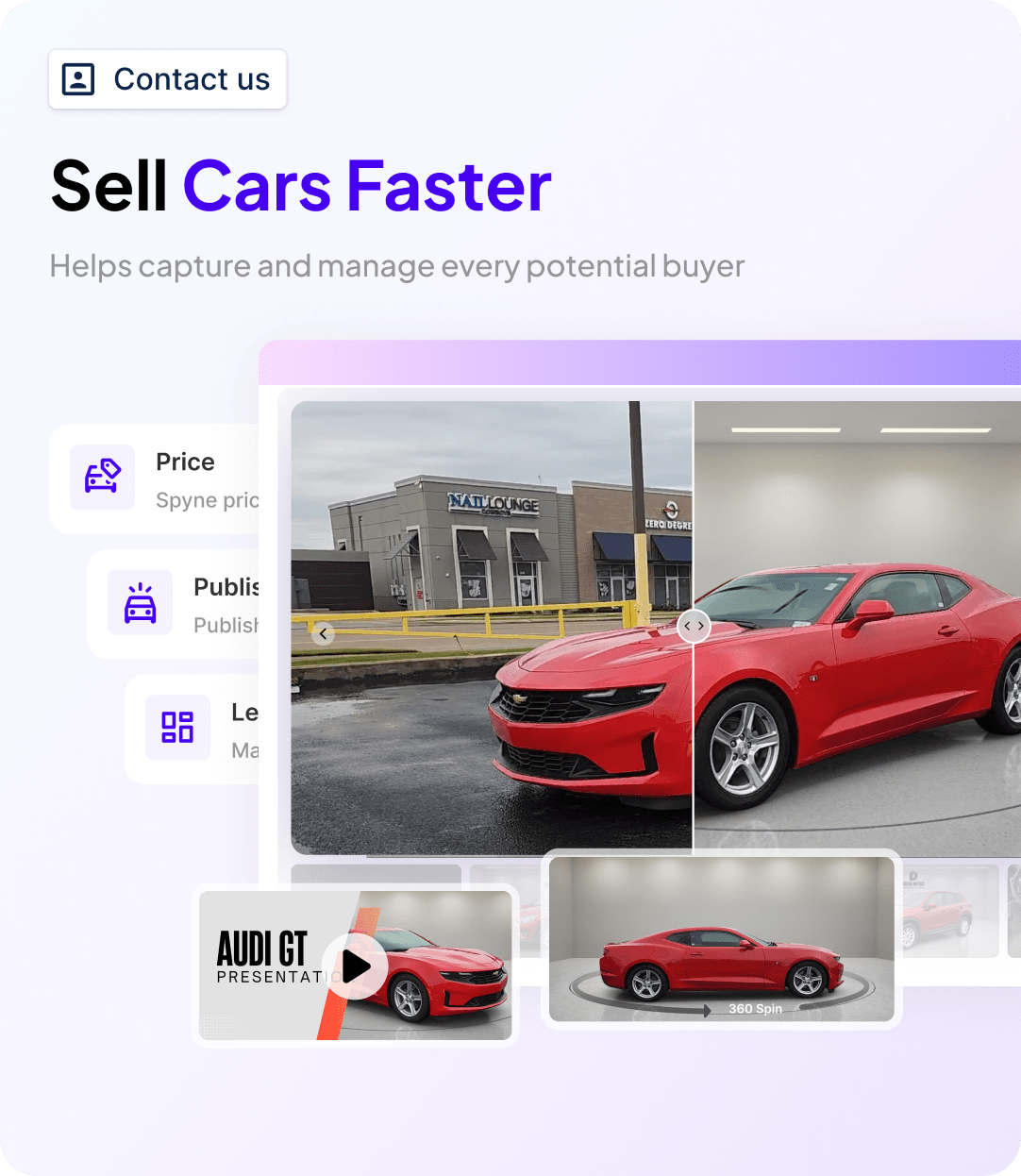
Dealers can digitize inventory, create professional listings with clean photos, car walkarounds, and immersive visuals using Spyne’s virtual car photography studio, and manage those listings across multiple sales channels, without juggling separate systems.
24/7 Virtual Sales & Customer Engagement
Vini, Spyne’s conversational AI, automates voice, chat, and email support. Even after hours, dealerships have an always-on AI sales assistant engaging prospects and answering service-related queries.
Advanced Visual Enhancement Suite:
It offers tools like car colour changer, background cleanup, number plate blur, glare removal, frame alignment, and instant image correction, ensuring consistent, high-quality visuals that convert.
AI-Powered Lead Generation & CRM Integration
Spyne captures leads from websites, social platforms, marketplaces, and messaging channels, then pushes them into a unified CRM for streamlined tracking and follow-up.
Conclusion
Digital tools can help dealers optimize their sales and service operations in a very cost-effective manner. From creating digital touchpoints and personalized marketing to managing bookings and service automation, dealers can find digital solutions for nearly all operations. There are primarily two ways to integrate digital tools into your workflow. The first one is custom development, which is more costly and time-consuming, and the second one is using off-the-shelf solutions that are affordable and can be quickly deployed. If you’d like to see how this works in practice, you can book a demo and explore the possibilities firsthand.
FAQs
How do digital tools improve sales performance for car dealerships?
Digital tools help dealers create smoother buying journeys through online listings, digital showrooms, automated follow-ups, and real-time lead management. They reduce manual work, improve lead quality, and offer customers faster responses, leading to higher conversions, better engagement, and more predictable sales pipelines.
What technologies help automate after-sales service operations for dealers?
Technologies like online booking portals, telematics, service management software, predictive maintenance systems, and digital job card tools help automate after-sales operations. They simplify scheduling, speed up diagnostics, reduce downtime, optimize parts inventories, and improve communication with customers, all contributing to faster, more reliable service.
What digital dashboards help dealers track performance across teams?
Dealers can use integrated digital dashboards in CRM, DMS, and service management platforms to monitor leads, sales pipeline, technician productivity, job card status, conversions, service revenue, and customer feedback. Providing real-time visibility, helping managers identify gaps, optimize workflows, and improve overall team performance.
What role does digital visualization (like 3D and AR) play in modern car retail?
Digital showrooms let customers explore vehicles virtually through high-quality images, car walkarounds, car colour changer, visualizer, and AR experiences. This creates an immersive online journey, reduces dependency on physical visits, and builds buyer confidence early.
How does CRM integration help dealers manage leads more efficiently?
CRM integration centralizes all leads from websites, ads, social platforms, and WhatsApp into one system. It automatically assigns tasks, triggers follow-ups, tracks conversations, and eliminates manual errors. Dealers get better lead visibility, faster responses, and higher conversion rates thanks to structured workflows and real-time insights.
How can dealers reduce dependency on walk-ins by adopting digital channels?
Dealers can reduce walk-in dependency by building strong digital touchpoints like digital showrooms, social listings, online booking portals, WhatsApp engagement, and AI-powered lead response.