
The best car sales tips focus on building trust, following up consistently, and using the right tools to turn more conversations into sales. That matters more today than ever because the car-buying journey often begins long before a customer walks into the dealership. By the time they speak with a salesperson, many buyers have already researched pricing, financing, vehicle comparisons, and dealership reviews online. As a result, outdated tactics like rushing the conversation, applying pressure, or avoiding transparency are far less effective than they once were.
This shift in buyer behavior is well documented. Most car buyers now complete a significant portion of their research online before contacting a dealership, making the salesperson’s role less about providing information and more about helping buyers evaluate their options and make confident decisions.
This guide shares 15 proven car sales tips to help you build stronger customer relationships, increase appointment and closing rates, and sell more cars in today’s competitive market. We will also discuss a practical follow-up strategy, common mistakes that reduce conversions, and how modern CRM and AI tools can help sales teams perform more consistently.
Why Modern Car Sales Require a Different Approach?
Today’s car buyers often compare prices, financing options, vehicle features, and dealership reviews before meeting with a salesperson. They’re not looking for someone to repeat information they already know. Instead, they look for someone who can answer questions, simplify the buying process, and help them make a confident decision.
That changes what separates top-performing salespeople from everyone else. Success no longer comes from high-pressure tactics or memorized scripts. It comes from building trust, communicating clearly, understanding customer needs, and following up consistently throughout the buying journey.
Whether you’re selling your first car or leading an experienced dealership team, adopting these habits leads to stronger customer relationships, higher appointment and closing rates, and more consistent sales performance. They also create a better buying experience, making prospects more likely to return and recommend your dealership to others.
15 Car Sales Tips to Build Trust and Close More Deals
The best car salespeople don’t rely on a single closing technique. They build trust at every stage of the buying journey, from the first conversation to post-sale follow-up. The car sales tips below follow that same progression, making them easy to apply throughout the customer journey. Together, they help you build a more consistent sales process that strengthens customer relationships, improves close rates, and drives repeat business.
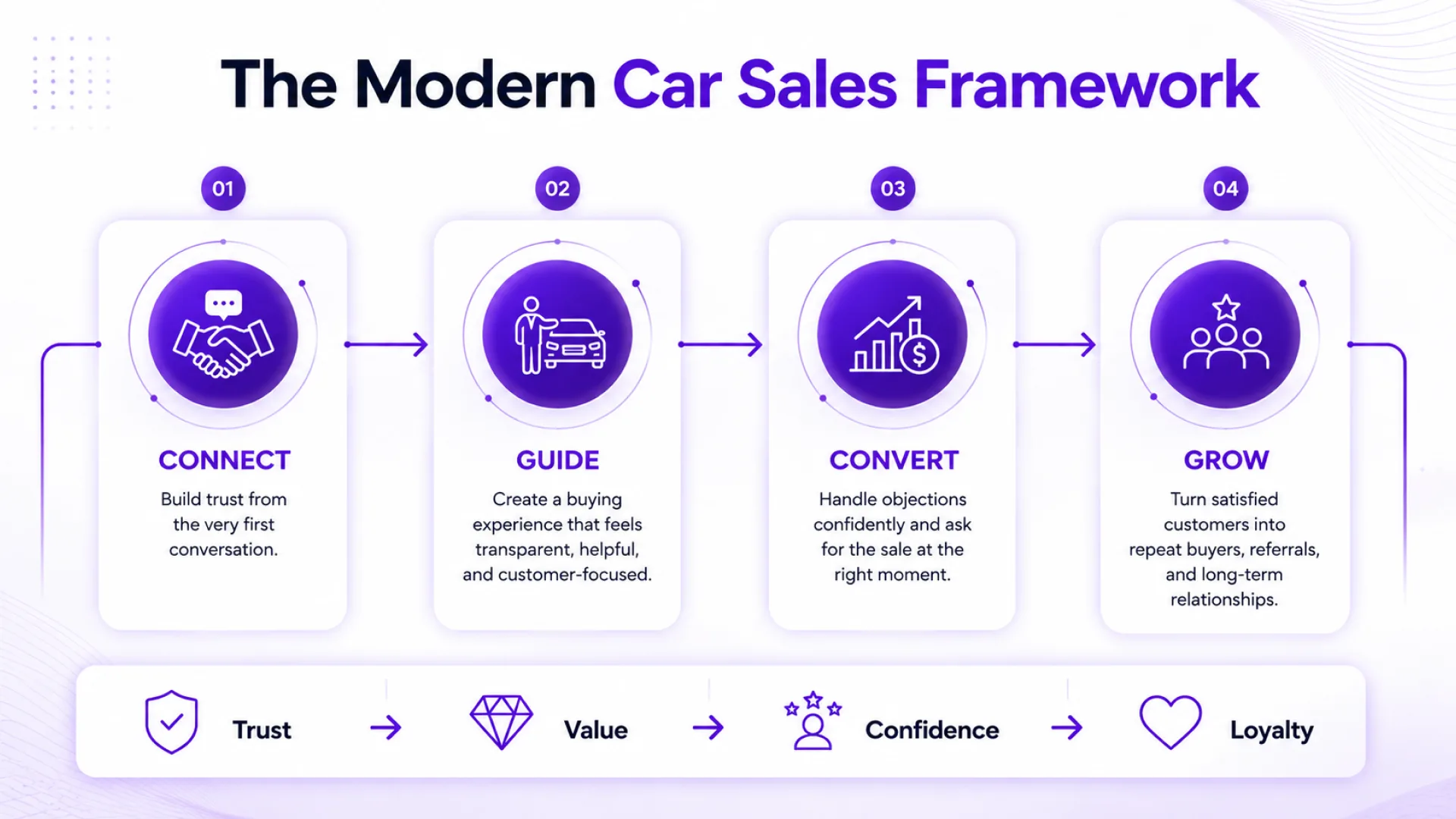
Build Trust From the First Conversation
First impressions shape the rest of the buying journey. These early interactions set the tone for customer trust. They make it easier to understand buyer needs, recommend the right vehicle, and move the conversation forward naturally.
1. Learn and Use the Customer’s Name
Ask for the customer’s name early and use it naturally throughout the conversation. Addressing someone by name makes the interaction feel more personal and shows you’re paying attention. If you forget it, ask again with confidence. Most buyers appreciate honesty far more than awkwardly avoiding their name.
2. Ask Open-Ended Questions Before Pitching
Resist the urge to jump straight into a vehicle presentation. Start by understanding what the customer needs the vehicle to do, whether it’s a daily commute, family transportation, towing, or weekend travel. Questions like, “What’s not working with your current vehicle?” or “What matters most in your next car?” uncover buying priorities and help you recommend the right solution instead of delivering a generic sales pitch.
3. Establish Value Before Discussing Price
Price is important, but it shouldn’t be the first conversation. Once customers see how a vehicle meets their needs, they’re more likely to evaluate its value rather than compare numbers alone. Before discussing pricing, ask a simple question like, “Does this feel like the right vehicle for you?” Establishing that agreement first creates a more productive and collaborative pricing discussion.
4. Know Your Inventory Beyond the Spec Sheet
Strong product knowledge goes beyond memorizing features. Understand which vehicles are best suited for different lifestyles, budgets, and driving needs so you can confidently recommend the right fit. Buyers who are comparing multiple dealerships quickly recognize the difference between someone reading specifications and someone offering genuine expertise. Pairing that expertise with effective car merchandising gives buyers the confidence to explore and compare inventory before they ever step into the dealership.
Create a Better Buying Experience
Once you’ve built trust, the focus shifts to creating a buying experience that feels transparent, comfortable, and customer-first. These habits help maintain buyer engagement and reinforce trust in your recommendations. As a result, purchase decisions feel more natural and less pressured.
5. Be Honest About Trade-Offs
No vehicle is perfect for every buyer, and pretending otherwise can quickly damage credibility. If a model isn’t the right fit, explain why and recommend one that better matches the customer’s needs. Buyers may not remember every feature you discussed, but they’ll remember a dealership sales professional who put their interests first.
6. Read Body Language and Adjust Your Pace
Pay attention to non-verbal cues throughout the conversation. Crossed arms, long pauses, brief responses, or frequent glances at the clock can all signal uncertainty or information overload. Instead of filling the silence with more talking, pause and ask if the customer has any questions or concerns. Matching your pace to the buyer’s comfort level creates a more relaxed and productive conversation.
7. Offer the Test Drive Early
A test drive transforms a vehicle from something customers can see into something they can experience. Once you’ve identified a suitable option, invite them to take it for a drive instead of waiting until the end of the conversation. Experiencing the vehicle firsthand builds confidence and helps buyers picture it fitting into their daily lives. Before they even arrive at the dealership, rotating car views can create that same sense of familiarity by giving buyers a complete view of the vehicle online. That emotional connection often has a greater impact than a conversation about features or specifications.
8. Let the Vehicle Sell Its Value
Customers are more likely to trust thoughtful guidance than aggressive sales tactics. Rather than creating artificial urgency or relying on scripted closing lines, focus on how the vehicle meets their specific needs. When buyers clearly understand the value, the decision to move forward feels natural instead of pressured.
9. Respect Every Customer’s Time and Perspective
Treat every customer with the same level of attention and respect, regardless of their appearance, budget, or who accompanies them. Avoid repeating answered questions, involve everyone in the purchase decision, and focus the conversation on their priorities. Small moments of professionalism often have the biggest impact on long-term customer trust.
Guide Buyers Toward a Confident Decision
Objections are a natural part of every sales conversation. Avoid treating objections as something to overcome with pressure. Instead, understand what’s holding the customer back and address their concerns with clarity.
10. Handle Objections with Curiosity
When a customer raises concerns about price, financing, features, or timing, resist the urge to respond immediately. Ask a follow-up question to understand what’s driving the hesitation. A simple response like, “Can you tell me more about what’s giving you pause?” encourages an open conversation and helps you address the real objection instead of making assumptions. In many cases, the first objection isn’t the real obstacle. Taking time to listen before responding helps uncover what’s actually preventing the buyer from moving forward.
11. Create Urgency Only When It’s Real
Limited inventory, manufacturer incentives, and financing deadlines can encourage customers to act, but only if they’re genuine. Avoid creating artificial urgency or making promises that don’t exist. Honest communication strengthens trust, while manufactured pressure can quickly undermine it and cost you the sale.
12. Ask for the Sale with Confidence
Once the customer agrees the vehicle meets their needs and they’re comfortable with the pricing, don’t hesitate to ask for the sale. A straightforward question like, “Are you ready to move forward today?” keeps the conversation moving. Many deals are lost not because customers say no, but because salespeople never clearly ask for a decision.
Build Long-Term Sales Success
The strongest salespeople know that every customer interaction creates an opportunity beyond the current sale. Following up consistently, learning from every outcome, and maintaining a professional dealership experience all contribute to stronger referrals, repeat business, and long-term sales success.
13. Ask for Referrals After Every Successful Sale
A satisfied customer is one of your best sources of future business. Shortly after the sale is complete, ask if they know anyone else who may be shopping for a vehicle. Many salespeople overlook this step, even though satisfied customers are often happy to recommend friends and family or leave positive online reviews. Both strengthen your dealership’s reputation and create future sales opportunities long after the original purchase.
14. Keep Your Sales Environment Updated
A positive buying experience extends beyond the conversation. Outdated brochures, incorrect pricing, neglected vehicle displays, or an unorganized showroom can weaken customer confidence before the sales process even begins. Maintaining an accurate, welcoming, and professional environment reinforces the trust you’ve worked to build.
15. Review Every Lost Opportunity
Not every customer will buy, but every lost deal offers a chance to improve. After losing a deal, take a few minutes to review what influenced the outcome. Look for patterns involving pricing, inventory, timing, communication, or follow-up. Tracking these patterns over time helps you refine your sales approach, improve close rates, and coach future conversations more effectively.
Modern dealership sales platforms make this process even easier by tracking sales activity, follow-up history, and pipeline performance, helping managers identify recurring trends and turn every lost opportunity into actionable coaching.

5 Common Car Sales Mistakes That Hurt Your Close Rate
Applying the right sales techniques is only part of the equation. Even experienced salespeople lose opportunities due to small, recurring mistakes that quietly undermine customer trust and reduce close rates. Simple improvements in how your team listens, communicates, presents value, and follows up can create a better buying experience and a more consistent sales process. Recognizing these common pitfalls helps reinforce the habits that consistently turn more conversations into closed deals.
- Talking more than listening: Customers are more likely to buy when they feel heard. Ask thoughtful questions and let their needs guide the conversation.
- Discussing price too early: Focusing on price before establishing value often shifts attention away from how well the vehicle fits the customer’s needs.
- Following up inconsistently: A structured follow-up process, supported by tools like an AI receptionist, helps ensure every inquiry receives a timely response while keeping your dealership top of mind without overwhelming the customer.
- Assuming instead of asking: Avoid making assumptions about a customer’s budget, preferences, or priorities. Clarifying questions almost always lead to better recommendations.
- Waiting too long to ask for the sale: Once the customer is confident in the vehicle and purchase terms, ask for the sale. Many deals are lost simply because the salesperson never asks.
Avoiding these mistakes strengthens every customer interaction, but maintaining momentum after the customer leaves the dealership is just as important. A consistent follow-up strategy helps reinforce buyer confidence, answer remaining questions, and ensure promising conversations don’t become missed opportunities.
How to Follow Up Without Losing the Sale?
A great sales conversation doesn’t end when a customer leaves the dealership. Many buyers need time to compare options, discuss the purchase with family, or finalize financing before making a decision. Consistent, timely follow-up keeps your dealership top of mind, reinforces buyer confidence, and remains one of the most important automotive BDC metrics for improving appointments and sales conversions.
The most effective follow-up balances consistency with relevance. Every touchpoint should answer a question, provide helpful information, or offer a timely reason to reconnect. Use the follow-up schedule below as a practical framework for staying engaged throughout the buying journey without overwhelming the customer.
| Touchpoint | Recommended Timing | Best Channel | Purpose |
| First follow-up | Same day | Phone or text | Thank the customer, answer questions, and offer further assistance. |
| Second follow-up | Day 2-3 | Share vehicle details, financing options, or similar inventory. | |
| Third follow-up | Day 5-7 | Phone call | Address questions about pricing, financing, or trade-ins. |
| Fourth follow-up | Around Day 14 | Text or email | Share relevant inventory, incentives, or pricing updates. |
| Ongoing follow-up | Day 30 and beyond | Email or CRM reminders | Stay top of mind with relevant updates and periodic check-ins. |
Following a structured cadence like this helps keep your dealership top of mind and ensures every customer receives timely, relevant communication. The challenge isn’t knowing when to follow up. It’s maintaining that consistency across every lead, every salesperson, and every customer interaction. That’s where the right dealership sales platform becomes an essential part of a high-performing sales process.
Why a CRM Is the Foundation of a Modern Dealership Sales Process
A dealership CRM is the foundation of a modern sales process. It centralizes customer information, automates follow-up, tracks performance, and ensures no sales opportunities are missed. As dealerships adopt AI-powered communication, lead management, and reporting tools, the automotive CRM becomes the system that connects those workflows into one consistent customer experience.
The comparison below highlights how a CRM transforms everyday sales activities into a more organized and repeatable process.
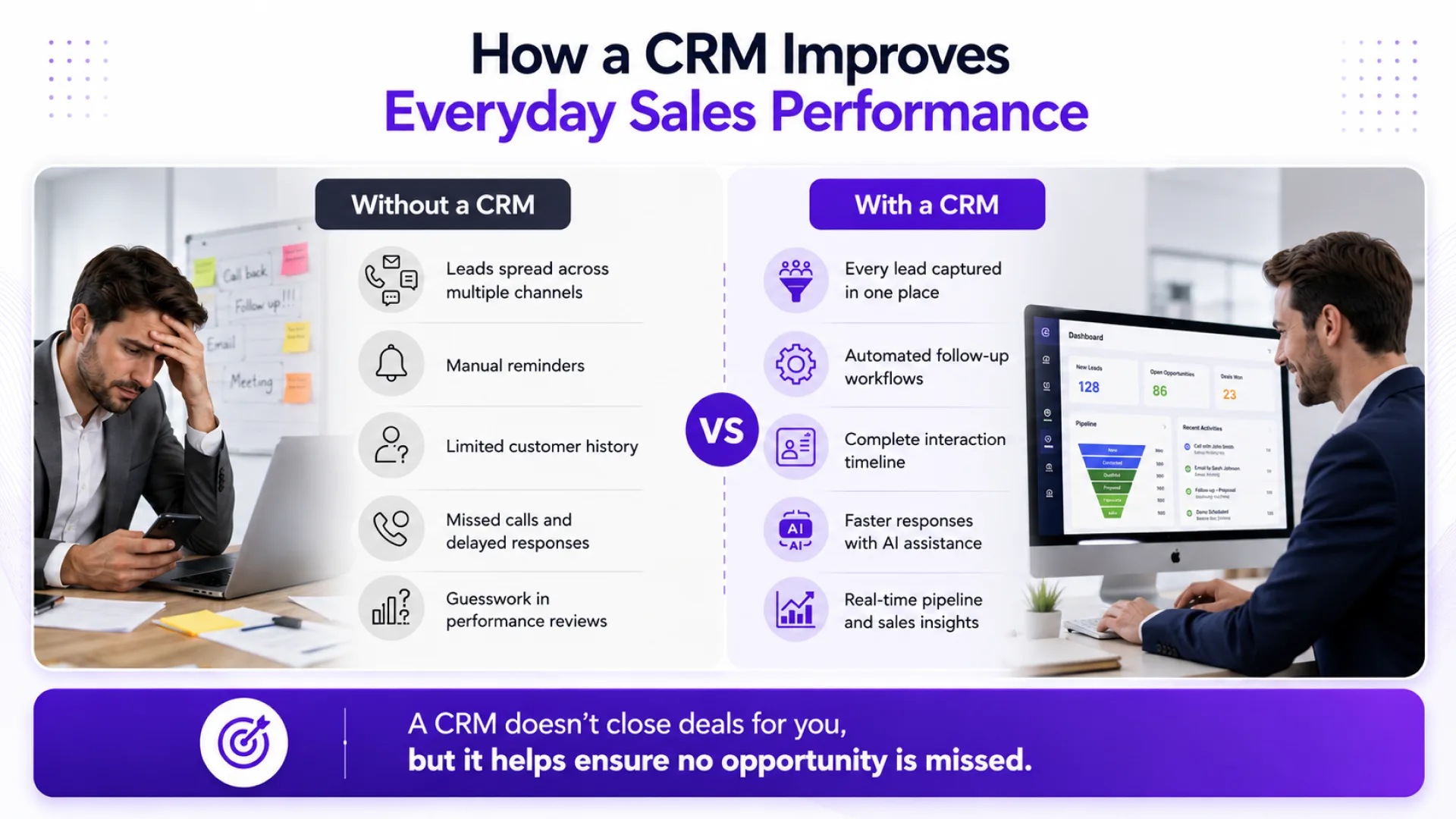
Not every CRM is built for the way dealerships sell vehicles. Before investing in one, make sure it supports the workflows, communication channels, and reporting capabilities your sales team relies on every day.
Before choosing a CRM, ask these four questions:
- Does it capture leads from every channel you use? Every inquiry, whether it comes from your website, phone calls, walk-ins, social media, or marketplace listings, should flow into one centralized system so no opportunity is overlooked.
- Does it automate follow-up and support multichannel customer communication? Look for a platform that helps you maintain consistent follow-up across email, text, phone, and other channels without relying on manual reminders.
- Does it provide actionable sales insights? Your CRM shoudl provide real-time visibilty into response times, close rates, pipeline health, and stalled deals. These insights help salespeople and managers identify opportunities to improve performance.
- Does it integrate with your existing dealership systems? Your CRM should connect seamlessly with your DMS, inventory management, and communication tools. That allows your team to work from one connected workflow instead of juggling multiple platforms.
Today’s dealerships increasingly combine their CRM with conversational AI to automate customer communication, qualify leads, answer inbound calls, improve response times across every channel, and create a more connected sales process. The most effective platforms bring these capabilities together, allowing sales teams to spend less time managing systems and more time building customer relationships.
Build a Smarter Dealership Sales Process with Spyne
Knowing the right sales techniques is only the first step. The dealerships that consistently outperform their competitors are the ones that combine proven sales practices with the right technology to execute them at scale. From capturing every lead and responding faster to following up consistently and coaching sales teams with real-time insights, modern dealership platforms help turn great sales habits into repeatable business results.
Spyne helps dealerships do exactly that by bringing AI-powered customer communication, lead management, CRM, sales automation, and performance reporting together in one connected platform. With Spyne, dealerships can:
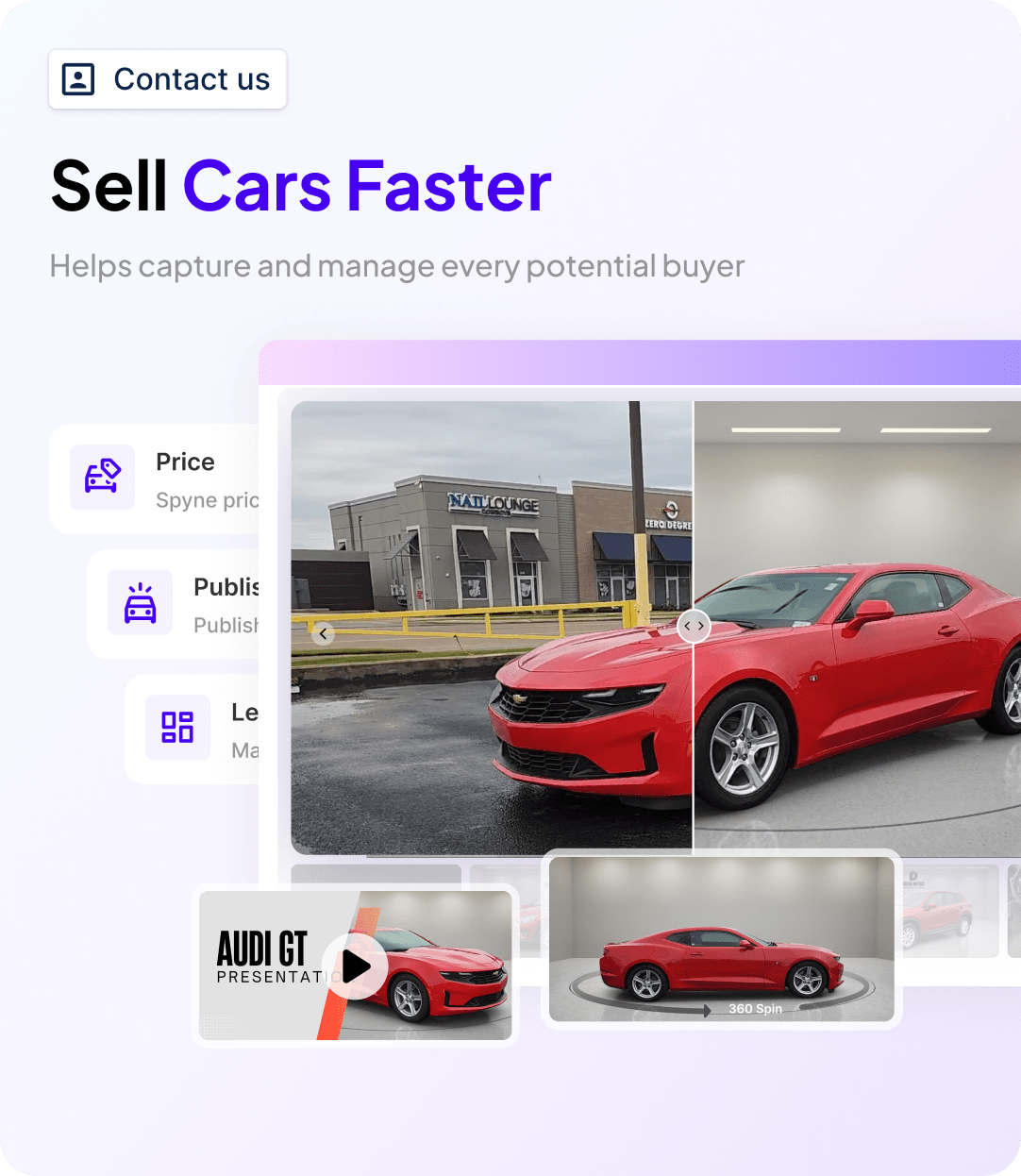
- Present inventory more effectively: Create a stronger first impression with AI-powered merchandising tools, including professional-quality vehicle images, rotating car views, and car video tours that help attract more buyers and build confidence before the first conversation even begins.
- Capture every lead in one place: Consolidate inquiries from your website, phone calls, social media, marketplace listings, and walk-ins into one dashboard. Track, assign, and follow up on every lead without switching between disconnected systems.
- Prioritize high-intent buyers with AI: AI-powered lead scoring helps sales teams identify the prospects most likely to convert, enabling faster, more personalized follow-up.
- Automate customer communication: Schedule personalized texts, emails, reminders, and follow-up sequences that keep every lead engaged without relying on manual tracking.
- Respond to every customer, even after hours: AI-powered receptionist capabilities answer calls, capture lead information, and route conversations so no opportunity is lost because your team is unavailable.
- Track team performance in real time: Monitor response times, appointment rates, close rates, and sales activity through intuitive dashboards. Use those insights to identify coaching opportunities and improve team performance.
- Deliver more personalized buying experiences: Give every salesperson instant access to customer history, vehicle preferences, previous conversations, and appointments before every interaction.
- Keep every conversation connected: Bring calls, texts, emails, and lead activity into one shared customer timeline so every team member always has the full context.
The best sales practices only deliver results when they’re applied consistently. Spyne combines AI-powered dealership tools with proven workflows to help teams automate routine work, engage buyers more effectively, and build a sales process that’s easier to scale and improve.

Conclusion
The most effective car sales tips aren’t built around clever closing lines or high-pressure tactics. They’re built around earning trust, understanding customer needs, communicating with transparency, and following up consistently throughout the buying journey. When these habits become part of your everyday sales process, they strengthen customer relationships and improve appointment and close rates. They also generate more referrals and support sustainable long-term growth.
The difference between average and top-performing dealerships isn’t knowing these strategies. It’s executing them consistently across every lead, salesperson, and customer interaction. That’s why leading dealerships combine proven sales strategies with technology that automates routine tasks and improves customer communication. It also streamlines sales workflows and gives managers complete visibility into team performance.
If you’re ready to build a more consistent, high-performing sales process, book a demo with Spyne and see how its AI-powered Automotive CRM helps dealerships capture every lead, automate follow-ups, and convert more opportunities into sales.