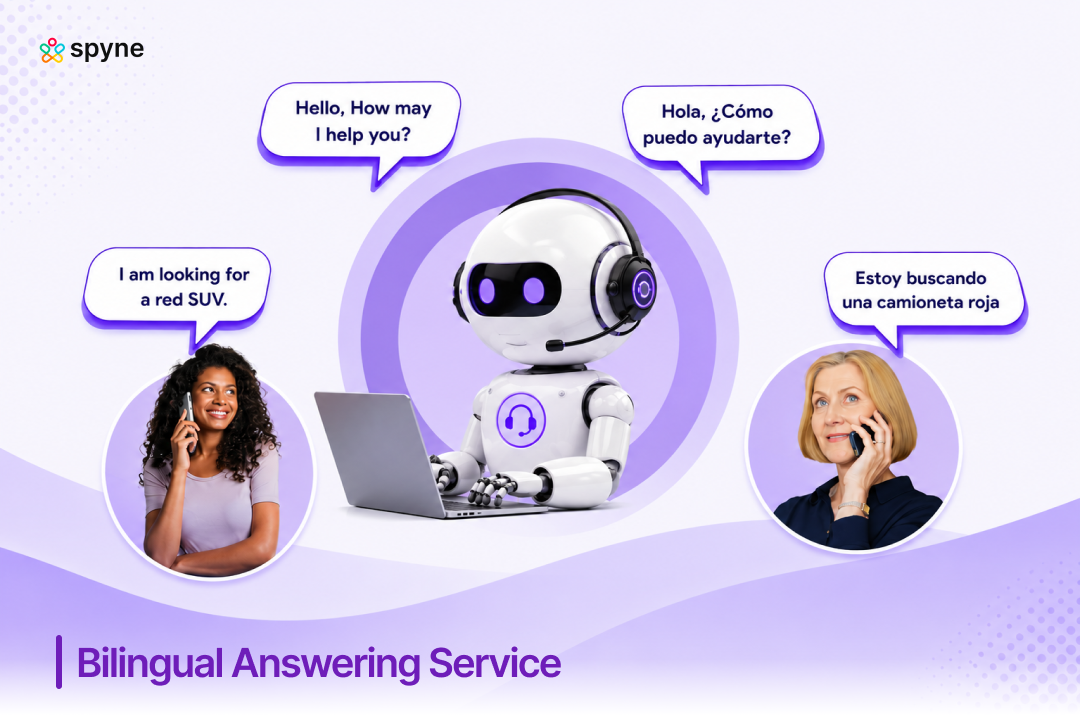

Businesses lose more than they realize because of one simple issue: the language barrier. According to the U.S. Census Bureau, more than 43 million people in the United States speak Spanish. Also, CSA Research found that 76% of consumers prefer buying products and services when information is available in their native language. Businesses relying on phone calls for sales or support: every unanswered or misunderstood conversation costs your revenue. A bilingual answering service helps eliminate these communication gaps by ensuring every caller receives assistance in their preferred language.
Whether it’s a Spanish-speaking customer calling a car dealership about vehicle availability, a patient booking a medical appointment, or a homeowner requesting emergency repairs, responding quickly and in the right language creates trust from the first interaction. With a modern bilingual or multilingual answering service, businesses can provide 24/7 support, improve first-call resolution, increase appointment bookings, and deliver a better customer experience.
What is a Bilingual Answering Service?
A bilingual answering service is a call-handling service where live or virtual receptionists handle calls fluently in two languages, most commonly English and Spanish. It can use trained bilingual agents or AI-powered receptionists to answer calls, understand customer requests, provide information, take messages, qualify leads, schedule appointments, and route calls to the right team member. This helps businesses serve customers in their preferred language without requiring an in-house bilingual team.
Why You Need a Bilingual Answering Service
Language support can have a direct impact on how easily customers can connect with a business. The latest 2024 U.S. Census Bureau data shows that 74.1 million people speak a language other than English at home, including 44.9 million Spanish speakers. That means businesses that cannot support Spanish-speaking callers may be creating an unnecessary barrier at the first point of contact.
A bilingual answering service helps remove that barrier by allowing customers to communicate in English or Spanish when they call. It can be especially valuable for businesses that depend on phone calls for leads, appointments, sales, or customer support. Instead of sending a caller to voicemail or asking them to find someone who speaks their language, businesses can provide immediate assistance and keep the conversation moving.

Top 8 Benefits of Using a Bilingual Phone Answering Service
Answering service bilingual is not just about handling calls. It also helps businesses reach a wider audience, keep calls covered 24/7, and reduce manual workload. Let’s discuss the benefits of using a bilingual answering service in depth:
1. Reach More Customers
Language should not prevent a potential customer from contacting your business. A Spanish answering service makes it easier to engage Spanish-speaking callers, while broader language capabilities can help businesses serve an increasingly diverse customer base without creating separate support teams.
2. Enhanced Customer Service
Customers are more comfortable when they can explain their needs in a language they understand well. A Spanish-speaking AI call bot can make conversations easier, reduce misunderstandings, and create a more personalized experience from the first interaction. This can be especially valuable for businesses handling appointments, purchases, service requests, or detailed customer questions.
3. 24/7 Availability
Calls do not always arrive during business hours. A 24/7 bilingual after-hours answering service can respond to customers in English and Spanish after hours, during weekends, or when employees are already handling other calls. Instead of reaching voicemail, customers can get assistance, leave details, schedule an appointment, or have their call routed according to the business’s instructions.
4. Saves Operational Costs
Hiring, training, and retaining dedicated bilingual receptionists can add significant operational expenses. A bilingual answering service gives businesses another way to provide language support without building a larger in-house team. AI-powered options can further reduce the resources needed to manage repetitive calls while keeping human employees available for more complex conversations.
5. Increase Sales Leads
Every inbound call can represent a potential sales opportunity. A bilingual phone answering service can answer calls promptly, identify what the customer needs, collect contact information, qualify prospects, and route sales-ready leads to the right person. For businesses where phone calls drive revenue, this can help prevent qualified opportunities from being lost because nobody was available to answer.
6. Scalability
Call volumes can change quickly during promotions, seasonal periods, or business expansion. A bilingual AI receptionist can provide additional call-handling capacity without needing businesses to expand their staff. This makes it easier to support more customers while maintaining consistent call-handling processes.
7. Build a Professional Image
The way a business handles its phone calls can shape the customer’s first impression. An answering service bilingual solution can greet callers consistently, follow customized scripts, provide accurate information, and route calls according to established workflows. Offering support in a customer’s preferred language can also make the business feel more accessible and customer-focused.
8. Fewer Distractions
Constant phone interruptions can make it difficult for employees to focus on sales, operations, service delivery, or other core responsibilities. A bilingual answering service call center can handle routine calls, take messages, schedule appointments, and address common questions before escalating matters that require an employee’s attention. This keeps teams focused without leaving customers unattended.
How Much Does a Bilingual Answering Service Cost?
A bilingual answering service typically costs $25 to $1,700+ per month, depending on whether you choose an AI receptionist, live agents, or a premium virtual receptionist. Live services commonly charge $0.75 to $2 per minute, while AI solutions can offer lower-cost plans for routine, high-volume calls.
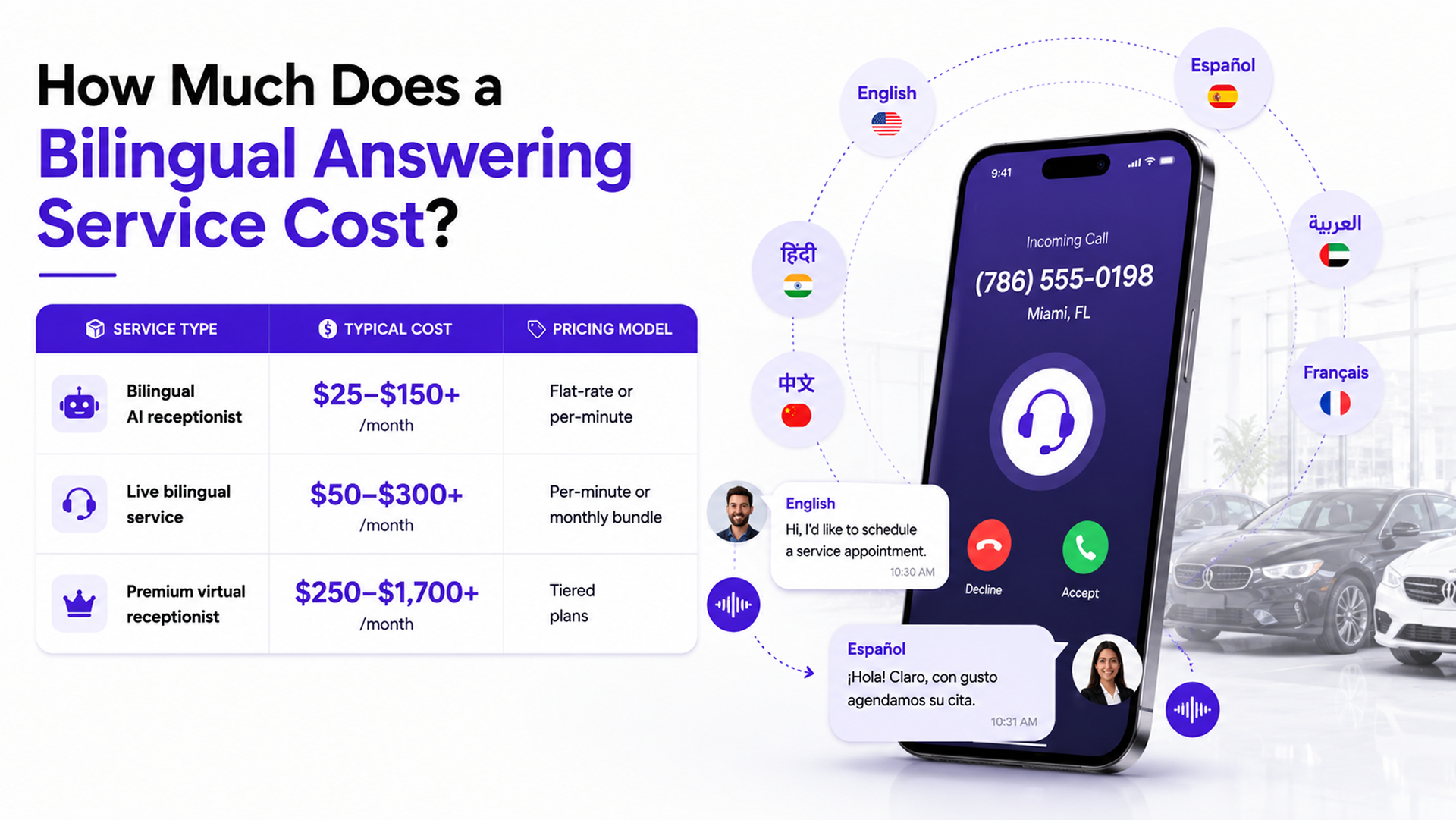
| Service Type | Typical Cost | Pricing Model |
| Bilingual AI receptionist | $25–$150+/month | Flat-rate or per-minute |
| Live bilingual service | $50–$300+/month | Per-minute or monthly bundle |
| Premium virtual receptionist | $250–$1,700+/month | Tiered plans |
When comparing providers, look beyond the base price. Bilingual surcharges, setup fees, after-hours coverage, integrations, and overage charges can increase your final bill. For businesses handling frequent routine calls, an AI-powered answering service bilingual solution can offer more predictable costs while providing 24/7 coverage.
What Features to Look for in a Bilingual Answering Service?
When choosing a bilingual answering service, look beyond basic call answering and language support. The right solution should help you respond faster, manage calls efficiently, and deliver a consistent customer experience.
1. 24/7/365 Availability
Choose a 24/7 bilingual answering voicebot that can handle calls around the clock, including weekends and holidays. Continuous availability ensures customers can reach your business even when your internal team is unavailable.
2. Automatic Language Detection
The service should identify whether a caller prefers English or Spanish without forcing them through complicated menu options. Automatic language detection creates a smoother conversation and helps callers get assistance in their preferred language faster.
3. Appointment Scheduling
Look for appointment scheduling that allows the assistant to book, reschedule, or confirm appointments during the call. This is particularly useful for dealerships, healthcare providers, home services, and other businesses where phone calls frequently lead to bookings.
4. Smart Call Routing
Smart call routing should recognize the purpose of a call and direct it to the right person or department. Urgent requests can be escalated immediately, while routine questions can be handled without involving your internal team.
5. Instant Responses
Customers should not have to wait several minutes for basic answers. A bilingual AI receptionist can respond instantly to common questions, provide information, capture lead details, and take the next action based on your business rules.
6. Customize Script
Your answering service should allow you to customize greetings, questions, responses, and escalation instructions. This ensures conversations in both languages follow your brand voice and reflect your actual business processes.
7. Omnichannel Support
Phone calls are only one part of customer communication. Consider a multilingual answering service that can also support channels such as SMS, web chat, and messaging. Managing these conversations from one system can make customer communication more consistent.
8. Security & Industry Compliance
Security becomes especially important when calls involve personal, financial, or medical information. If you operate in a regulated industry, check whether the provider follows relevant security standards and offers required compliance, such as HIPAA for eligible healthcare use cases.
9. Integrations
The service should connect with the tools your team already uses, including CRM, calendar, scheduling, and communication platforms. These integrations can automatically transfer caller information, update appointments, and keep customer records current without manual data entry.
Indeed, a bilingual answering service can help you reach a wider customer base, but its support is limited to two languages. A multilingual answering service takes this a step further by removing that language barrier altogether. It can engage customers in their preferred language, regardless of where they are from, helping businesses serve diverse audiences and expand their reach across international markets.
Spyne’s Answering Service for Automotive Dealers
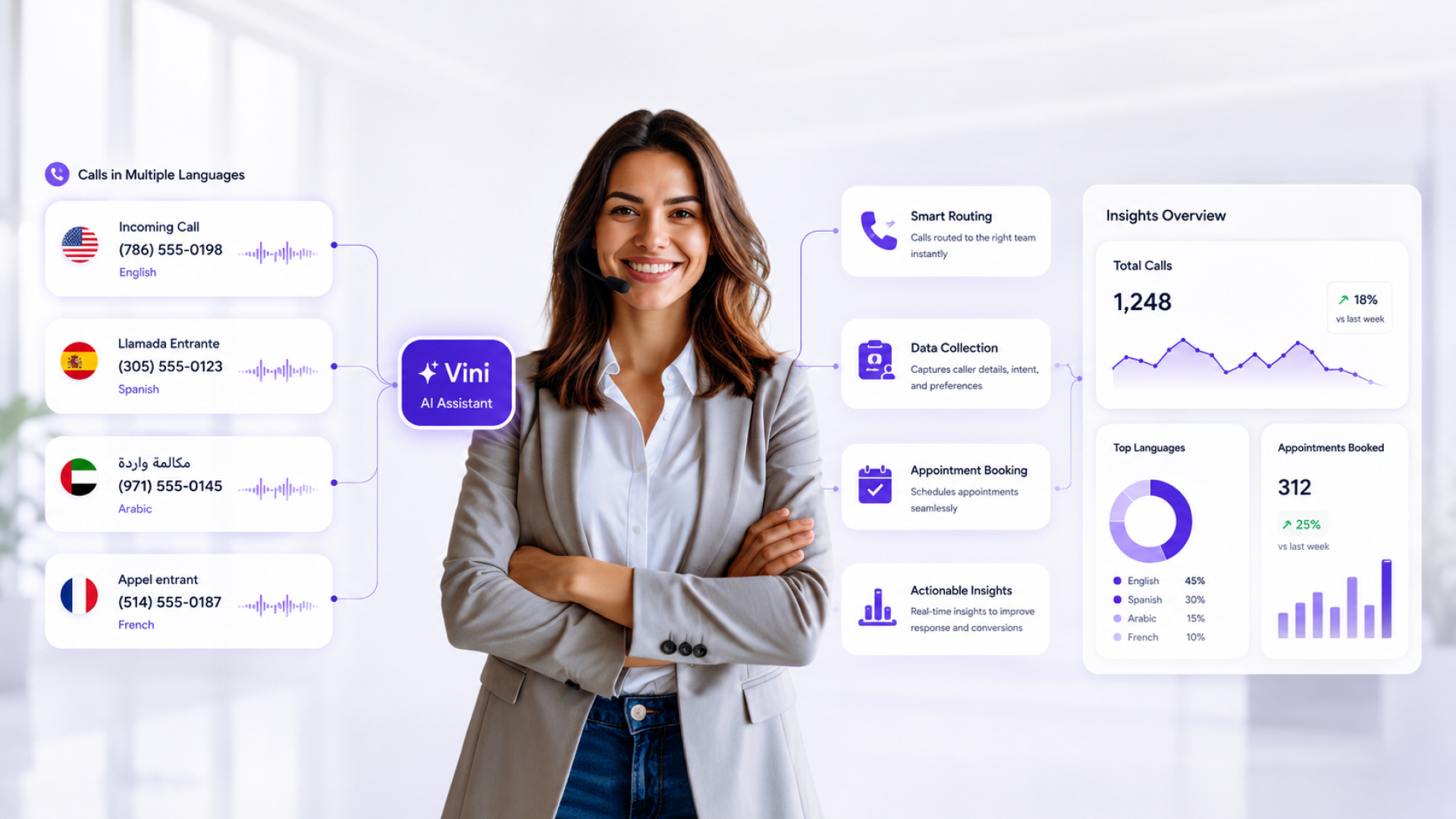
Running a car dealership and looking for an answering service to automate your calls? Spyne’s AI-powered answering service, Vini AI, helps car dealerships handle customer calls 24/7, engage buyers in multiple languages, qualify leads, book appointments, and route conversations to the right team.
1. 24/7 Availability
Vini AI answers dealership calls around the clock, including after hours, weekends, and holidays. Customers can get immediate assistance even when your sales or BDC team is unavailable.
2. Multilingual Support
Serve more customers in their preferred language with multilingual AI conversations. Vini AI helps dealerships engage diverse buyers without needing to maintain a separate team for every language. Whether it’s English, Spanish, or any other language, our AI can understand and talk. Do not limit your business with a language barrier.
3. Scalability
Handle increasing call volumes without continuously expanding your BDC team. Vini AI can manage multiple customer conversations simultaneously, helping dealerships maintain consistent coverage during busy periods.
4. Understand Context
Vini AI understands the context and intent behind customer conversations instead of simply following rigid scripts. It can ask relevant follow-up questions and respond based on what the buyer actually needs.
5. Instant Responses
When a buyer calls about a vehicle, price, availability, or appointment, every second matters. Vini AI responds immediately, helping dealerships engage customers while their purchase intent is still high.
6. Qualify & Capture Leads
Our automotive call center software asks qualifying questions, captures contact details, understands buyer intent, and collects relevant vehicle requirements. Your sales team receives useful lead information instead of an unanswered call or incomplete message.
7. Automate Appointment Booking
Our AI phone call solution turns conversations into appointments without relying on manual follow-ups. It can schedule test drives, service appointments, and other dealership visits based on your availability and predefined workflows.
8. Smooth Integrations
Connect Vini AI with your existing dealership systems and workflows to keep customer information and follow-up actions organized. This reduces manual data entry and helps your team maintain continuity across customer interactions.
9. Smart Call Routing & Handoff
Some conversations require a human. Vini AI can identify when a customer needs sales, service, or another department and route the call to the appropriate team member, creating a smooth AI-to-human handoff.
10. Insights & Analytics
Turn customer conversations into actionable insights. Vini AI can help dealerships understand call volumes, common customer questions, lead quality, appointment activity, and other conversation trends to improve sales and customer engagement.

Conclusion
A bilingual answering service helps businesses remove language barriers, respond to customers faster, capture more leads, and stay available beyond regular business hours. The right solution should offer reliable language support, intelligent call handling, appointment booking, and seamless integrations.
For dealerships looking to go beyond traditional call answering, Spyne’s automotive answering service brings multilingual conversations, lead qualification, appointment booking, smart routing, and 24/7 availability into one AI-powered solution. See how Vini AI Spyne automates your dealership calls and book a demo today.