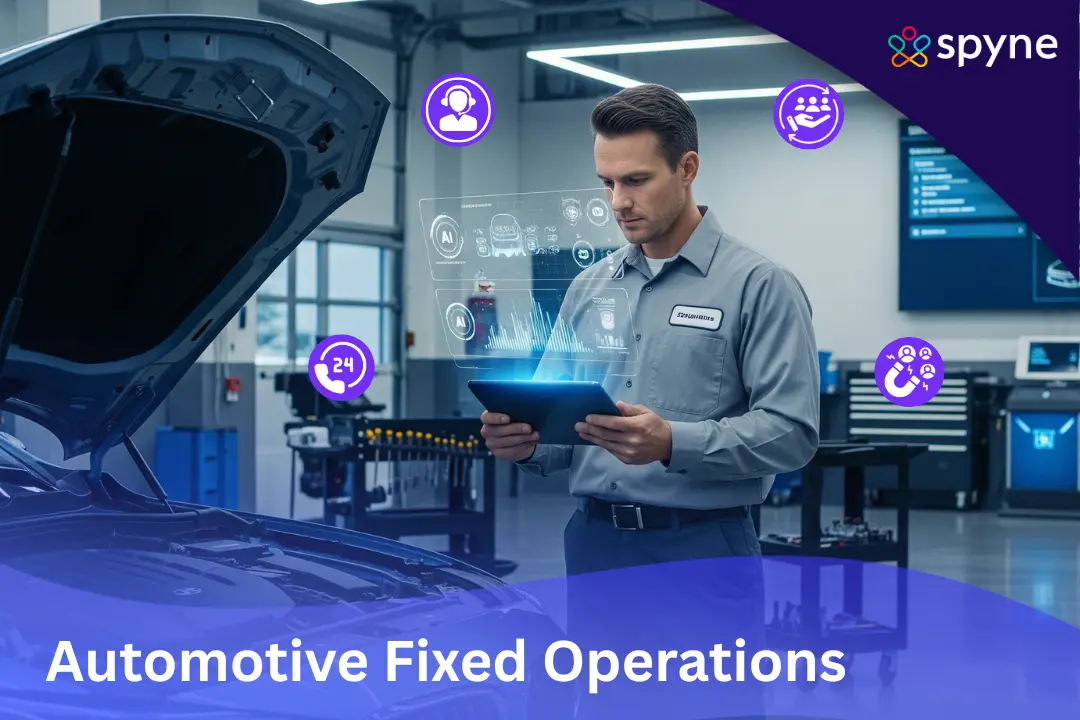

A dealership must be built of two fundamental components: automotive fixed operations and variable operations. Both operations have their own impact on the revenue model of the dealership. The fixed operations are considered the cornerstone of every dealership for driving profitability and fostering lasting relationships with customers.
This blog outlines the differences between fixed and variable operations, the importance of their difference, and major KPIs you must know to manage the fixed operations in a car dealership.
What are Automotive Fixed Operations?
The car dealership fixed operations refer to the service department in a car dealership that focuses on maintaining and repairing vehicles. The automotive fixed operations are not involved in the direct sales of the automotive business. These operations are considered fixed as they generate revenue in parts and services, which tend to be more stable than the actual vehicle sale. This is the reason they are less variable compared to vehicle sales.
What are Variable Operations in a Dealership?
The dealership variable operations refer to revenue-generating processes that are tied directly to vehicle sales. This includes all the activities that vary according to the sales of vehicles, such as new or used car sales, financing, and other related services. Unlike dealer fixed ops, the variable operations are highly influenced by market trends changing over time, consumer preferences, and economic conditions. This makes these operations more volatile and unpredictable for dealership profitability.
However, promotional offers and marketing strategies are often essential to attract potential buyers to drive profit and success through variable dealer ops.

What Part of the Dealership is included in Fixed Operations?
The fixed ops in a dealership included everything related to the repair of a car. It includes parts and service departments as well as body shop work. They have a more consistent base for expenses and income. People often come to the dealership for a car service after the purchase, allowing you to make a predictable amount for your business.
- Service Department: The service department handles all the routine repair and maintenance tasks of an automobile, like oil changes, tire rotations, brake repairs, engine diagnostics, and warranty work.
- Parts Department: The parts department in automotive fixed operations is responsible for managing the inventory of parts required for service processes or walk-in customers for their own vehicle repairs.
- Body Shop: The Body Shop is responsible for repairing damages caused by accidents like collision repair, painting, and dent removal.
What Part of the Dealership is included in Variable Operations?
The variable part of dealership operations encompasses sales and financing departments for new or used car sales. They are called variables because their performance relies on several external factors, from market conditions and promotions to inventory and holidays.
- Sales Department: The core part of variable ops is the sales department, managing the selling of cars.
- Finance and Insurance: This department is responsible for helping customers with financing options and selling other insurance products.
What is the Difference Between Automotive Fixed Operations and Variable Operations?
In a car dealership, fixed ops automotive involves service and parts departments, which are more stable and generate predictable revenue. In contrast, variable car dealership operations focus on car sales leads and financing that are less stable. Hence, the primary difference lies in the nature and income-generating methods of both operations. Understanding the difference is crucial for a dealership’s stability and growth.
Automotive Fixed Operations
The fixed operations include parts and service departments revolving around routine maintenance, repairing, and warranty work. They are generally more stable even when the vehicle sales fluctuate. The fixed operations in a car dealership encourage customer loyalty and retention, providing reliable and superior service after initial purchase.
Variable Operations
The variable operations automotive handles vehicle sales and finances for new as well as used car sales. Since variable ops are highly susceptible to market trends and economic conditions, they greatly impact dealership profitability. The dealership operations are direct income generators, thus focusing on the initial purchase of customers, managing interactions through car dealer live chat, and ensuring smooth transactions.
Why is it Important to Know the Difference between the two Operations?
Knowing the difference between variable and dealership fixed operations is essential for effective and well-balanced dealership operations. Earlier, dealerships viewed variable ops as their primary money maker, but this thinking has shifted over time. Balancing the two operations is crucial for long-term dealership profitability and fostering strong customer relations.
Both the variable and automotive fixed operations have their own impact in each area that allows dealerships to identify ongoing trends in each department for staying competitive.
Top 6 KPIs Required to Manage the Automotive Fixed Operations
The dealer fixed operations are necessary for your business since a majority of buyers return to the dealership for service after initial purchase. However, managing these dealer fixed ops business operations is crucial to track service department performance, drive profitability, and identify key improvements. Here are some KPIs listed below, including customer satisfaction, effective labor rate, gross profit, etc.
1. Customer Satisfaction and Retention
Tracking important metrics such as Customer Satisfaction Index (CSI), online reviews, and feedback surveys to improve automotive lead response, higher retention rates, and foster long-term profitability for automotive fixed operations in a car dealership.
2. Service Technician Productivity
Monitoring the number of orders repaired, hours billed, and actual revenue generated per labor gives insights into pricing strategies, upselling opportunities, and individual technician efficiency.
3. Revenue and Gross Profit
This major KPI includes gross profit, average repair orders, and the number of orders repaired in the first attempt to reflect profitability and how well the revenue generated covers the overhead dealership costs.

4. Vehicle Turnaround Metrics
The vehicle metrics demonstrate how long it takes for technicians to repair a vehicle, providing insights into automotive operational efficiency and impacting the customer satisfaction rate.
5. Service Parts and Inventory Management
By tracking inventory in real-time, you can measure how fast your automobile parts are sold and replaced with new inventory stock, impacting costs and efficiency.
6. Sales and Marketing Effectiveness
Maximize your ROI with targeted marketing campaigns and track the effectiveness of marketing strategies, driving traffic and increasing the lead conversion rate. This helps you know about customer preferences and optimize your ad spend.
How Do You Increase the Gross Profit in Automotive Fixed Operations?
Increasing gross profit is all about balancing revenue maximization and cost control by improving service quality, sales performance as well as operational capacity.
Firstly, personalized communication and timely service are important for customer retention in automotive fixed operations. This can be achieved by hiring skilled technicians and monitoring their performance for consistent improvements. Spyne’s conversational AI automates routine workflows such as appointment scheduling, answers basic questions, and keeps track of the customer journey. Ensure transparent conversations to build trust and foster long-term loyalty.
In addition to service, optimizing sales performance and inventory management is also crucial. Connecting to both old and new customers through tailored conversations enhances dealership sales pipeline. Dealerships need to analyse pricing strategies to optimize overhead costs, overstocking of inventory, and adopt digital data analytics tools for controlling costs.
Lastly, evaluate technician performance and monitor the progress regularly to identify blockages in service, parts, or customer support. This allows you to make necessary adjustments and timely improvements in your services and effectively allocate resources to maintain quality and business growth.

How Does Spyne help in Automotive Fixed Operations?
Spyne’s Retail AI enables dealerships to explore the untapped potential of dealership fixed operations in the automotive industry. We assure superior service and enhanced customer satisfaction with the use of AI and automation to help you manage operations and costs effectively.
1. Handle Routine Tasks with Automation
Spyne’s Conversational AI takes over automating routine workflows such as service appointment booking, reminders, and customer communication. This frees up your dealership staff to work on priority tasks leading to profitability.
2. Personalized Experiences
The AI interacts with customers in a natural manner that is most suitable for them with timely reminders, personalized messages, and repair updates through an automated lead follow up system for car dealerships, leading to retention and service upsell.
3. Operational Efficiency
With a real-time track of everything, we help you identify bottlenecks across teams, services, or processes and work on key improvement areas for the betterment of the automotive fixed operations of your business.
4. Omnichannel Support and Bulk Call Handling
Spyne cuts down on the pressure of handling FAQs and inbound calls in bulk through smart call diversion and automated chat software. Moreover, we support engagement across all channels like calls, messages, email, or website, assuring your service accessibility and responsiveness.
5. Valuable Insights for Profitability
Spyne provides actionable insights into your customer behaviors, technician efficiency as well as service trends. This in-depth understanding enables fixed ops automotive teams to make precise decisions that directly impact margins and operational profit.
6. Consistent Customer Communication
Our AI ensures you never miss an opportunity, regardless of the time. With chatbots and AI call bot for car dealerships, we ensure timely responses across every touchpoint, building trust and enhancing the retention rate.
Conclusion
An automotive business can not flourish even if any of the operational pillars is missing. Both the fixed and variable operations are necessary for a prosperous dealership. Variable operations are necessary for generating direct revenue through car sales. The automotive fixed operations are responsible for the service and parts department. This ensures long-term profitability and customer loyalty. With evolving technology, dealerships need to optimize these operations. With automation and intelligence both delivered by Spyne, your dealership can operate efficiently and drive profitability, assuring long-term customer relationships. Book a free demo to gain a competitive edge in this automotive world.