
Every car buyer browsing Facebook Marketplace is already in motion, comparing prices, messaging multiple sellers, and moving toward a decision faster than most dealerships can respond. The platform reaches over 2.9 billion monthly active users and has quietly become one of the highest-volume, lowest-cost lead sources in automotive retail. Listing is free. The audience is enormous. Yet most dealerships treat it like an afterthought, raw lot photos, copy-pasted pricing from AutoTrader, and a Messenger inbox nobody checks after 6pm.
That execution gap is where structured dealers are pulling ahead.
This guide covers the three variables that determine whether Facebook Marketplace becomes a serious volume channel for your dealership, inventory merchandising, pricing strategy, and lead response, and the tools that make consistent execution operationally realistic at scale.
Facebook Marketplace as a Lead Channel for Used Car Dealerships
Facebook Marketplace has become the second-largest automotive listing channel in the United States by used car lead volume. 38% of car buyers actively use Facebook when researching a vehicle purchase, rising to 53% among those who bought within the last year. Yet most dealerships treat it as a secondary channel managed with leftover attention and no structured process. That gap is exactly where high-performing dealers are gaining ground.
Franchise dealers historically pushed budget into AutoTrader, Cars.com, and paid search, leaving Marketplace relatively uncontested for independent and used car operators willing to take it seriously. The result: a large, price-motivated buyer pool with limited competition from professionally run dealer listings.
Buyers on Marketplace tend to be earlier in the purchase funnel than buyers on traditional automotive platforms. They are actively comparing prices, open to negotiation, and highly responsive, but only to listings that give them a reason to click. The channel does not underperform. The execution standard does.
What separates high-performing Marketplace dealers:
- Consistent, professional photo standard across all inventory.
- Pricing that accounts for Marketplace buyer psychology, not a copy-paste from AutoTrader.
- A lead response system that operates outside business hours, when most Marketplace inquiries arrive.
- Listing descriptions that pre-qualify buyers before they send a message.
Why Listing Photos Make or Break Marketplace Performance
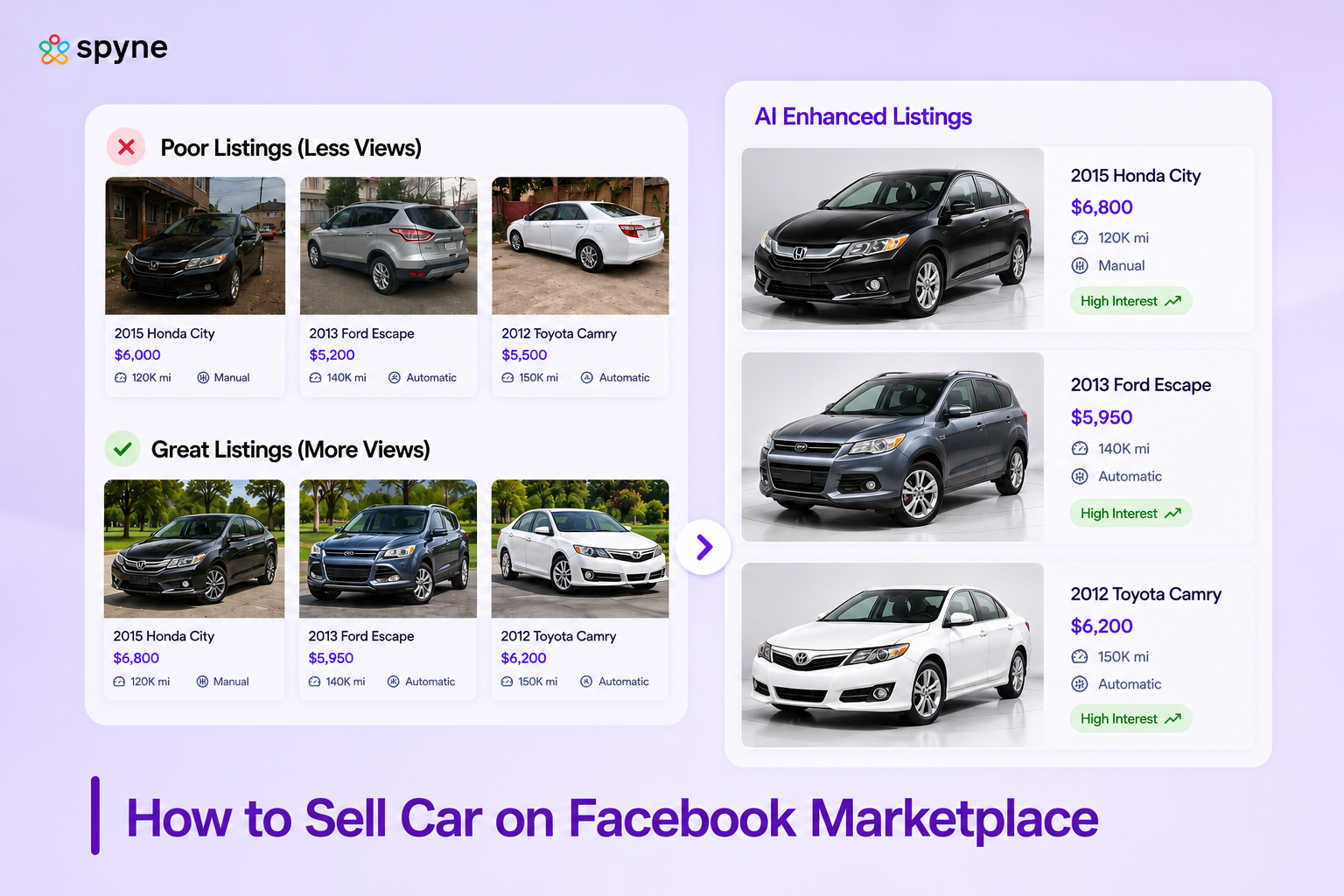
Vehicle photography is the single highest-leverage variable in Marketplace performance. The data is unambiguous.
According to CDK Global research, replacing stock photos with a single custom photo increases VDP views by 166%. Multiple custom photos push that figure to 349%. A May 2024 survey by Auto Remarketing found that 95% of car buyers say professional images significantly boost perceived vehicle value, and 87% would click a well-lit photo over a blurry one. Cox Automotive reports that used vehicle listings with real photos are 40% more likely to generate leads.
On Facebook Marketplace, the stakes are higher than on any traditional automotive platform. Your listing appears in the same scroll as vacation photos and local news, a social feed where the contrast between a professional presentation and a cluttered lot shot is immediate and unforgiving. That contrast affects click-through before a buyer reads a single word of the description.
The minimum photo standard for a competitive Marketplace listing:
- 15+ photos per vehicle, exterior angles, interior dashboard, front and rear seats, cargo area, odometer, and any notable condition items
- Clean white or studio background on all exterior shots, no competing vehicles, clutter, or uneven lot lighting in the frame
- Front three-quarter hero shot as the lead image, wheels turned outward, clean background; this one image determines click-through rate in the feed
- No heavy watermarks or branded overlays, Facebook’s algorithm actively suppresses listings with prominent branded overlays
- Well-lit interior photos without windshield glare, a consistent failure point on raw lot photography that AI correction addresses automatically
- At least one odometer photo, among the most-requested images by Marketplace buyers; including it reduces repetitive mileage inquiries
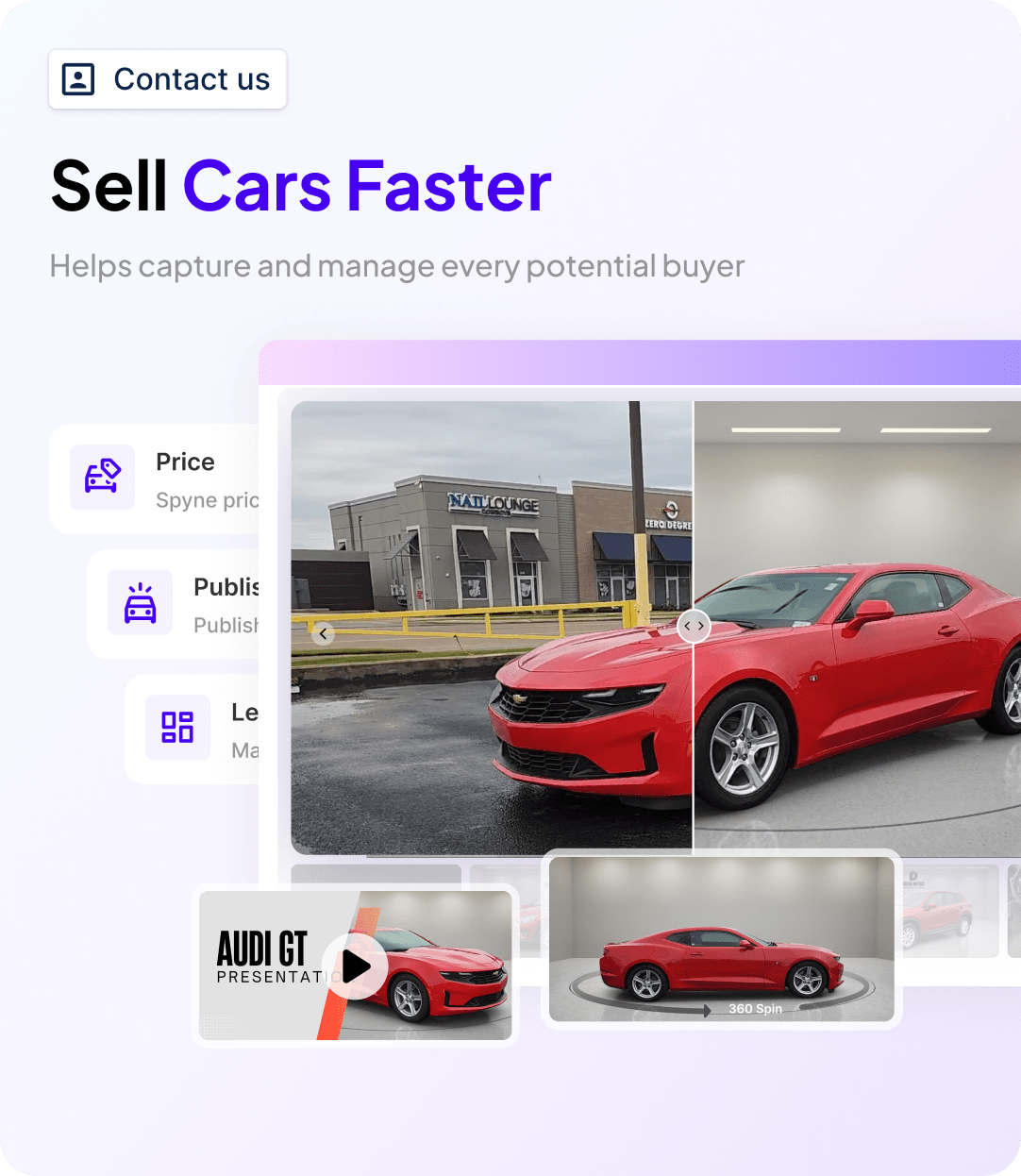
This is the merchandising problem that Spyne’s Studio AI was built to solve at scale. The same photo workflow that produces AutoTrader and Cars.com listing images generates Marketplace-ready photos simultaneously, no separate shoot, no extra editing time.
How AI Background Replacement Affects Marketplace Visibility?
A vehicle photographed on a cluttered lot competes poorly against the same vehicle on a clean white background, even when every other variable is identical. The brain processes the background as part of the product signal. A busy background creates friction. A clean background communicates confidence and professionalism, which transfers directly to perceived vehicle value.
On CarGurus or AutoTrader, listings share a roughly comparable visual treatment, the platform context normalizes the presentation. On Facebook Marketplace, your listing sits inside a social feed. The contrast between a professionally edited image and a raw lot photo is amplified by everything surrounding it. Clean, high-contrast images stand out sharply against user-generated content, and that differentiation is what drives click-through in a free-scrolling feed.
Spyne’s Studio AI produces studio-quality exterior images from standard lot photography, no controlled environment required. The platform handles:
- Background replacement, replaces any lot background with a clean white or neutral studio finish
- Exposure correction, normalizes lighting across all exterior and interior shots regardless of shooting conditions
- Interior normalization, removes windshield glare and evens out cabin lighting
- Hero shot generation, ensures every listing leads with the front three-quarter shot that performs best in the Marketplace feed
The result is a consistent visual standard across the full inventory. Every unit, regardless of when it was acquired, who photographed it, or what the lot looked like that day, meets the same professional standard in the Marketplace feed.
Dealership Listing Strategy for Facebook Marketplace
#1- Syncing Full Inventory
Verified dealer accounts can list their complete inventory through Facebook’s Automotive Inventory feed, which integrates directly from the dealership’s DMS or inventory management system. There is no practical listing cap for verified accounts. Facebook does not charge a per-vehicle listing fee on the standard feed, Marketplace listings are free. Promoted placements through Facebook Ads are a separate, paid option for dealers wanting additional feed visibility.
Spyne’s Studio AI syncs AI-edited inventory photos directly to connected listing channels including Marketplace, eliminating the manual upload step per vehicle. Photos produced for primary platforms are simultaneously distributed to Marketplace without a separate workflow or additional staff time.
#2- Writing Descriptions That Pre-Qualify Buyers
A well-structured listing description reduces low-intent inquiries and increases the proportion of messages from buyers close to a decision. The description should do four things:
- State accurate trim level and key features, buyers cross-referencing multiple listings use this to filter before messaging
- Disclose condition honestly, noting paint blemishes, recent service, or wear items builds trust upfront and removes friction at the dealership
- Provide pricing context, if the vehicle has remaining warranty, recent major service, or a clean Carfax, say so; it supports the asking price without negotiating in the listing itself
- Include a clear next step, schedule a test drive, call the lot, or message to confirm availability; vague listings generate vague inquiries
#3- Pricing Used Car Inventory on Marketplace
Marketplace buyers arrive having already checked AutoTrader, Cars.com, or CarGurus. They are looking for value differentiation, not the same vehicle at the same price they found on a paid platform. The most common dealer mistake is copy-pasting the AutoTrader price without accounting for that expectation gap.
| Inventory Age | Recommended Pricing Approach |
| 0–30 days on lot | Market average or slight premium if condition justifies it |
| 31–45 days on lot | 2–3% below comparable active listings |
| 45+ days on lot | 4–6% below market to accelerate turnover |
| 60+ days (aged) | Price aggressively, carrying cost exceeds margin concession |
For aged inventory specifically, Marketplace is one of the most operationally efficient clearance channels available. A vehicle sitting 60 days is accumulating floor plan interest, lot costs, and opportunity cost daily. A listing priced 5% below comparable units typically costs less to close than another 30 days of carrying charges.
Lead Response Time on Facebook Marketplace
Getting a buyer to click on a listing is only half the equation. What happens in the minutes after they send a message determines whether that inquiry becomes an appointment.
Marketplace lead response is where most dealerships lose the sale they already earned with a good listing. The majority of Marketplace browsing and inquiry submission happens between 7pm and 11pm on weekdays and throughout weekends, exactly when BDC teams are offline and Messenger inboxes go unmonitored.
1. The Response Window That Determines Outcomes
Research from Demand Local shows leads contacted within the first hour are 7x more likely to convert than those contacted later. The industry average dealer response time is 9.2 hours. A DAS Technology study at NADA 2025, covering over 1,700 U.S. dealerships, found 19% take more than an hour to respond, and 4% never respond at all.
There is also a platform-specific constraint most dealers overlook: Facebook Messenger operates on a 24-hour response window. If a buyer messages and the dealership doesn’t respond within that window, Messenger closes the thread permanently. The lead doesn’t go cold, it disappears entirely. The buyer has already moved on.
What this means operationally:
- Leads submitted on a Sunday evening are invisible until Monday morning
- Buyers who message at 9pm are comparing responses from multiple sellers in real time
- A 14-hour response delay doesn’t just reduce conversion, it eliminates it
2. Handling Lowball Offers
Marketplace attracts a wide range of buyer intent, from buyers ready to transact within the week to price-testers sending $3,000 under asking on every listing they message. The effective response to a lowball offer is not immediate negotiation. It is acknowledgment followed by value justification:
- Reference recent comparable sales at the listed price point
- Highlight specific condition advantages, recent service, or remaining warranty that supports the asking price
- Provide a transparent vehicle history summary that reduces buyer uncertainty
- Keep the conversation open without conceding margin prematurely
Buyers who open with low offers are typically testing the negotiating room, not stating a ceiling. A professional, evidence-based counter keeps the conversation active. Many convert at or near asking price when the dealership demonstrates the pricing is grounded in market data.
3. Automated Lead Response for Marketplace Inquiries
Spyne’s AI BDC monitors the Marketplace Messenger inbox and responds to buyer inquiries within 60 seconds, at any hour, including evenings and weekends. The system qualifies the buyer on timeline, trade-in, and financing preference; answers vehicle-specific questions; schedules test drives directly within Messenger; and routes high-intent conversations to a human salesperson with full context already documented.
A DealerRefresh forum discussion from November 2025 captures the operational impact directly:
Messages get answered instantly even when everyone’s out of office… probably 15–20 hours a week that my team can actually spend selling instead of doing admin work.
Every inquiry, regardless of when it arrives, receives an immediate, substantive response. No lead waits 14 hours for someone to check the inbox.
Facebook Marketplace vs. Traditional Automotive Listing Platforms
Facebook Marketplace is not a replacement for Cars.com, AutoTrader, or CarGurus. It is a complementary channel that attracts a different buyer profile at zero incremental listing cost.
| Platform | Buyer Stage | Listing Cost | Price Sensitivity | Best For |
| AutoTrader / Cars.com | Mid to late funnel | Paid subscription | Moderate | New, CPO, premium used |
| CarGurus | Mid-funnel, price-aware | Paid | High | Used, price-competitive inventory |
| Facebook Marketplace | Early to mid-funnel | Free | High | Used, aged inventory, independent dealers |
| Facebook Ads | Awareness and retargeting | Paid per click | Varies | All inventory types |
Dealers who run Marketplace as a structured extension of their existing listing strategy, same photo standard, consistent pricing logic, active lead response, typically see it become their second or third largest used car lead source within 60–90 days.
How Spyne Studio AI Fits Into a Marketplace Workflow
Most dealerships running Marketplace at volume face the same three bottlenecks: inconsistent photo quality across inventory, manual effort required per listing, and lead follow-up limited to business hours.
Spyne’s Studio AI addresses the photography and distribution layer directly:
- Background replacement, clean white-background exterior images from standard lot photography, no studio required
- Exposure and interior correction, consistent lighting across all photos regardless of shooting conditions
- Inventory feed sync, AI-edited photos distributed to Marketplace and connected listing channels automatically, no per-vehicle uploads
- Hero shot generation, every listing leads with the front three-quarter exterior image that drives click-through
The outcome is a consistent merchandising standard across the full inventory, not just the units that had time allocated for careful photography. Every vehicle meets the same visual standard in the Marketplace feed, regardless of acquisition timing or photographer.

Closing Thoughts
Facebook Marketplace in 2026 is a proven, high-volume lead source, free to use, enormous in reach, and deeply underexploited by most dealerships. The dealers winning on it are not doing anything complex. They are applying a consistent photo standard, pricing with platform psychology in mind, and ensuring every inquiry gets a response before the buyer moves on.
The operational infrastructure to execute this at scale exists today. Spyne’s Studio AI handles the merchandising layer, producing professional, consistent inventory images that stand out in a social feed and sync automatically to Marketplace. The AI BDC handles the response layer, qualifying buyers and booking appointments at any hour, without adding headcount.
If marketplace is not performing at the level your inventory count suggests, the bottleneck is in photography, pricing, or response time. All three are solvable.
Book a demo with Spyne and see what a structured marketplace operation looks like at inventory scale.